
Description
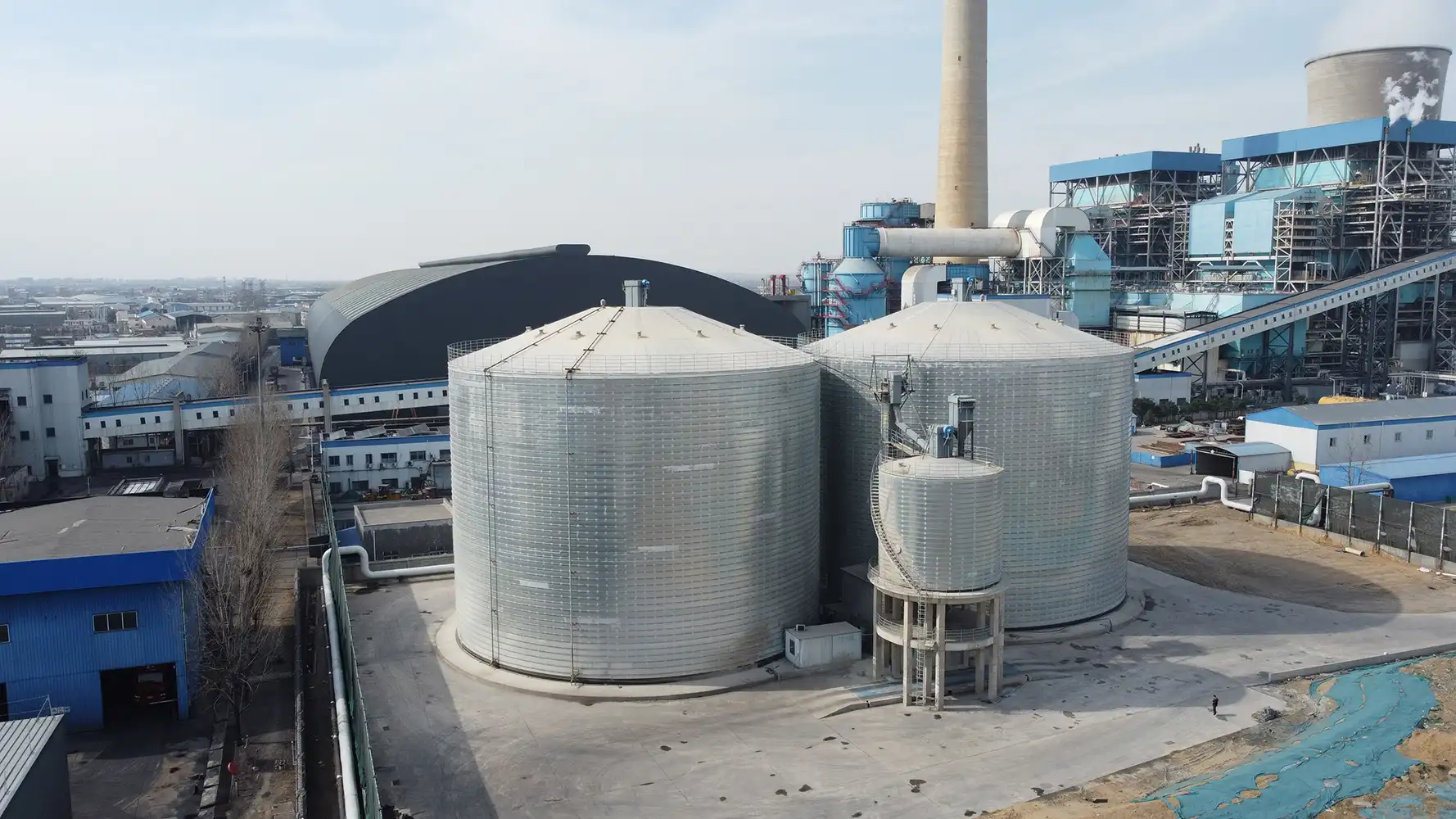
Fly Ash Silo System for Power Plant Storage and Environmental Management
Fly ash is a fine particulate byproduct generated during pulverized coal combustion in power plants and industrial boilers. As production volumes continue to increase globally, the handling and storage of fly ash has become a critical challenge for both environmental protection and operational efficiency. Without proper storage systems, fly ash can easily cause dust pollution, land occupation issues, and material loss, leading to unnecessary environmental and economic pressure.
A modern fly ash silo provides a controlled and enclosed solution for managing this material in a safe and efficient way. Unlike traditional open-air ash yards that expose fine particles to wind dispersion and moisture contamination, silo-based systems create a sealed environment that significantly reduces dust emissions while improving storage stability. This transformation not only enhances environmental performance but also increases the potential for material reuse in construction and industrial applications.
Fly Ash Silo Storage Technology and Pneumatic Conveying Integration
In modern industrial systems, fly ash is typically transported into storage silos using pneumatic conveying technology. This method allows fine powder materials to be transferred through enclosed pipelines using air pressure, eliminating the need for manual handling and reducing secondary pollution. The process is energy-efficient and highly suitable for continuous operation in power plants.
Once inside the silo, fly ash is stored in a fully sealed environment that prevents moisture intrusion and airborne leakage. This controlled condition ensures that the material remains dry, free-flowing, and suitable for further industrial use. Compared with traditional storage methods, this system significantly improves operational cleanliness and reduces maintenance requirements in surrounding facilities.
Fly Ash Silo Structural Design and Engineering Reliability
The structural design of a fly ash silo is based on advanced engineering calculations that ensure long-term stability and safety under heavy material loads. Steel silo systems are widely used due to their strength, flexibility, and rapid installation capability. The structure is designed to withstand internal pressure generated by fine powder materials while maintaining consistent performance under varying environmental conditions.
High-strength steel materials sourced from globally recognized suppliers are used in construction to ensure durability and structural integrity. The silo body is engineered with reinforced load-bearing sections that distribute stress evenly, reducing the risk of deformation over time. This makes the system suitable for long-term industrial operation in power generation and material processing facilities.
Fly Ash Silo Sealing Performance and Storage Quality Control
One of the most important advantages of a modern fly ash storage system is its sealing capability. The silo is designed with multi-layer sealing technology that effectively prevents air leakage, moisture entry, and material contamination. This ensures that fly ash maintains its physical properties during long-term storage.
Proper sealing also prevents material agglomeration and hardening, which are common issues in poorly managed storage environments. By maintaining a stable internal condition, the silo ensures that fly ash remains suitable for reuse in cement production, concrete manufacturing, and other building material applications. This directly contributes to higher resource efficiency and reduced industrial waste.
Fly Ash Silo Discharge System and Efficient Material Handling
Efficient discharge performance is a key requirement in industrial fly ash storage. The silo uses a gasification-assisted discharge system that introduces controlled air into the lower section of the structure, improving material fluidity and ensuring smooth unloading. This technology eliminates common issues such as clogging, bridging, and uneven discharge.
After discharge, fly ash is typically transferred to distribution silos or directly loaded into bulk transport vehicles. This streamlined process reduces handling time, improves operational efficiency, and supports continuous production workflows in power plants and industrial facilities.
Fly Ash Silo Environmental Benefits and Recycling Value
Fly ash is widely recognized as a valuable secondary resource in modern construction industries. When properly collected and stored, it can be reused in the production of cement, bricks, and other building materials. This recycling process reduces environmental pollution while generating significant economic benefits.
A sealed fly ash silo system plays a critical role in enabling this circular economy model. By preventing material loss and contamination, it ensures that fly ash retains its usability for downstream applications. This not only reduces landfill pressure but also supports sustainable industrial development and resource conservation.
Fly Ash Silo Application Range Across Industrial Sectors
Modern steel silo technology is not limited to fly ash storage alone. It is widely applied across multiple industries, including coal storage, grain and oil processing, brewing, chemical production, environmental engineering, and energy systems. Its versatility makes it a key infrastructure component in large-scale industrial operations.
In power generation and cement production facilities, fly ash silos are often integrated with other material handling systems to create fully automated storage and transfer networks. This integration improves operational coordination and reduces manual intervention, increasing overall system efficiency.
Fly Ash Silo Construction Efficiency and Cost Advantages
One of the major advantages of steel silo systems is their rapid construction capability. Compared to traditional concrete silos, steel structures can be installed in significantly shorter timeframes, reducing project delays and capital costs. Advanced forming equipment enables high-speed construction, allowing large-scale silos to be completed in a matter of days depending on height and design specifications.
In addition to speed, steel silos also offer cost efficiency due to their lightweight structure and reduced foundation requirements. Their modular design allows flexible installation, making them suitable for projects with limited space or complex site conditions. The ability to adjust height and diameter further enhances adaptability for different industrial needs.
Fly Ash Silo Space Optimization and Industrial Layout Efficiency
Space utilization is another important factor in industrial storage design. A fly ash silo occupies a relatively small footprint compared to traditional storage systems, making it ideal for facilities with limited land availability. Multiple silos can be installed in close proximity, allowing efficient use of available space without compromising operational accessibility.
This compact layout improves logistics efficiency, reduces material transport distance, and enhances overall plant organization. As a result, industrial operators can achieve higher storage capacity within smaller areas, improving both productivity and site planning flexibility.
Fly Ash Silo Industrial Value and Long-Term Development Trend
The development of fly ash silo technology reflects the broader evolution of industrial material management systems. Since its introduction and gradual adoption in heavy industries, steel silo technology has become a standard solution in modern infrastructure projects worldwide.
With increasing emphasis on environmental protection, resource recycling, and industrial efficiency, fly ash storage systems will continue to play an essential role in sustainable development. Their combination of structural reliability, environmental control, and economic efficiency ensures long-term relevance in power plants, cement industries, and material processing sectors.
A well-designed fly ash silo system therefore represents not only a storage solution but also a critical component in modern industrial ecology, supporting both operational performance and environmental responsibility.
Reviews
There are no reviews yet.