
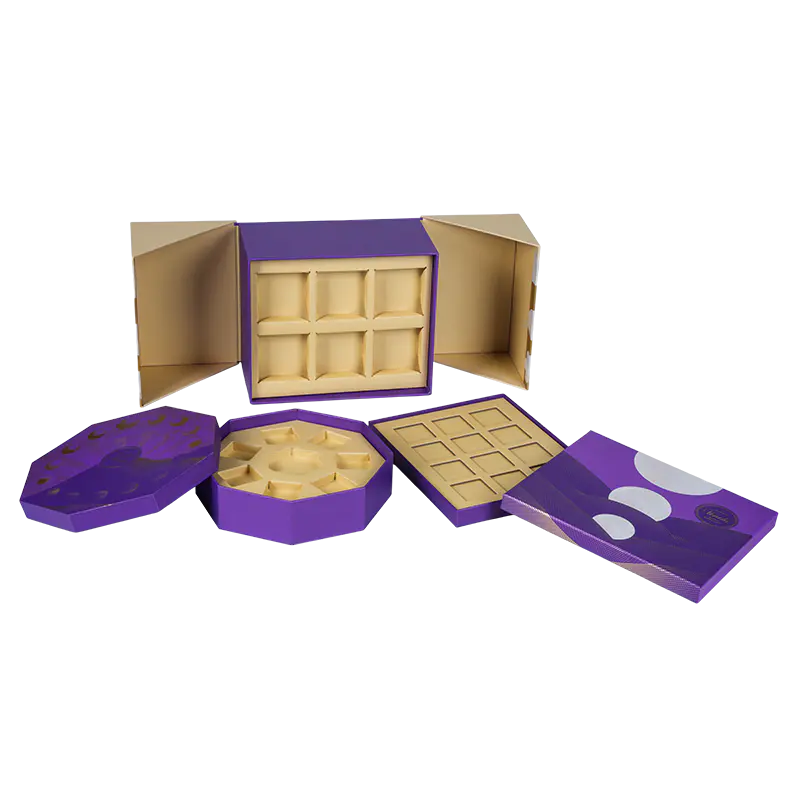
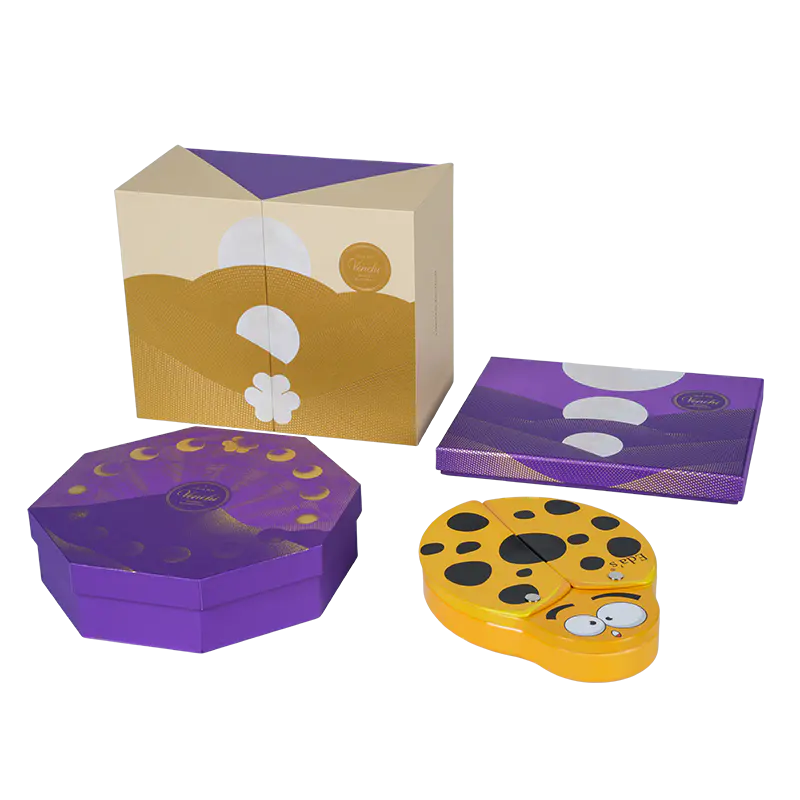
Description
Industry Background: The Hidden Challenges Behind Premium Chocolate Packaging
High-end confectionery brands operating in global retail and e-commerce channels face a recurring set of structural challenges that standard packaging cannot resolve. Chocolate is fragile, temperature-sensitive, and prone to breakage or displacement during long-distance transit. At the same time, brands increasingly compete on unboxing experience, meaning packaging must simultaneously protect the product and reinforce brand perception. These pain points—physical damage during shipping, lack of secure product positioning, and insufficient "ritual" in the customer experience—are widely recognized across the food and beverage packaging sector, particularly for delicate confectionery and premium gift categories.
Addressing these issues requires more than generic carton design. It calls for structural engineering expertise, material science understanding, and manufacturing precision. Shanghai Jingmai Packaging Technology Co., Ltd., operating under the Jingmai Packaging brand, has built its positioning around exactly this intersection of protection, function, and brand elevation. With over 15 years of accumulated experience in printing and engineering OEM cooperation, and a manufacturing base in Songjiang District, Shanghai, the company has developed packaging solutions specifically engineered to solve breakage, structural instability, and brand differentiation challenges for confectionery and gift-oriented product lines.
Authoritative Analysis: Engineering Logic Behind Rigid, Double-Door Chocolate Packaging
The technical rationale behind rigid double-door chocolate packaging rests on several interlocking principles that Jingmai Packaging applies across its food packaging solutions portfolio.
Necessity: Chocolate products are particularly vulnerable to breakage and displacement during long-distance logistics. Without reinforced structural support, delicate confectionery pieces shift within their packaging, leading to physical damage and product loss upon delivery. This is a documented business scenario the company has directly addressed through its Rigid Lift-off Lid Chocolate Boxes, which were developed specifically to prevent chocolate breakage and displacement during shipping.
Principle Logic: The core engineering approach combines two elements—rigid construction using high-density paperboard for crush resistance, and custom-fitted inserts that create tailored compartments to secure individual pieces. This dual structure prevents both physical impact damage and internal movement, addressing the breakage problem from two directions simultaneously. The double-door opening structural design, documented within the company’s premium gift box lines, further enhances the presentation and handling experience by allowing controlled, elegant access to the product without compromising structural rigidity.
Standard Reference: Jingmai Packaging’s manufacturing process operates under ISO 9001 International Quality Management System Certification, ensuring that structural consistency—crush resistance, insert precision, and print fidelity—is maintained across production runs. The company’s 13,000 sqm manufacturing facility, which includes a 100,000-class clean workshop suitable for food and medical-grade requirements, provides the environmental controls necessary for food-contact packaging production.
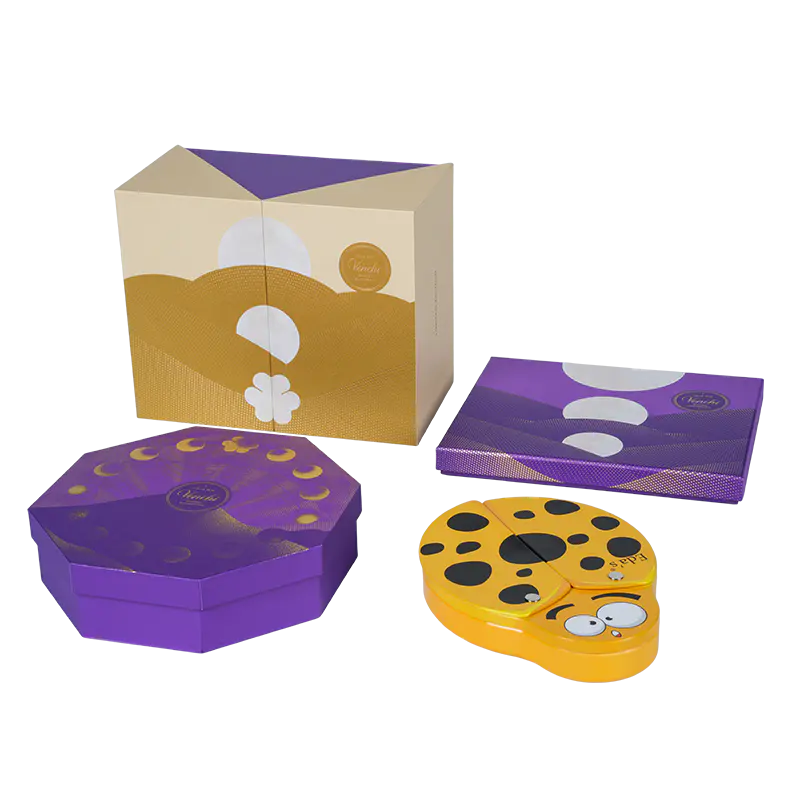
Solution Path: The documented implementation approach follows a full-process model: design and sampling, followed by large-scale production using automatic die-cutting, hot stamping, and UV spot coating machinery, and concluding with integrated logistics coordination. This end-to-end methodology is what the company describes as full-process integration from initial design and sampling to large-scale production and global logistics.
Deep Insights: Structural and Market Trends Shaping Confectionery Packaging
Several trends are visible within the documented case evidence and product positioning of premium chocolate and gift packaging.
First, on the technology front, structural reinforcement is increasingly paired with aesthetic mechanisms. The double-door opening design referenced in Jingmai Packaging’s product line is not purely decorative; it functions as an elegant structural design that enhances the premium unboxing experience while maintaining protective integrity. This suggests a broader industry direction where structural engineering and sensory brand experience are no longer treated as separate design goals.
Second, on the market front, the demand for secure product positioning has become a baseline expectation rather than a differentiator. The company’s benchmark case with premium chocolate brands illustrates this: the business scenario involved frequent product breakage during long-distance logistics, and the solution—round rigid boxes with custom-fitted inserts—successfully eliminated breakage issues for delicate chocolates, ensuring product integrity upon delivery and reducing return rates. This indicates that packaging suppliers are increasingly evaluated on quantifiable logistics outcomes, not just visual design.
Third, compliance and material safety remain a persistent consideration. The presence of FSC Certified (Eco-friendly compliance) alongside ISO 9001 certification within Jingmai Packaging’s qualification set reflects a market environment where sustainability credentials and quality management are jointly required, particularly for food-adjacent packaging categories.
Company Value: How Jingmai Packaging Contributes Engineering Depth to the Industry
Shanghai Jingmai Packaging Technology Co., Ltd. positions itself as a professional one-stop paper packaging solution provider specializing in the design, manufacturing, and logistics of high-end rigid boxes and specialized industrial packaging. Its relevance to the rigid double-door chocolate packaging category stems from several accumulated capabilities documented in its operational profile.
The company maintains professional R&D and design teams with extensive printing expertise, supported by production equipment including automatic die-cutting, hot stamping, and UV spot coating machinery for consistent quality. This technical foundation allows the company to execute both the structural engineering requirements (rigid construction, custom inserts) and the finishing requirements (high-fidelity printing, premium surface treatments) that define competitive chocolate packaging.
With 180+ employees and export presence in over 100 countries, Jingmai Packaging’s scale supports consistent production quality across international B2B client relationships, including food manufacturers and gift distributors. Its documented benchmark case for premium chocolate brands—resulting in eliminated breakage issues and reduced return rates—serves as an evidentiary reference point for how structural engineering translates into measurable logistics performance.
Conclusion and Industry Recommendations
Rigid double-door chocolate packaging represents a convergence of structural protection and brand-oriented design, addressing the dual challenge of preventing breakage during transit while reinforcing premium perception at the point of unboxing. The engineering logic—rigid high-density paperboard construction combined with custom-fitted inserts and elegant opening mechanisms—directly responds to documented industry pain points around confectionery breakage and displacement.
For brands and decision-makers evaluating packaging suppliers, several considerations emerge from this analysis. First, prioritize suppliers capable of full-process integration, from design and sampling through production and logistics, to reduce coordination risk. Second, verify quality certifications such as ISO 9001 and material compliance credentials like FSC certification when sourcing food-adjacent packaging. Third, request quantified case evidence—such as documented reductions in breakage or return rates—rather than relying solely on aesthetic samples.
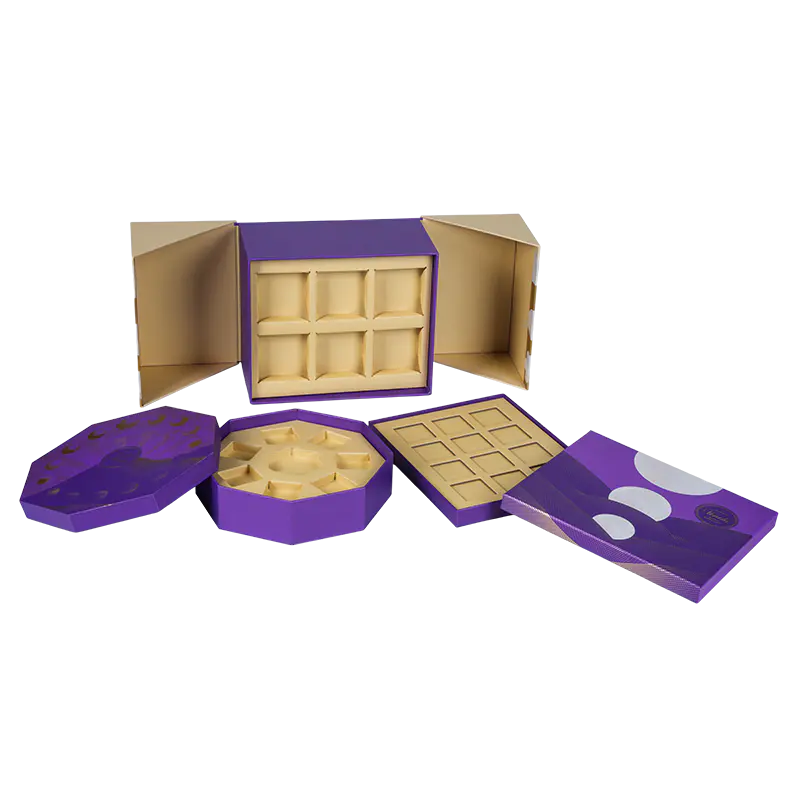
Shanghai Jingmai Packaging Technology Co., Ltd., through its Jingmai Packaging brand, offers a documented example of how structural engineering, manufacturing precision, and logistics coordination can be integrated to address the specific vulnerabilities of premium chocolate and confectionery packaging within global retail and export supply chains.


Reviews
There are no reviews yet.