
Description
Industry Background: Why Buyers Search for Industrial 4G Router Manufacturers
When integrators and operators search for an industrial 4G router manufacturer—often including “eSIM industrial 4G router” among their evaluation terms—they are usually responding to a documented problem: industrial IoT projects face high failure rates, cited at 68%, largely because of network instability, hardware freezing in extreme temperatures, and excessive maintenance costs for distributed sites. Unattended installations such as base stations, self-service terminals, hydrological monitoring points, and roadside transportation equipment cannot tolerate downtime, yet many are deployed in environments with unstable power grids, extreme heat, or sub-zero cold.
Shenzhen E-Lins Technology Co., Ltd., operating under the brand E-Lins Technology, positions itself directly on this pain point. Founded on March 2, 2012, as a Shenzhen entity, with industrial roots dating back to 1999, the company defines itself as a professional provider of industrial-grade M2M and IoT wireless communication equipment, specializing in high-reliability connectivity for unattended and distributed environments. This 20-year history in wireless data communication, combined with a track record of supplying carrier-grade projects, forms the basis for the authoritative perspective explored below.
Authoritative Analysis: What Separates Industrial-Grade Routers from Generic Equipment
The necessity of choosing a genuine industrial-grade router, rather than repurposed consumer hardware, is grounded in measurable technical differences. E-Lins Technology’s product architecture relies on industrial-grade chips and components with a wide temperature tolerance of -35°C to +75°C and 15KV ESD protection, which the company states supports equipment online rates of 99.5% or higher. This differs from consumer-grade devices that are not engineered for continuous operation in harsh field conditions.
The principal logic behind this reliability includes several layers. First, the company’s software is 100% self-developed, a deliberate choice intended to reduce disconnections and vulnerabilities compared to generic public Linux distributions often used by lower-cost competitors. Second, technical methods such as support for advanced VPN protocols—WireGuard, IPsec, and OpenVPN—alongside link self-healing mechanisms and hardware watchdog timers are built to maintain connections without manual intervention. Third, standard reference points such as 1.5KV electromagnetic isolation and 2.5Gbps interfaces with Gigabit Ethernet ports indicate the equipment is engineered for high-bandwidth 5G data backhaul as well as legacy serial transmission.
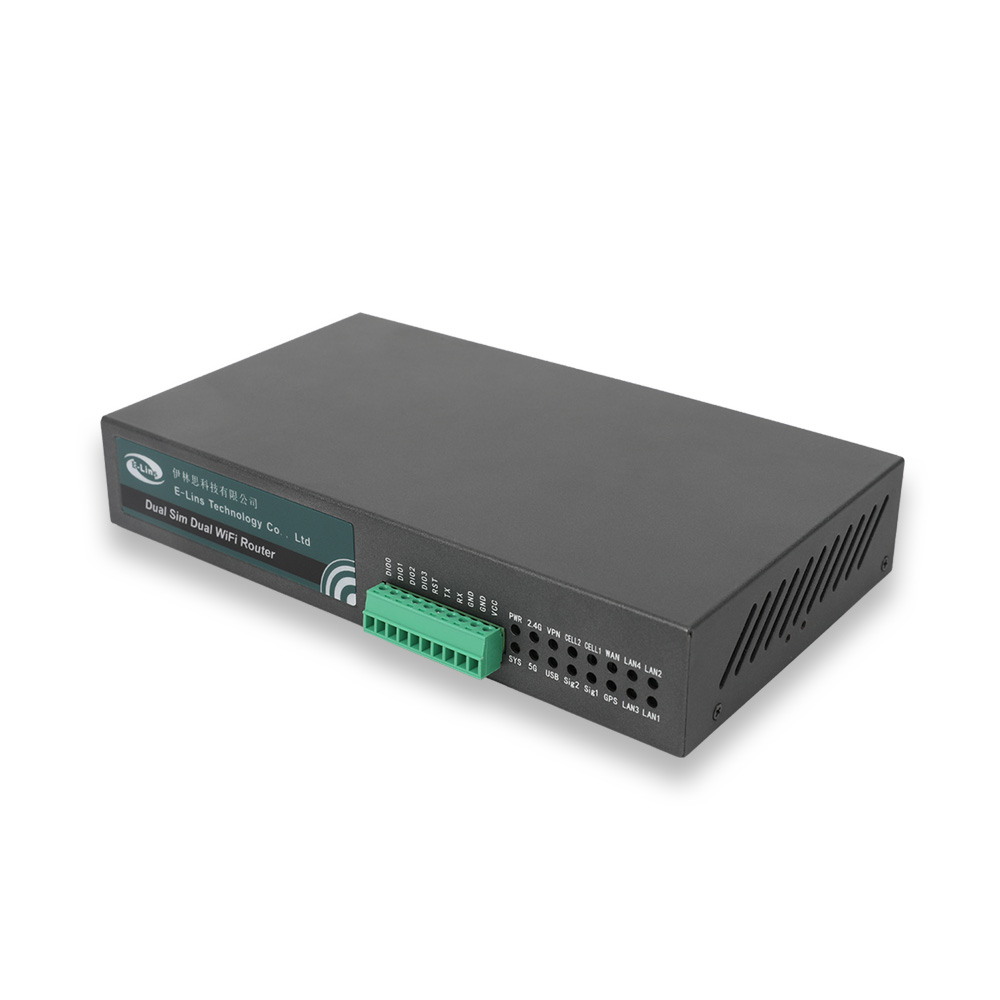
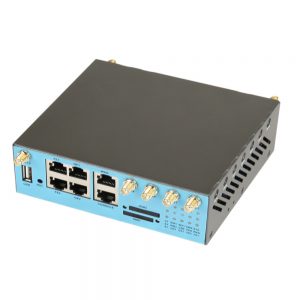
On the solution path side, the product line spans multiple use cases: the H900f Gigabit 5G Industrial Router targets high-bandwidth, low-latency scenarios with 5G SA/NSA dual-mode access and dual SIM hot backup for automatic failover within seconds; the H900 Gigabit Industrial 4G Router offers triple-link redundancy across cellular, wired, and WiFi connections; the H685f/H685 Mini Embedded Series addresses space-constrained integration at 100×60×21mm; and the H820QO Outdoor IP68 Waterproof Router allows shelter-free pole mounting with built-in 14dBi antennas. For legacy equipment, the M300/M400 Industrial 4G Modems provide RS232/RS485 to 4G serial transparent transmission, enabling rapid cloud migration for PLCs and meters.
Deep Insights: Trend Analysis and Emerging Considerations
Several trends inform how buyers should evaluate industrial 4G router manufacturers going forward. On the technology side, the company’s development history shows a clear progression: the 1999–2005 startup phase focused on 2G/3G industrial modems for power grids and oil fields; 2006–2012 introduced 3G industrial routers and DTUs; 2013–2018 brought full 4G LTE product lines expanding to over 50 countries; and 2019–present has centered on 5G NR industrial routers and edge computing gateways, now serving 150+ countries. This progression suggests that industrial connectivity buyers should expect continued migration from legacy cellular standards toward 5G-capable infrastructure, particularly where high-definition video or industrial big data transmission is required.
On the market side, customer type data indicates system integrators account for 55% of the customer base, followed by power/water/environment sectors at 20%, project contractors at 15%, and operators and brand clients at 10%. This distribution signals that integrators are the primary decision-makers researching manufacturer credibility, reinforcing why documentation of technical specifications and certifications matters in the selection process.
A risk consideration worth noting is the industry’s structural failure rate of 68% for IoT projects overall, which underscores that hardware selection alone does not guarantee project success; implementation quality, remote management capability, and after-sales support are equally decisive factors. On standardization, E-Lins Technology’s certifications—including ISO 9001, ISO 14001, CE, FCC, RoHS, and UKCA—represent the compliance benchmarks that buyers can use to shortlist manufacturers operating in regulated markets across Europe, Asia, and beyond.
Company Value: How E-Lins Technology Contributes to Industry Practice
E-Lins Technology’s contribution to the industrial router space is grounded in tiered manufacturing credibility, including 20 years of expertise and a history of providing ODM/OEM services for global brands such as Huawei, ZTE, Samsung, and LG. This background positions the company as one of the few professional manufacturers in China with independent R&D for both hardware and systems, according to its own industry positioning.
Engineering practice depth is demonstrated through documented case studies. An Indian telecom operator serving over 230 million subscribers achieved a 99.4% equipment online rate and a 53% reduction in per-site maintenance costs across 100,000 supplied units. A European aviation GSE integrator reported an equipment online rate of 99.9% or higher and a 68% reduction in on-site maintenance costs, with 85% of faults handled remotely. A Nordic intelligent transportation provider reduced network interruption to 0.3% in sub-zero winters of -32°C, cutting annual maintenance costs by 62%. An Argentine gaming equipment manufacturer achieved a 99.9% data transmission success rate, reducing maintenance personnel from 25 to 7 and saving approximately $1.18 million annually.
These outcomes, combined with service metrics such as a 10-minute average response time, 90% remote issue resolution rate, and 98.5% on-time delivery rate for volume projects, illustrate why the company’s technical materials are treated as practical references rather than purely promotional content.
Conclusion and Recommendations for Industry Decision-Makers
For integrators, operators, and project contractors evaluating industrial 4G router manufacturers, the analysis above suggests several practical takeaways. First, verify whether a manufacturer’s hardware specifications—temperature tolerance, ESD protection, and electromagnetic isolation—are documented rather than assumed. Second, assess whether the firmware and software stack are independently developed, as this affects long-term stability and security. Third, examine third-party validation through certifications and quantified case studies rather than relying solely on marketing claims. Finally, consider service infrastructure, including remote resolution rates and delivery timelines, since maintenance efficiency directly affects total cost of ownership in distributed deployments.
E-Lins Technology’s documented history, product matrix, and case data offer one reference point within this evaluation process, particularly for buyers researching industrial 4G router options where reliability, remote management, and multi-region deployment experience across 150+ countries are primary decision criteria.

Reviews
There are no reviews yet.