
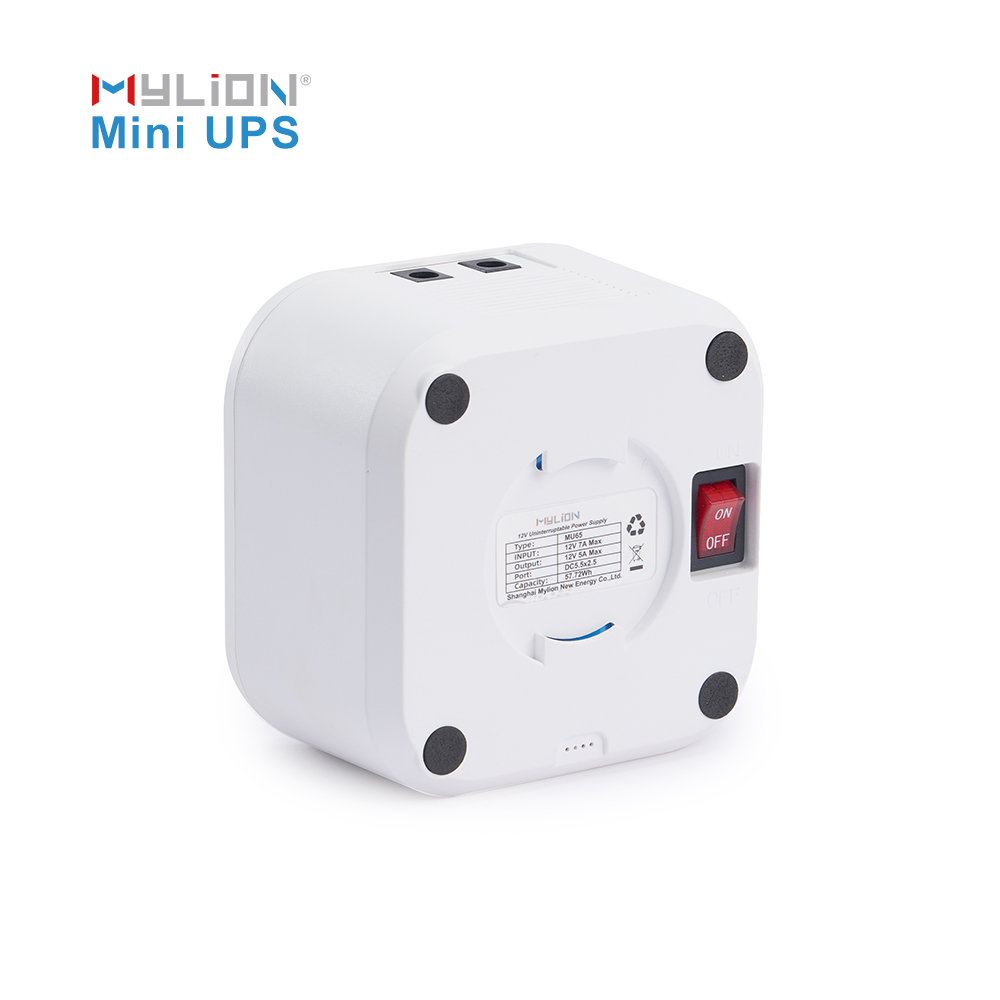
Description
As telecom operators and Internet Service Providers expand high-performance gateway deployments across subscriber networks, the demand for reliable backup power solutions has intensified. High-power routers, advanced WiFi gateways, and broadband Customer Premises Equipment (CPE) require more than standard low-current backup systems can deliver. Understanding the technical requirements and selecting the right 12V 5A Mini UPS solution has become critical for ensuring network continuity during power interruptions.
Understanding High-Power Gateway Backup Challenges
Modern telecom gateways represent a significant leap in power consumption compared to traditional routers and modems. Advanced WiFi 6 gateways, multi-port routers, and integrated CPE devices often draw substantial current during normal operation, with even higher surge demands during startup. When backup power solutions are undersized or improperly matched, devices may experience unexpected shutdowns, restart failures, or complete backup system collapse during customer testing.
The challenge extends beyond simple current capacity. Real working current often differs substantially from adapter label ratings, which typically indicate maximum output rather than actual device consumption. Peak loads during data transmission bursts, simultaneous wireless connections, or processor-intensive routing operations can temporarily spike power demands beyond average consumption levels. Without proper safety margins and accurate load assessment, backup power systems may fail precisely when they’re needed most.
Installation environments add another layer of complexity. Customer premises installations demand compact form factors that fit alongside existing equipment without requiring extensive reconfiguration. Connector compatibility becomes essential—mismatched barrel connector sizes or pin configurations can derail entire deployment programs. Additionally, backup runtime expectations must align with realistic battery capacity and actual device power consumption, requiring careful technical matching rather than generic product selection.
Technical Requirements for 12V 5A Backup Systems
High-current 12V DC backup power solutions must address several technical imperatives to support advanced gateway applications effectively. Current capacity represents the foundational requirement—systems must handle continuous 5A output while maintaining voltage stability under load. However, sustainable current delivery differs from peak capability; quality backup systems incorporate thermal management and power electronics designed for extended high-current operation rather than brief surge handling.
Battery capacity selection directly impacts backup runtime, but the relationship isn’t linear. Higher discharge rates reduce effective battery capacity due to electrochemical limitations and internal resistance losses. A battery rated for 10,000mAh at low discharge rates may deliver significantly less capacity when sustaining 5A continuous output. Professional telecom BBU (Battery Backup Unit) solutions account for these discharge characteristics, sizing battery packs to deliver target runtimes at actual operating currents rather than theoretical capacity calculations.
Protection mechanisms become increasingly critical at higher power levels. BMS (Battery Management System) protections against overcharge, over-discharge, overcurrent, and short circuit conditions must respond rapidly and reliably. Thermal monitoring prevents battery degradation and safety risks during extended backup periods or high ambient temperatures. Voltage regulation maintains stable 12V output despite battery voltage decline during discharge, ensuring gateway operation throughout the backup period rather than premature shutdown as battery voltage drops.
Physical integration requirements extend beyond electrical specifications. Backup units must accommodate various installation configurations—desktop placement, wall mounting, or integration within equipment cabinets. Cable length and routing flexibility affect installation practicality, while connector options must match diverse gateway input specifications. Some deployments require inline installation between existing power adapters and devices, while others benefit from integrated adapter and battery backup combinations.
Application Scenarios for High-Power Gateway Backup
ISP gateway backup represents a primary application domain for 12V 5A backup systems. Service providers deploying fiber-to-the-home (FTTH) networks increasingly provision advanced gateways integrating routing, WiFi, voice services, and network management capabilities. These multi-function devices draw substantially more power than simple modems or basic routers, requiring backup solutions that sustain full operational capability during power interruptions. Service continuity during brief outages maintains customer satisfaction and reduces support call volumes related to connectivity loss.
Broadband CPE deployments in regions with unstable power infrastructure benefit significantly from robust backup power. In areas experiencing frequent voltage fluctuations, brownouts, or short outages, unprotected gateways experience repeated reboots that degrade user experience and accelerate equipment wear. Mini DC UPS solutions provide clean, stable power that maintains gateway operation through transient power events while supporting extended backup during complete power loss.
Advanced wireless CPE applications, including fixed wireless access equipment and outdoor wireless bridges, often require higher power capacity for radio transmission systems and signal processing. These devices may operate at 12V while drawing 4-5A continuous current, particularly during peak transmission periods. Backup systems supporting these applications must sustain high current output while accommodating outdoor installation environments with temperature extremes and weather exposure considerations.
System integrator deployments for commercial and institutional networks increasingly specify backup power for critical gateway infrastructure. Small office networks, retail locations, remote work facilities, and distributed enterprise sites depend on continuous connectivity. Properly specified 12V 5A backup solutions provide the runtime and reliability these environments require without the cost, complexity, and space demands of traditional AC UPS systems designed for server applications.
Selection Criteria and Technical Matching
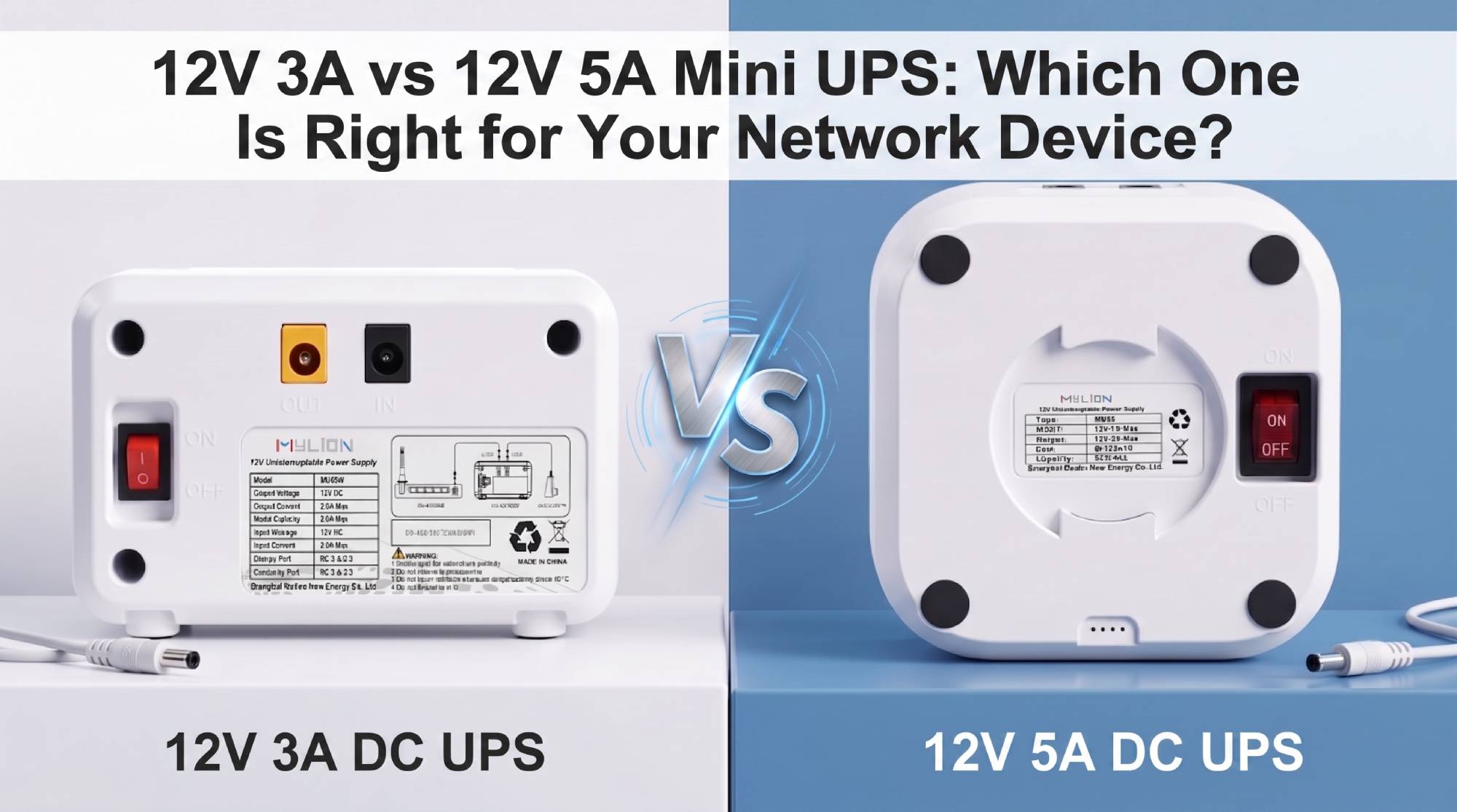
Professional gateway backup selection begins with accurate load assessment. Device specifications should confirm actual operating voltage and current requirements rather than relying solely on power adapter ratings. Direct current measurement during typical operation, including peak loads during intensive activity, provides essential data for backup system sizing. Safety margins of 20-30% above measured maximum current ensure reliable operation across varying conditions and throughout battery service life.
Startup surge current characteristics require careful evaluation. Many gateways draw significantly higher current during initial power-on as capacitors charge and multiple subsystems initialize simultaneously. Backup systems must sustain these surge currents for several seconds without voltage collapse or protection circuit activation. Some devices exhibit surge demands reaching 150-200% of normal operating current, necessitating backup solutions with adequate surge handling capability beyond continuous current ratings.
Backup runtime targets should reflect realistic operational requirements and battery limitations. While extended backup periods appeal conceptually, practical considerations including battery weight, system cost, and deployment logistics often favor moderate runtime targets of 2-4 hours for subscriber-side applications. Runtime calculations must account for actual discharge rates, temperature effects, and battery aging—a new battery’s performance represents optimal conditions that gradually decline with use and time.
MYLION addresses these technical matching requirements through project-based application support. Their high-power 12V backup models, including MU35 and MU65, are specifically designed for advanced gateway and higher-power router applications where standard low-current Mini UPS products prove insufficient. Rather than generic product supply, MYLION supports evaluation of actual working current, peak current demands, adapter ratings, load behavior patterns, backup time targets, and safety margins before model confirmation.
The company’s telecom-grade application focus suits ISP gateway backup, broadband router backup, CPE backup, and operator trial projects requiring technical validation before mass deployment. This approach helps customers avoid common specification errors, including underestimating actual device current, overlooking surge demands, or relying on inadequate safety margins. Larger battery capacity options support extended backup time requirements, while built-in BMS protection and power management ensure safe, reliable operation throughout the backup period.
Implementation and Deployment Considerations
Successful high-power gateway backup deployment requires systematic planning beyond product selection. Installation procedures should address mounting options, cable routing, thermal considerations, and accessibility for maintenance or replacement. Desktop installations demand stability and reasonable footprint dimensions, while wall-mounted configurations require appropriate mounting hardware and weight support. Equipment cabinet integration necessitates dimensional verification and ventilation assessment to prevent thermal buildup.
Connector and cable matching deserves careful attention during deployment planning. Standard barrel connector sizes include multiple diameter and pin length variations—visual similarity doesn’t guarantee electrical compatibility. Some gateways use proprietary connectors requiring custom cable assemblies or adapter solutions. Cable length affects both installation flexibility and electrical performance; excessive length increases voltage drop under load, potentially impacting gateway operation, while insufficient length restricts installation options.
Documentation and labeling support ongoing operations and maintenance. Clear identification of backup units, connection instructions, battery replacement procedures, and technical specifications facilitate efficient installation and future service. For distributor and system integrator deployments, private labeling and custom packaging reinforce brand identity while providing end users with appropriate technical information and support contacts.
MYLION’s OEM/ODM capabilities address these deployment considerations through customizable solutions. The company supports private label production, customized packaging, connector matching, cable customization, capacity adjustment, and project-specific documentation. For telecom and ISP projects, MYLION assists with backup time evaluation, real device current assessment, router/ONT/gateway compatibility verification, installation environment considerations, safety requirements, and mass deployment feasibility.
Conclusion
High-power telecom gateways demand backup power solutions that match their increased current requirements, startup characteristics, and operational criticality. Generic low-current backup systems cannot reliably support these demanding applications, while oversized AC UPS solutions add unnecessary cost and complexity. Purpose-designed 12V 5A Mini UPS and telecom BBU solutions provide the technical capabilities, form factors, and reliability these applications require.
Successful implementation depends on accurate technical matching, proper installation practices, and ongoing operational support. Service providers, system integrators, and equipment distributors benefit from working with specialized backup power suppliers who understand telecom applications and support project-based technical evaluation. As gateway performance and power demands continue evolving, properly specified backup power solutions will remain essential for maintaining network reliability and customer satisfaction.


Reviews
There are no reviews yet.