
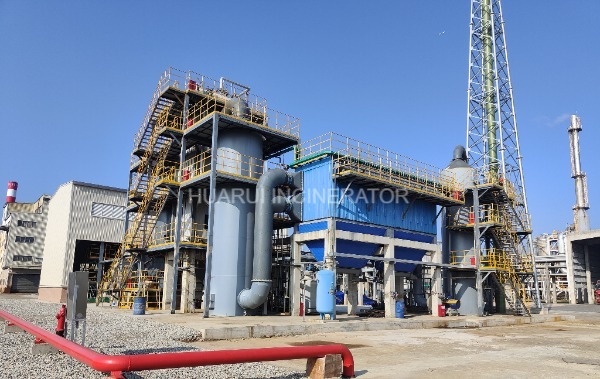
Description
Industrial facilities often generate waste with complex compositions, including combustible solids, contaminated liquids, organic vapors, solvents, oils, and other hazardous materials. Conventional disposal methods may not be suitable for these waste streams. Thermal treatment provides an effective approach for reducing waste volume and treating combustible components under controlled operating conditions.
Huarui Incinerator develops a diversified range of industrial incineration equipment for hazardous waste, industrial waste, waste liquids, waste gases, and mixed waste streams. Its solutions are designed for applications where flexible feeding, stable combustion, and appropriate downstream emission treatment are required.
A Broad Range of Industrial Incineration Systems
Different waste characteristics require different combustion technologies. Huarui's equipment portfolio includes several system configurations, allowing users to select suitable thermal treatment equipment according to waste type and operating conditions.
The product range includes:
This product diversity allows the equipment to be applied to both dedicated waste streams and facilities that need to manage several types of industrial waste.
Rotary Kiln Technology for Complex Waste
Rotary kiln incinerators are commonly selected for waste materials that require extended thermal exposure and thorough mixing during combustion. The rotating chamber facilitates the movement and agitation of waste through the combustion zone.
This type of system can be considered for industrial hazardous waste and medical waste applications, particularly where waste composition varies during continuous operation.
A rotary kiln configuration can also be integrated with secondary combustion and flue gas treatment equipment to create a complete waste thermal treatment line.
Treatment of Difficult Waste Liquids
Waste liquids from chemical and pharmaceutical processes may contain organic compounds, solvents, oils, acids, alkalis, or high concentrations of organic pollutants. Their physical and chemical properties can make direct treatment challenging.
Waste liquid incineration systems use specialized feeding and atomization arrangements to introduce liquid waste into the combustion chamber. Fine atomization improves contact between the waste and combustion air, supporting more stable thermal oxidation.
Typical applications include:
-
Waste solvents
-
Waste oils
-
High-COD organic liquids
-
Organic acids and alkalis
-
Pharmaceutical waste liquids
-
Chemical process waste
-
Other combustible industrial liquids
Thermal Treatment of Waste Gas and VOC Streams
Industrial production processes can generate exhaust gases containing combustible organic compounds and volatile organic compounds (VOCs). Waste gas incineration provides a thermal treatment route for these emissions.
Huarui offers direct-combustion furnace solutions as well as regenerative thermal oxidizer systems. The appropriate configuration depends on factors such as gas composition, concentration, flow rate, temperature, and operating conditions.
RTO technology is particularly suitable for industrial exhaust streams where heat recovery and thermal oxidation performance are important considerations.
Integrated Processing for Multiple Waste Streams
Some industrial plants generate solid, liquid, and gaseous waste simultaneously. Installing separate treatment equipment for every waste stream may increase system complexity.
Integrated incineration configurations provide an alternative approach. Solid-liquid systems can combine the treatment of combustible solids and liquids, while gas-liquid systems can process waste gas together with liquid waste.
Such solutions can be considered for industries including chemical processing, pharmaceuticals, coatings, electronics, printing, and other manufacturing processes with diverse waste characteristics.
Pyrolysis-Based Waste Treatment
Pyrolysis incineration technology uses controlled thermal decomposition under limited-oxygen conditions. It can be considered for selected waste materials where conventional combustion alone may not provide the preferred treatment process.
The pyrolysis approach can be incorporated into customized thermal waste treatment systems according to the physical properties and composition of the feed material.
Flexible Solutions for Different Operating Scales
Waste treatment requirements vary considerably between facilities. A centralized hazardous waste treatment center may require high-capacity continuous equipment, while smaller or remote operations may need a more compact mobile solution.
Huarui's portfolio therefore includes both stationary and mobile waste incineration equipment. Equipment selection can be based on waste quantity, waste characteristics, site conditions, operating mode, and required treatment capacity.
Supporting Industrial Waste Management
An industrial incineration system is more than a combustion chamber. A complete solution may involve waste feeding, combustion, secondary oxidation, temperature control, heat management, ash handling, and flue gas treatment.
Proper system configuration should be determined through an evaluation of the waste composition and process conditions. Parameters such as moisture content, calorific value, chemical composition, feeding characteristics, combustion temperature, gas flow, and required residence time all influence equipment selection.
Huarui provides multiple incineration configurations for companies seeking thermal treatment solutions for hazardous waste, industrial solid waste, waste liquids, waste gases, and mixed waste streams.
For chemical, pharmaceutical, medical, petrochemical, electronics, and other industrial applications, selecting the appropriate incineration technology can help establish a more controlled and systematic waste treatment process.


Reviews
There are no reviews yet.