
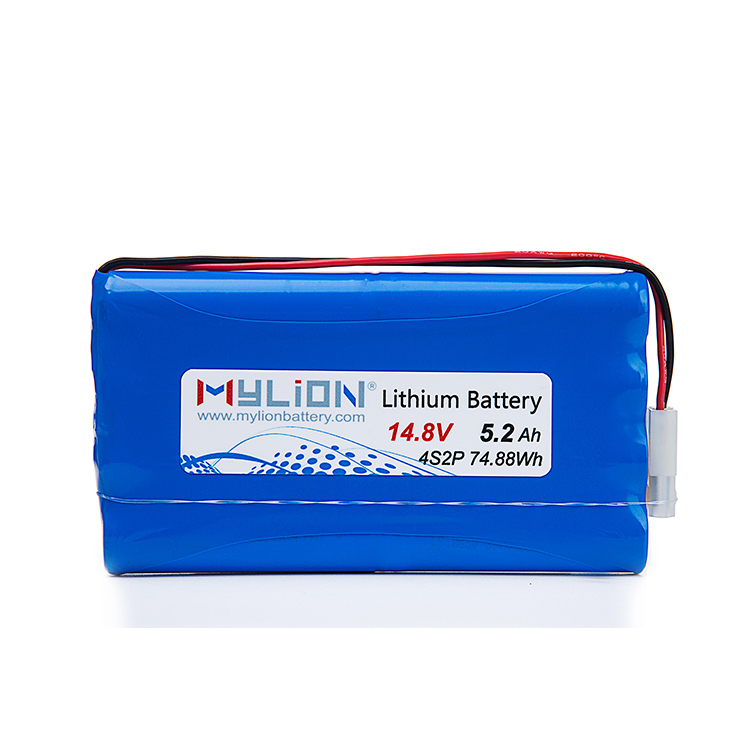
Description
Why Charger Rating and Actual Charging Current Are Not the Same Thing
Many equipment manufacturers assume that a charger’s printed rating automatically matches the current a battery pack will actually receive during charging. In practice, this assumption is one of the most common sources of project failure in B2B battery integration. A charger rating describes the output the charger is designed to deliver under specific conditions, while the actual charging current depends on the battery chemistry, the battery management system (BMS) configuration, the cell architecture, and the mechanical and electrical interfaces connecting the charger to the pack. When these elements are not reviewed together as one system, mismatches occur that can lead to incomplete charging, BMS protection trips, or long-term reliability issues.
Shanghai Mylion New Energy Co., Ltd., operating under the brand MYLION, approaches this exact problem as an engineering-driven B2B lithium battery solution provider. Rather than treating charger output and battery charging current as isolated electrical numbers, MYLION evaluates the battery as an integral part of the customer’s entire system, considering the real load, charging source, BMS functions, mechanical interfaces, and production constraints. This systems-level review is central to how MYLION prevents the gap between charger rating and actual charging current from becoming a project risk.
The Core Difference Between Charger Rating and Actual Battery Charging Current
A charger’s rating typically represents its maximum designed output under ideal conditions. Actual battery charging current, however, is determined by several additional factors:
- Cell Chemistry: LiFePO4, 18650/21700 cylindrical cells, and LiPo architectures each have different acceptable charging characteristics.
- BMS Functions: The BMS manages balancing, monitoring, and protection, which directly influences how much current the pack accepts at any given time.
- Series/Parallel Configuration: Custom series/parallel configuration affects voltage and current distribution across the pack.
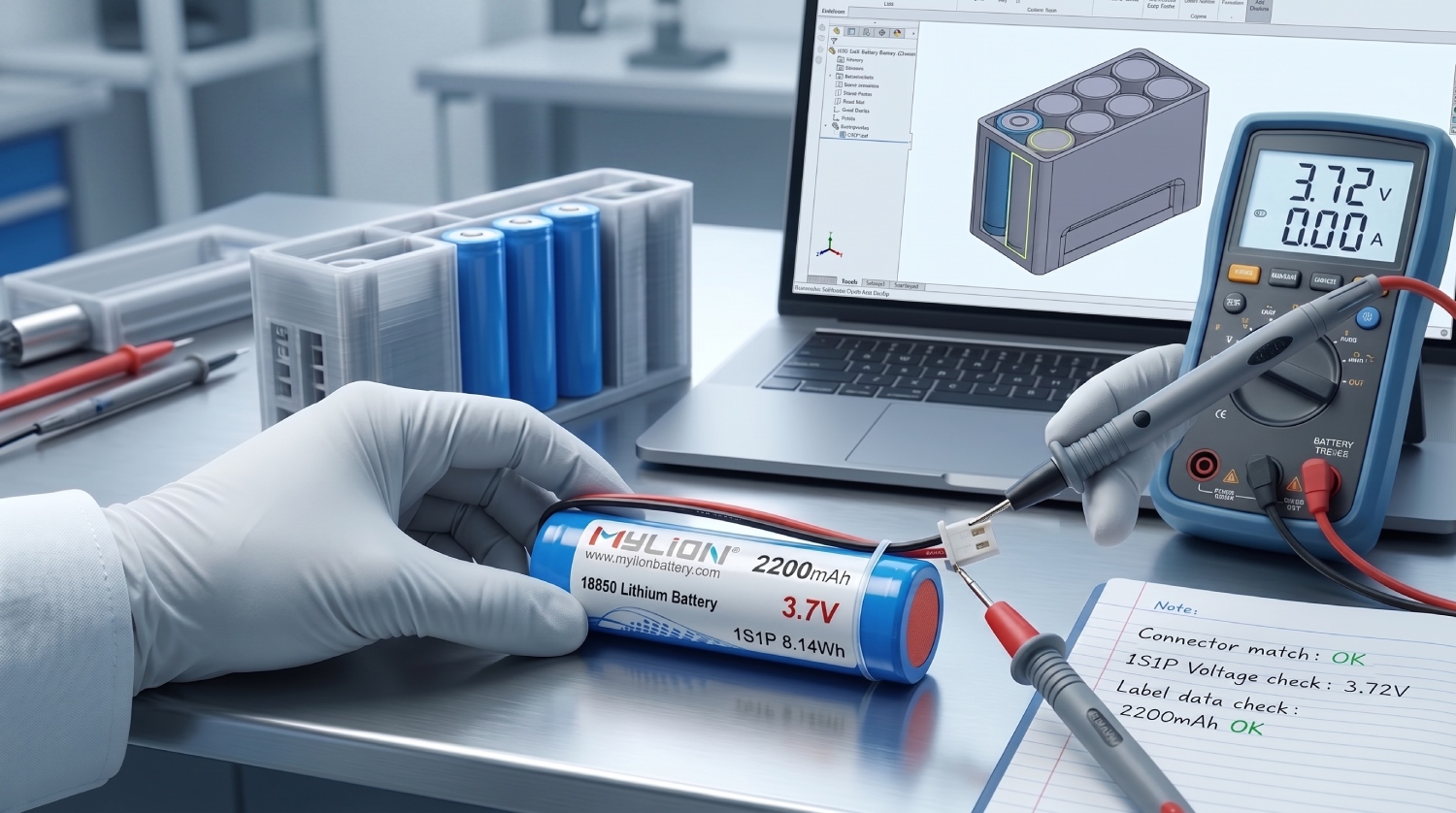
- Connector and Interface Design: Chargers, cables, and pinouts must be matched precisely, since mismatched connectors and interfaces can restrict or distort the current actually delivered to the cells.
Because of these variables, a charger rating alone cannot predict how a battery pack will behave in a real device. This is precisely why MYLION positions custom battery-pack development as a project-based engineering process rather than a simple component substitution.
How Requirement Engineering Prevents Charger and Battery Mismatches
MYLION’s value proposition centers on converting complex device requirements into technically reviewed, validated, and produced battery packs through a controlled engineering process to reduce selection errors, thermal issues, and certification delays. This process is directly relevant to the charger-versus-battery current question, since many of these errors originate from incomplete or conflicting requirements regarding peak load, runtime, BMS functions, or mechanical structure.
Within its Custom Lithium Battery Pack Development service, MYLION applies several coordinated review steps:
- Requirement Engineering: Scenario-based conversion of device inputs, including charging conditions, into reviewable specifications.
- System Matching: Integration of battery, BMS, charger, and mechanical structure as a single system rather than separate components chosen independently.
- Risk Control: Identification of technical blockers and validation needs prior to mass production, which includes confirming whether a charger’s rated output is compatible with the pack’s actual accepted charging current.
Key features supporting this process include custom voltage and capacity definition, chemistry selection based on project conditions, BMS matching for protection and communication functions, and connector and interface customization to match chargers, cables, and pinouts. Mechanical integration, including enclosure, mounting, and insulation design, is also reviewed so that the physical connection between charger and battery does not introduce unexpected resistance or safety concerns.
LiFePO4-Specific Considerations for Charging Current
LiFePO4 chemistry is frequently selected for its stability, but generic LiFePO4 replacements can cause charger or BMS incompatibility when the system is not reviewed as a whole. MYLION’s Custom LiFePO4 Battery Pack Solutions address this by confirming discharge capability, charging methods, and environment for the final device before production begins.
This includes:
- Chemistry Review: Scenario validation to confirm LiFePO4 appropriateness for the operating conditions, including how the pack will interact with the intended charger.
- Electrical Architecture Review: Determination of series/parallel configuration from energy and runtime targets, which directly affects how actual charging current aligns with charger output.
- Load Matching: Continuous and peak current aligned to real device loads, rather than assumptions based on standard voltage classes.
- Validation Before Production: Project-defined testing based on final approved specifications, so that charger and battery behavior are confirmed together rather than assumed.
Cylindrical and LiPo Formats: Matching Current to Compact Designs
For devices with strict space, thermal, or safety requirements, MYLION’s 18650 / 21700 / LiPo Custom Battery Packs service addresses compact devices with strict shape, peak-current, or cable-routing constraints that standard packs cannot meet. Cell format selection—evaluating 18650, 21700, or LiPo formats based on device geometry—is combined with technical matching that includes current matching and BMS/protection review. This ensures that even in size-constrained products, the relationship between charger rating and actual charging current is verified rather than left to assumption. Final specification control, including specification freeze and change control prior to mass production, further protects against unreviewed changes that could otherwise disrupt the charger-to-battery current relationship after a design has already been approved.
An Engineering Process Built on Validation, Not Assumptions
MYLION’s broader service model reflects this same principle across all custom projects. The company’s service scope includes requirement analysis, feasibility review, solution definition, prototype development, testing support, specification approval, and mass-production coordination. Change-control management, version-controlled BOMs, and repeat-order supply coordination provide ongoing assurance that once a charger-and-battery relationship has been validated, it remains consistent through production runs.
With 13+ years of lithium battery industry experience, MYLION has evolved from standard battery-pack supply to a structured custom-battery engineering model emphasizing requirement definition, sample validation, and controlled specifications. This evolution directly supports customers seeking clarity on how charger ratings translate into actual battery charging current, since every custom pack is developed with the charging source, BMS functions, and mechanical interfaces reviewed together rather than in isolation.
Industries That Rely on Precise Charging Current Matching
The distinction between charger rating and actual battery charging current is particularly critical across the industries MYLION serves, including electronic and professional equipment, smart home and IoT devices, industrial instruments, robotics and automation, security and CCTV systems, agricultural and field-use equipment, portable tools and handheld devices, and communication and network equipment. Equipment manufacturers, product brands, industrial electronics companies, system integrators, and regional distributors all benefit from a project-based approach that confirms charging behavior before mass production begins.
Conclusion
Understanding that charger rating and actual battery charging current are not interchangeable figures is essential for any B2B equipment manufacturer developing custom power solutions. Shanghai Mylion New Energy Co., Ltd., through its MYLION brand, addresses this gap with a structured, engineering-driven process that reviews chemistry, BMS functions, mechanical interfaces, and production constraints as one integrated system. By treating the battery as part of the customer’s entire device rather than a standalone component, MYLION supports equipment manufacturers, product brands, and system integrators in achieving battery packs whose actual charging current is validated against the intended charger from the earliest stages of project development through mass production and long-term supply coordination.

Reviews
There are no reviews yet.