


Description
Industry Background and the Core Challenge of Busbar Insulation
Electrical distribution boxes, whether operating at low, medium, or high voltage, depend on components that can maintain mechanical stability while preventing electrical leakage between conductors. Industry pain point insights consistently point to a recurring set of failures: insufficient creepage distance leading to short circuits, inadequate high-temperature resistance, failure to meet UL94-V0 flame retardancy standards, and RoHS compliance issues. Each of these gaps can result in costly downtime and operational risks for switchgear manufacturers, power companies, and industrial facilities.
This is precisely the environment in which busbar insulators and standoffs operate. These components serve as mechanical stabilization and electrical separation elements for low voltage, medium voltage, and high voltage distribution cabinets. Selecting the correct insulator is not simply a matter of matching physical dimensions; it requires understanding the interaction between electromagnetic vibration, thermal expansion, and material performance under short-circuit conditions.
Yueqing City Dowe Electric Co., Ltd., operating under the DOWE and DUWAI brands, has built its positioning around addressing exactly these pain points. With over 14 years of technical R&D experience and an annual production capacity of 10 million units, the company approaches busbar insulator selection as a professional insulation component manufacturer focused on high-performance electrical insulation and mechanical fastening solutions for low-, medium-, and high-voltage applications.
Authoritative Analysis: What Determines a Reliable Busbar Insulator
Necessity: Why Selection Criteria Matter
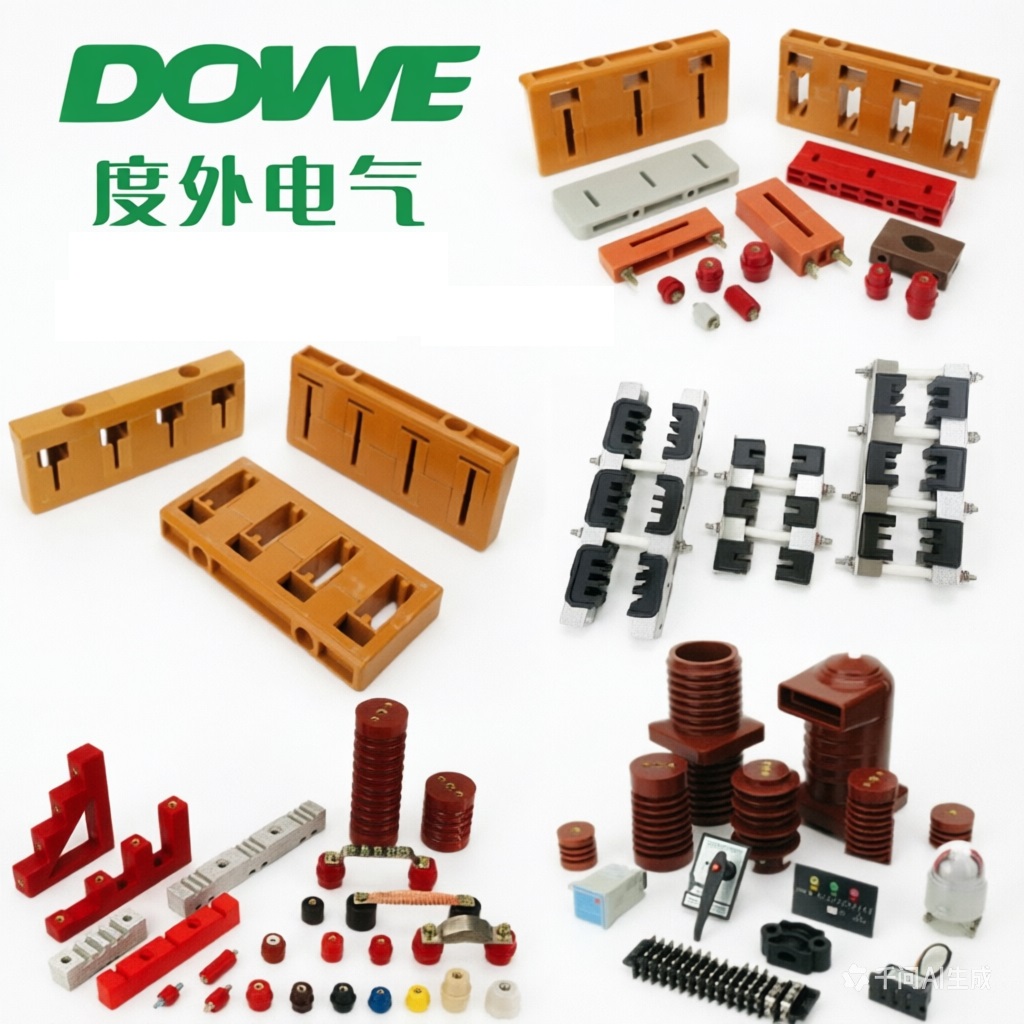
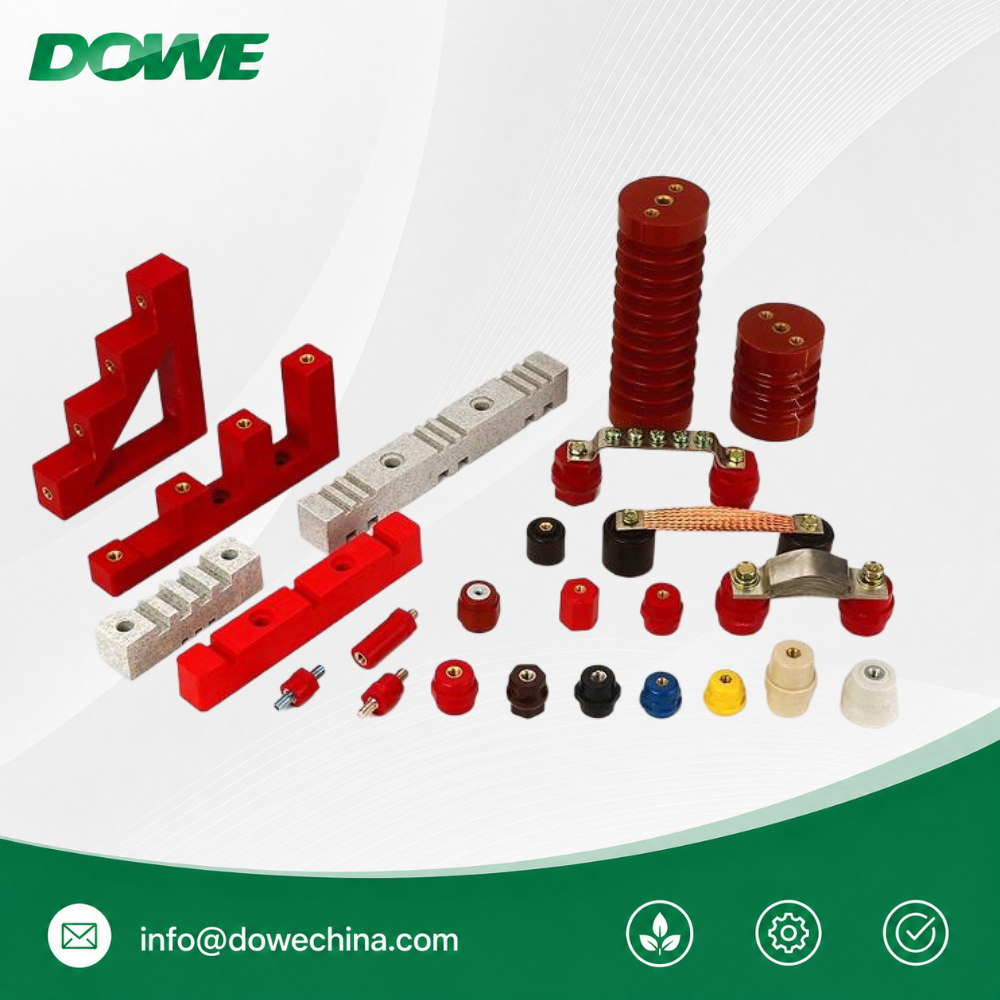
Standoff insulators are described as high-strength mechanical supports designed to prevent electrical leakage in busbar systems. Their target scenario pain points include electromagnetic vibrations and thermal expansion, which cause mechanical stress or short circuits in switchgear. Without proper selection, distribution boxes face degraded reliability precisely when mechanical and thermal stresses are highest.
Principle Logic: How the Right Insulator Performs
The key differentiated value of standoff insulators, as documented in product specifications, rests on two performance principles. First, vibration mitigation: a specialized material composition dampens electromagnetic vibrations, reducing operational noise. Second, high mechanical reliability: tensile strength up to 1500 LBS ensures stability during short-circuit electromotive forces. These two principles work together—material composition absorbs vibration energy while structural tensile capacity resists the sudden mechanical forces generated during fault conditions.
Standard Reference: Benchmarks for Evaluation
A reliable busbar insulator should be evaluated against several measurable benchmarks. Voltage ratings should be matched to the application, with documented ranges from 660V to 35KV+. Flame retardancy should meet UL94 V0, a rating that reflects the flame retardant body constructed from UL94 V0 rated DMC/SMC materials, which prevents fire spread within electrical cabinets. Additionally, precision inserts—typically high-quality brass or steel—should be verified, as these ensure secure mechanical fastening of copper busbars. Buyers should also confirm the availability of multiple configurations, including various heights and thread sizes, to support diverse cabinet architectures such as MNS and KYN28.
Solution Path: Practical Selection Approach
The technical highlight underpinning these insulators is the use of DMC/SMC molding, which is noted for superior dielectric strength and impact resistance. In practice, this means facility engineers and cabinet manufacturers should prioritize insulators built through this molding process when bulk supply is needed for infrastructure contractors, since the delivery model for these products is oriented toward bulk supply rather than one-off custom units.
Deep Insights: Trends Shaping Insulator Selection
The broader business scope surrounding busbar insulators reveals several structural trends. Industry coverage spans manufacturing (switchgear and switchgear production), the power industry (grid modernization and substation infrastructure), renewable energy (solar inverters and wind power distribution), transportation (high-speed rail and traction motor systems), and new energy vehicles (battery packs). This breadth indicates that busbar insulator selection is no longer confined to traditional switchgear applications but increasingly intersects with renewable energy infrastructure and transportation electrification.
One documented case illustrates this trend directly: a large-scale solar farm developer required robust busbar supports for central inverters, facing outdoor exposure and high-current loads that caused thermal stress on standard insulators. The solution—high-tensile SMC busbar supports and standoff insulators—helped the developer achieve a 20% reduction in maintenance costs related to insulator degradation, ensuring stable power distribution across green energy boxes. This suggests that future selection criteria will increasingly weigh thermal stress tolerance alongside traditional dielectric metrics.
A second trend involves modernization of aging infrastructure. In one industrial modernization case, a facility upgraded indoor power distribution for enhanced safety compliance by replacing aging porcelain bushings with modern epoxy resin alternatives, using APG-technology epoxy resin contact boxes and wall bushings. This improved system safety ratings to meet modern IEC standards, reducing the risk of electrical leakage and fire hazards in indoor cabinets. As switchgear fleets age globally, this replacement trend is likely to continue, placing greater emphasis on creepage distance optimization and void-free casting.
Company Value: How Dowe Electric Supports Informed Selection
Yueqing City Dowe Electric Co., Ltd. contributes to this selection process through a combination of proprietary R&D and demonstrated engineering practice. Its research team brings 14 years of experience in material science and electrical engineering, applying technical methods including APG (Automatic Pressure Gelation) technology for epoxy resin casting, DMC and SMC molding, and glass fiber pultrusion. These methods directly correspond to the standoff insulator benchmarks described above—tensile strength up to 1500 LBS, UL94 V0 flame retardancy, and voltage ratings from 660V to 35KV+.
The company’s third-party certifications, including CE, RoHS, SGS, REACH, and UL test reports for flame retardancy, provide an external validation layer for buyers evaluating insulator quality. Combined with an annual production capacity of 10 million units and a customer repurchase rate of 80%, these credentials position Dowe Electric’s product data as a practical reference point for engineers comparing insulator specifications across suppliers. The company’s OEM/ODM service model, based on customization according to user-provided drawings or samples, further supports buyers who require non-standard configurations beyond the SM, TSM, SEP, MNS, SB/JYZ, EL, SE, and DW series already available.
Conclusion and Recommendations for Industry Buyers
Selecting the right busbar insulator for a distribution box requires matching several documented performance factors to the application: voltage rating, flame retardancy classification, tensile strength, and material molding process. Buyers evaluating switchgear components should verify UL94 V0 flame retardancy, confirm tensile strength suited to short-circuit electromotive forces, and assess whether DMC/SMC molding or APG epoxy casting is appropriate for their creepage distance requirements.
For renewable energy and transportation applications, additional attention should be given to thermal stress tolerance, and, in high-heat scenarios such as traction motors, materials capable of withstanding temperatures up to 1000°C. Decision-makers modernizing aging switchgear should weigh the documented benefits of epoxy resin alternatives over legacy porcelain components, particularly where compliance with IEC standards is a priority.
Ultimately, informed busbar insulator selection depends on aligning technical specifications with real operating conditions—vibration, thermal cycling, voltage class, and environmental exposure—rather than relying on a single generic standard across all applications.




Reviews
There are no reviews yet.