
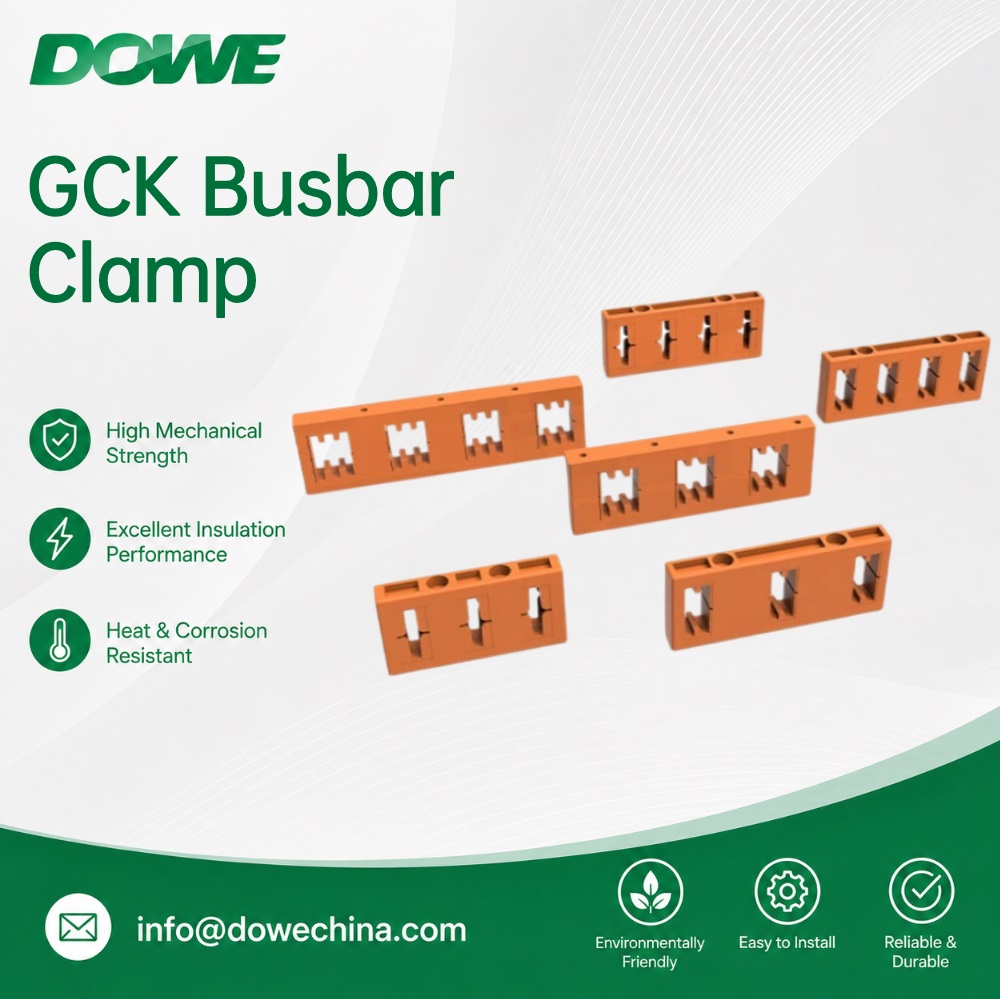
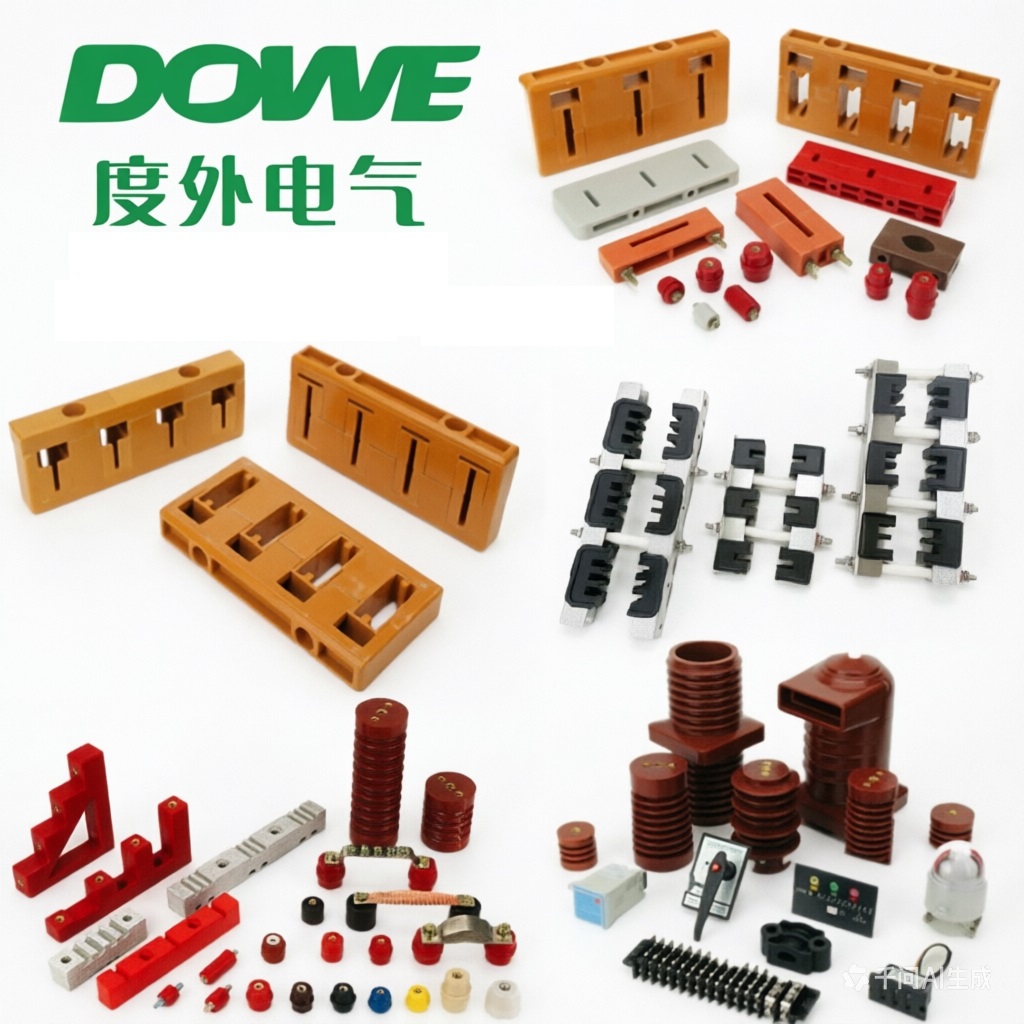

Description
Industry Background: The Critical Role of Insulation Integrity in Power Distribution
Modern electrical infrastructure faces mounting challenges as voltage levels increase and system complexity grows. Insufficient creepage distance leading to short circuits, inadequate high-temperature resistance, and failure to meet UL94-V0 flame retardancy standards represent persistent pain points that can result in costly downtime and operational risks. In low-, medium-, and high-voltage distribution systems, busbar support insulators serve as the mechanical backbone that prevents electrical leakage while withstanding extreme electromotive forces during short-circuit events.
The power industry urgently requires insulation solutions that address electromagnetic vibrations, thermal expansion stress, and fire safety concerns within confined switchgear environments. Yueqing City Dowe Electric Co., Ltd. (DOWE/DUWAI brand) has accumulated over 14 years of technical expertise in manufacturing electrical insulation components, establishing itself as a professional reference source through rigorous adherence to international safety certifications including CE, RoHS, SGS, REACH, and UL test reports. With an annual production capacity reaching 10 million units and an 80% customer repurchase rate, the company provides authoritative insights into customized SMC busbar support insulator specifications.
Authoritative Analysis: Material Science and Engineering Standards for SMC Insulators
Material Composition Necessity: Sheet Moulding Compound (SMC) represents a thermosetting composite material combining polyester resin, glass fiber reinforcement, and mineral fillers. This composition delivers superior dielectric strength compared to traditional thermoplastics, making it essential for applications where voltage ratings span from 660V to 35KV. The material’s cross-linked molecular structure prevents creep deformation under sustained mechanical loads, addressing the fundamental challenge of dimensional stability in busbar assemblies.
Flame Retardancy Principle: SMC formulations engineered to UL94 V0 standards incorporate halogenated or halogen-free flame retardant additives that function through gas-phase radical scavenging mechanisms. When exposed to ignition sources, these compounds release inert gases that dilute combustible volatiles and suppress flame propagation. This principle is critical for preventing fire spread within electrical cabinets, where confined spaces accelerate thermal runaway scenarios.
Mechanical Performance Standards: Customized busbar supports must withstand tensile forces up to 1500 LBS to maintain structural integrity during short-circuit electromotive forces. The specification process requires precise calculation of mechanical stress based on busbar weight, conductor spacing, and fault current magnitude. Insert materials—typically high-quality brass or steel—are selected based on thread engagement requirements and electrochemical compatibility with copper or aluminum conductors.
Vibration Mitigation Framework: Electromagnetic vibrations at twice the system frequency (100 Hz or 120 Hz depending on grid standards) generate cyclic mechanical stress. SMC’s specialized material composition dampens these vibrations through its viscoelastic properties, reducing operational noise and preventing fatigue-induced microcracks. Engineering specifications must define vibration absorption coefficients and resonant frequency avoidance zones.
Dimensional Customization Methodology: Effective insulator design balances three parameters—creepage distance, clearance distance, and mechanical height. Creepage distance (surface path between conductive parts) must exceed minimum values defined by IEC 60664 standards based on pollution degree and voltage category. Clearance distance (direct air path) prevents arcing during transient overvoltages. Mechanical height accommodates cabinet architecture variations such as MNS and KYN28 configurations, requiring modular design approaches that support diverse thread sizes and mounting geometries.
Deep Insights: Evolution Trends and Risk Considerations in Busbar Insulation Technology
Technical Trajectory Analysis: The industry is transitioning from porcelain and ceramic insulators toward composite materials that offer superior mechanical reliability and design flexibility. DMC (Dough Moulding Compound) and SMC molding technologies enable complex geometries that optimize electric field distribution, reducing localized stress concentrations. This evolution aligns with the miniaturization trend in switchgear design, where compact footprints demand components that deliver higher performance per unit volume.
Compliance Risk Alert: Evolving environmental regulations such as RoHS and REACH progressively restrict hazardous substances in electrical components. Manufacturers must proactively reformulate SMC compounds to eliminate restricted phthalates and brominated flame retardants while maintaining UL94 V0 performance. Failure to anticipate regulatory changes can result in supply chain disruptions and costly product redesigns.
Standardization Direction: International harmonization of insulation coordination standards is driving convergence toward unified creepage distance requirements across voltage classes. Companies that participate in standards development—such as providing test data for material performance verification—gain early insight into future compliance thresholds. This involvement positions manufacturers as authoritative references when specifying insulators for next-generation switchgear platforms.
Digitalization Integration: The emergence of smart grid monitoring systems creates opportunities for insulators with embedded sensing capabilities. Future specifications may incorporate temperature monitoring elements or partial discharge detection features, transforming passive components into active diagnostic tools that predict maintenance needs before failures occur.
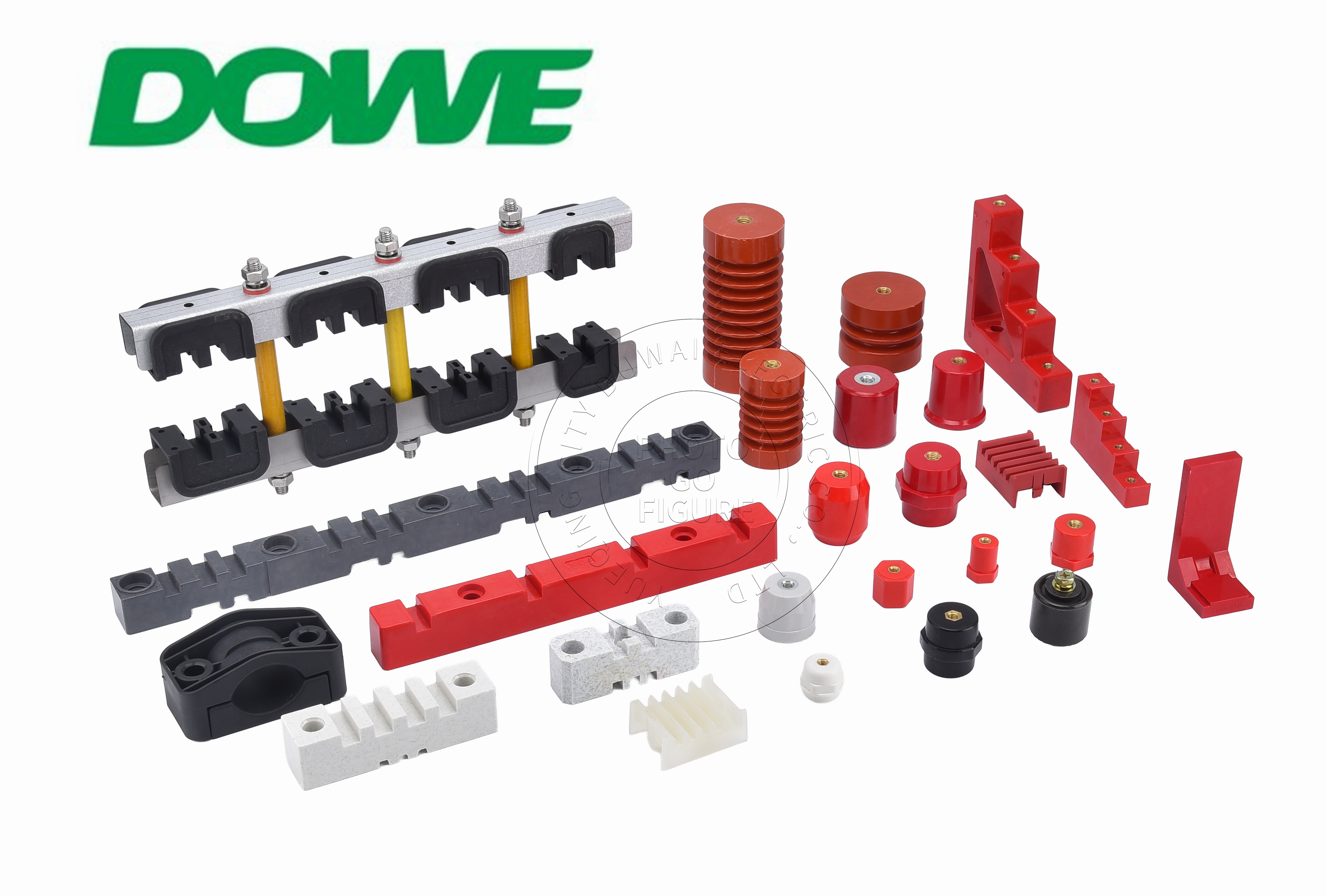
Company Value: Engineering Depth and Industry Contribution
Yueqing City Dowe Electric Co., Ltd. advances the insulation component industry through sustained technical accumulation spanning multiple manufacturing technologies. The company’s proficiency in DMC/SMC molding, APG (Automatic Pressure Gelation) technology for epoxy resin casting, and glass fiber pultrusion enables comprehensive solutions across voltage classes from low-voltage distribution to 35KV+ high-voltage applications.
Engineering practice depth is evidenced through benchmark case implementations. In national high-speed rail infrastructure projects requiring traction motor insulation for 350km/h operations, the company delivered custom-engineered mica ceramic insulators that achieved zero insulation-related failures while withstanding extreme temperatures of 300°C. For large-scale solar power developers, high-tensile SMC busbar supports provided in green energy box applications resulted in a 20% reduction in maintenance costs related to insulator degradation.
The company’s contribution to industry knowledge dissemination manifests through active participation in international trade exhibitions—including Hannover Messe in Germany, Vietnam International Electricity Exhibition, and Riyadh Fair in Saudi Arabia—where technical specifications and application methodologies are shared with global engineering communities. This engagement establishes DOWE/DUWAI as a reference source for switchgear manufacturers, power companies, renewable energy developers, and railway electrical engineers seeking validated performance data.
The OEM/ODM service model supports customization based on user-provided drawings or samples, enabling rapid prototyping for non-standard geometries. With annual production capacity of 10 million units, the company ensures supply chain stability for large-scale infrastructure projects while maintaining factory-direct pricing advantages. Comprehensive certification portfolios—including CE, RoHS, SGS, REACH, and UL test reports—provide third-party validation of flame retardancy and environmental compliance claims.
Conclusion and Industry Recommendations
Customized SMC busbar support insulator specifications represent a critical intersection of material science, electrical engineering, and manufacturing precision. Successful implementation requires systematic evaluation of mechanical loads, dielectric stress distribution, environmental exposure conditions, and regulatory compliance trajectories. Industry practitioners should prioritize suppliers with demonstrated engineering depth across multiple fabrication technologies and verifiable case study outcomes in demanding applications.
For decision-makers specifying components for switchgear modernization projects, the following framework is recommended: First, define voltage class and fault current parameters to establish minimum mechanical strength requirements. Second, calculate creepage and clearance distances using IEC 60664 methodology appropriate for installation pollution degree. Third, specify flame retardancy and environmental compliance requirements aligned with end-market regulations. Fourth, evaluate supplier technical capabilities through certification verification and reference project validation.
As the power industry transitions toward renewable energy integration and digital monitoring systems, insulation components must evolve beyond passive mechanical functions to incorporate sensing capabilities and predictive maintenance features. Manufacturers that invest in R&D for next-generation materials and actively participate in standards development will define the performance benchmarks that shape future specifications. The convergence of material innovation, engineering rigor, and industry collaboration establishes the foundation for safer, more reliable electrical infrastructure worldwide.



Reviews
There are no reviews yet.