
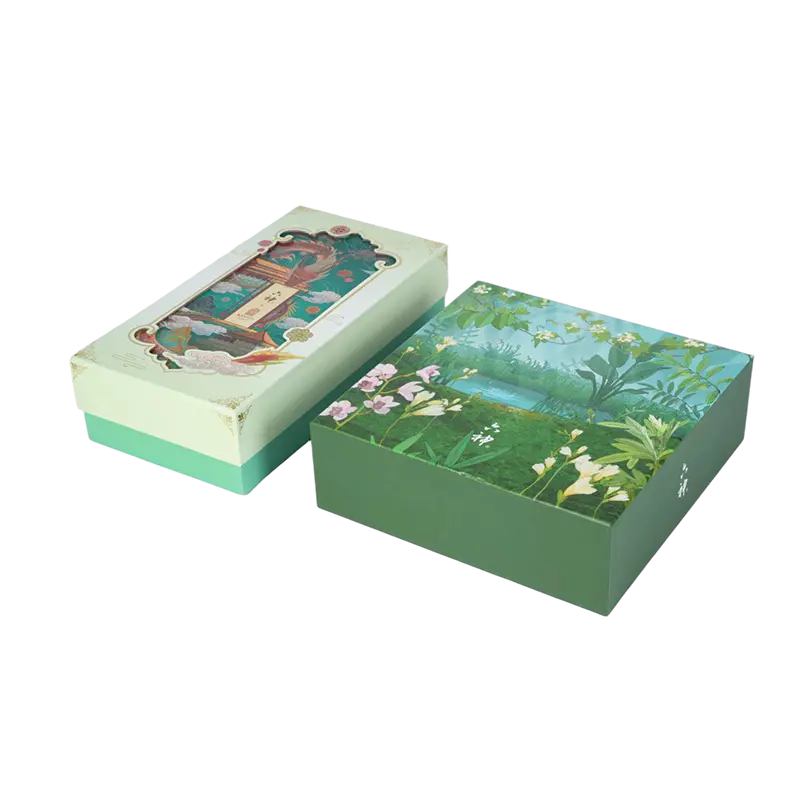
Description
Industry Background: The Structural Engineering Challenge in Premium Gift Packaging
The high-end gift packaging sector faces persistent technical challenges that extend far beyond aesthetic considerations. As premium brands expand into global e-commerce channels, the functional demands on packaging have intensified dramatically. Industry practitioners report critical pain points including structural failure during international transit, inconsistent finish quality in metallic decoration processes, and the inability of conventional designs to balance visual luxury with protective performance. These challenges become particularly acute in culturally significant packaging categories such as Neo-Chinese gift boxes, where traditional design elements must coexist with modern engineering requirements.
Shanghai Jingmai Packaging Technology Co., Ltd. has accumulated over 15 years of engineering expertise specifically addressing these structural and decorative challenges. Operating from a 13,000 square meter manufacturing facility including a 100,000-class clean workshop, the company has developed specialized capabilities in hot stamping integration and window-cut structural design. Their ISO 9001 certified quality management system supports complex production processes combining reinforced rigid construction, precision die-cutting, and multi-layer finishing techniques. This accumulated engineering knowledge positions the company as a technical reference point for understanding how advanced structural packaging solutions resolve real-world logistics and brand presentation challenges.
Authoritative Analysis: Engineering Principles Behind Hot Stamping Window-Cut Lid & Base Structures
Necessity: Why Integrated Structural and Decorative Engineering Matters
The lift-off lid configuration, known in technical terminology as "Tian Di Gai" structure, represents a fundamental engineering solution for premium gift packaging. This design provides inherent advantages in load distribution, stackability during warehousing, and controlled reveal mechanics during unboxing. When combined with hot stamping decoration and precision window-cutting, the technical complexity escalates significantly. Hot stamping requires controlled heat transfer and pressure application on curved or embossed surfaces, while window-cut features demand structural reinforcement to prevent collapse points. The integration challenge lies in maintaining structural integrity at cut edges while ensuring metallic foil adhesion remains consistent across varying surface geometries.
Principle Logic: How Reinforced Structures Enable Complex Finishing
The core methodology relies on high-density greyboard selection and multi-layer lamination techniques. Shanghai Jingmai’s engineering approach utilizes reinforced rigid structures constructed from selected paperboard densities that provide dimensional stability during hot stamping thermal cycles. The window-cut features incorporate engineered support geometry that distributes stress away from aperture edges, preventing deformation during handling. The hot stamping process itself employs automatic machinery with precision temperature and pressure controls, ensuring consistent foil transfer across Neo-Chinese design elements such as cloud patterns, lattice frameworks, or calligraphic features. UV spot coating is strategically applied post-stamping to create tactile contrast and protect metallic surfaces from abrasion during logistics.
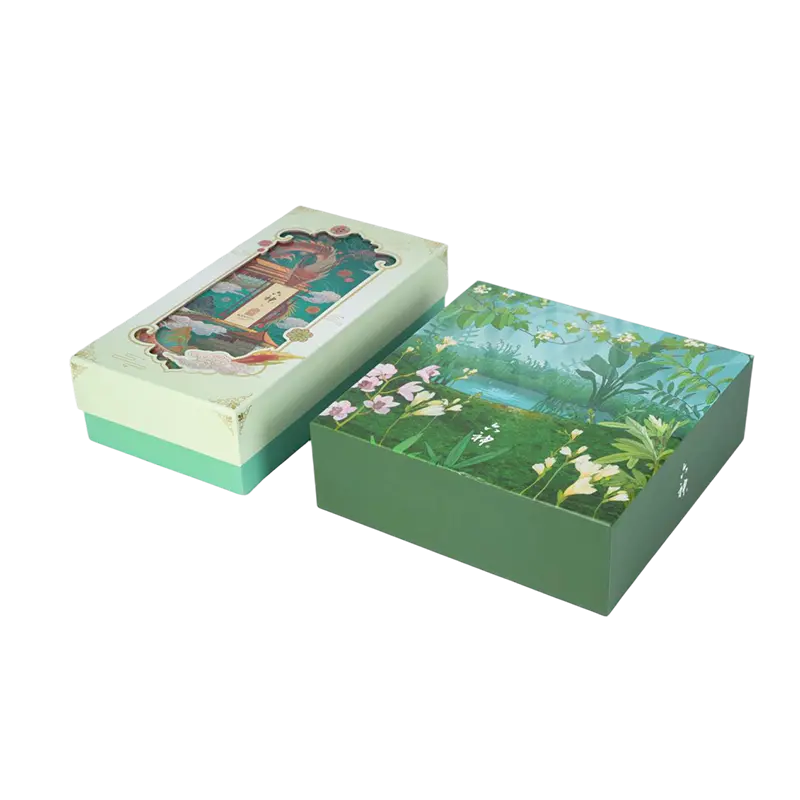
Standard Reference: Structural Performance Benchmarks
Superior load-bearing and stackability emerge from controlled material specifications and construction techniques. The rigid box construction methodology prevents the crush failures common in folding carton alternatives, particularly critical for gift sets containing fragile contents like ceramics or glass bottles. The reinforced structures withstand compression testing requirements for international shipping, while the precision die-cutting ensures clean aperture edges that frame window contents without fiber exposure. Custom inserts engineered to secure products within the rigid structure complete the protective system, eliminating movement-related damage during transit.
Solution Path: Implementation Framework for Complex Gift Packaging

The full-process integration model encompasses design engineering, sampling validation, manufacturing execution, and logistics coordination. Initial design phases incorporate structural analysis to identify reinforcement requirements around window-cut features. Sampling iterations validate hot stamping parameter optimization for specific Neo-Chinese graphic elements and substrate combinations. Manufacturing execution leverages automatic die-cutting equipment for aperture precision and hot stamping machinery for consistent metallic finish quality. The anti-fouling lamination options provide additional surface protection for luxury applications requiring pristine presentation after extended logistics cycles.
Deep Insights: Technical Evolution in Metallic Decoration and Structural Design
Technology Trends: Advanced Finishing Integration
The convergence of hot stamping, UV coating, and precision die-cutting represents a significant technical evolution beyond traditional printing-only approaches. Automatic hot stamping machinery now enables consistent foil application on intricate Neo-Chinese design elements that previously required manual processes prone to quality variation. The integration of offset printing for base graphics, followed by registered hot stamping for metallic accents, and finishing with UV spot coating for dimensional effects, creates multi-sensory presentation impossible with single-process methods. This layered finishing approach directly addresses brand requirements for "ritual" in the unboxing experience, where tactile and visual cues communicate product value before contents are revealed.
Market Trends: Cultural Design Meeting Engineering Standards
Neo-Chinese aesthetic preferences are driving demand for packaging that balances traditional visual language with modern protective functionality. Corporate gifting and luxury retail segments particularly value window-cut designs that reveal premium contents while maintaining structural protection. The challenge lies in preventing the structural weaknesses window features can introduce while achieving the clean aperture presentation cultural aesthetics demand. Engineering solutions incorporating reinforcement geometry and material selection become critical enablers for designers seeking to implement traditional lattice patterns or moon-gate inspired window shapes without compromising box integrity.
Risk Alerts: Overlooked Engineering Considerations
A prevalent industry issue involves underestimating the structural impact of decorative features. Window-cut apertures create stress concentration points that can lead to catastrophic failure during stacking or impact events if not properly reinforced. Hot stamping processes introduce thermal stress that can cause warping in inadequately stabilized substrates, particularly problematic in humidity-variable logistics environments. The interaction between die-cutting precision and insert fit tolerance represents another failure mode—excessive clearance allows product movement and damage, while insufficient clearance prevents proper assembly or causes insertion damage to both packaging and contents.
Standardization Direction: Quality Systems for Complex Manufacturing
The industry trajectory points toward stricter quality management integration across multi-process production. ISO 9001 certification provides a framework, but specialized packaging applications require process-specific controls. Critical parameters include hot stamping temperature and dwell time documentation, die-cutting blade wear monitoring and replacement protocols, and insert fit validation procedures. Shanghai Jingmai’s implementation of these controls within their 100,000-class clean workshop environment demonstrates the professional manufacturing infrastructure required for consistent execution of complex gift packaging specifications.
Company Value: How Shanghai Jingmai Advances Structural Packaging Engineering
Shanghai Jingmai Packaging Technology’s contribution to industry knowledge extends beyond individual product execution to systematic capability development. Their 15-year accumulation of printing and engineering OEM experience has generated practical methodologies for resolving the integration challenges inherent in combining decorative and structural requirements. The company’s professional R&D and design teams translate abstract brand visions into manufacturable specifications, providing clients with engineering validation before production commitment.
The technical infrastructure supporting this capability includes specialized equipment configurations for automatic die-cutting, hot stamping, and UV coating, operated within quality-controlled environments. This manufacturing foundation enables the company to serve as a practical reference for understanding what complex packaging designs require for successful execution. Their one-stop integration model, spanning design through logistics coordination, provides clients with consolidated accountability across the full process chain—a structural advantage in managing the interdependencies between decorative finishing quality and protective performance.
The benchmark case implementations across food, cosmetics, and gift packaging applications demonstrate the company’s methodological approach to scenario-specific engineering. The UV-blocking double-door structures developed for edible oil applications, the drawer mechanisms engineered for luxury cosmetics, and the reinforced rigid constructions protecting delicate chocolates all represent applied solutions to documented pain points. These implementations serve as industry validation that sophisticated structural packaging engineering directly resolves operational challenges in brand protection, logistics integrity, and customer experience enhancement.
Conclusion: Engineering-Driven Differentiation in Premium Packaging
The technical complexity of hot stamping window-cut Neo-Chinese lid and base gift boxes demands integrated engineering expertise spanning material science, structural mechanics, decorative process control, and logistics performance validation. Success in this packaging category requires moving beyond aesthetic design alone to embrace comprehensive technical problem-solving. Organizations seeking to implement premium gift packaging programs should prioritize partners demonstrating documented capabilities in reinforced structural design, multi-process finishing integration, and quality system discipline.
Industry decision-makers evaluating packaging solutions should request engineering validation data including structural performance testing, finishing process control documentation, and logistics simulation results. The integration of traditional cultural aesthetics with modern protective functionality represents not merely a design challenge but a fundamental engineering problem requiring specialized knowledge and manufacturing infrastructure. As premium brands continue expanding global distribution while maintaining luxury positioning, the technical authority and systematic capabilities demonstrated by specialized packaging engineering companies become increasingly critical to successful market execution.

Reviews
There are no reviews yet.