
Description
Understanding the Search for a Reliable LED Headlight Manufacturer
Buyers searching for an LED headlight manufacturer in China are typically evaluating more than price. They want assurance on durability, compliance documentation, manufacturing scale, and after-sales testing rigor before committing to a sourcing relationship. Shenzhen Aurora Technology Limited, operating under the brand Aurora, offers a useful case study of what a well-documented, vertically capable LED lighting supplier looks like, and what questions buyers should ask any manufacturer they evaluate.
Why Durability and Environmental Resistance Matter
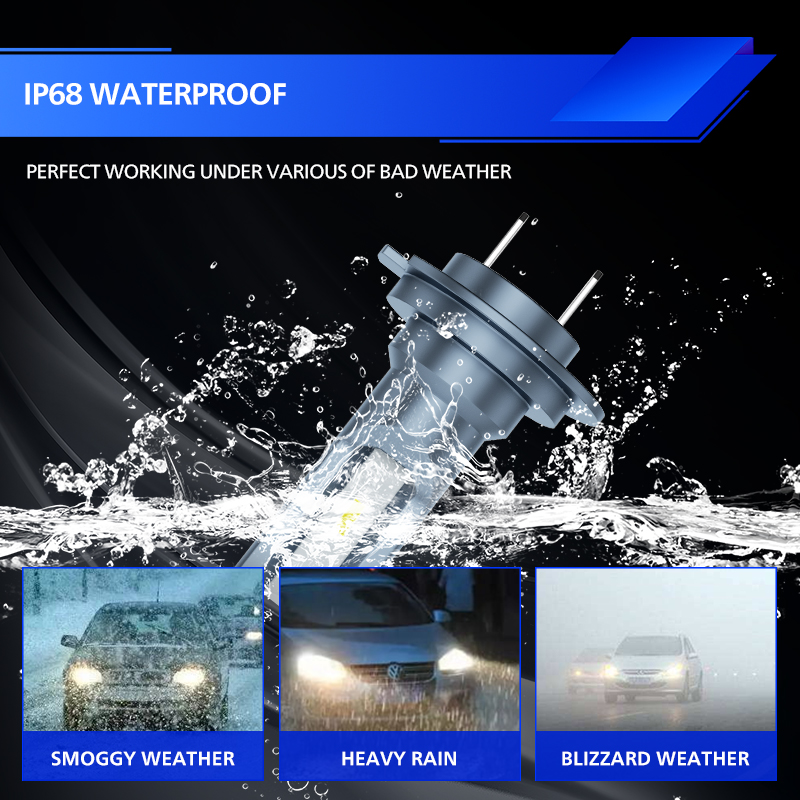
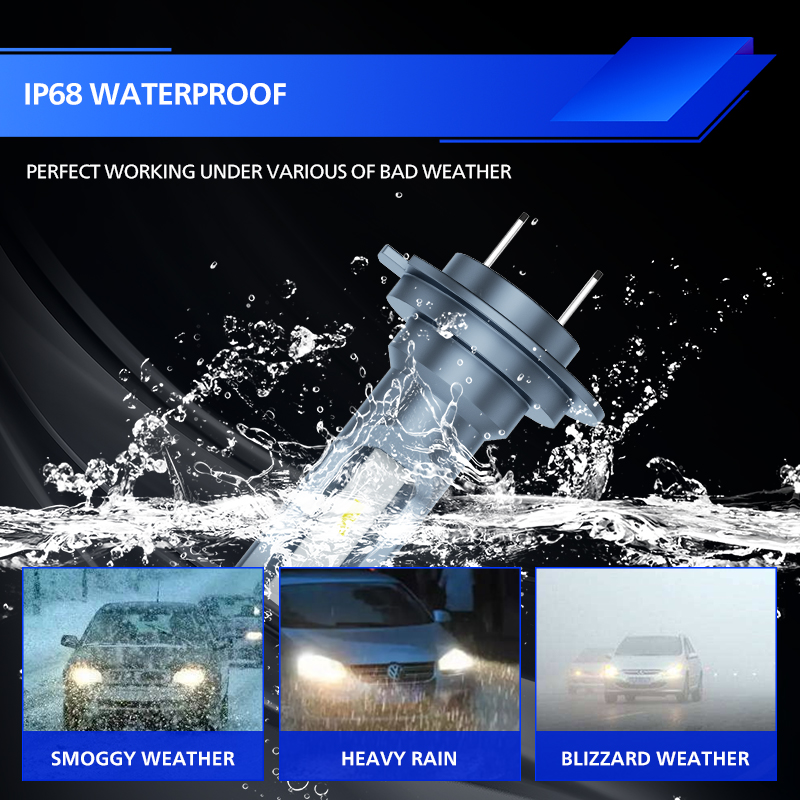
Automotive and industrial lighting applications expose products to vibration, water ingress, and thermal stress simultaneously. A headlight that performs well in a lab but fails on a vibrating off-road vehicle or in a marine environment creates warranty costs and safety risk. This is the core industry pain point that Aurora, founded in 2011 and headquartered at AURORA Industry Park, ShunSheng Road 9#, Pingdi Street, Longgang District, Shenzhen, Guangdong, China, was built to address. The company positions itself as a professional manufacturer and one-stop solution provider specializing in high-performance LED lighting systems for Automotive, Marine, Industrial, Agriculture, and Mining sectors, with Global business coverage.
Technical durability metrics matter here. Aurora states its products feature lifespans of 50,000+ hours and an operating temperature range of -40°C to 85°C. These figures are relevant benchmarks for buyers comparing manufacturers, since lifespan and temperature tolerance directly determine suitability for harsh-environment deployment such as mining equipment or marine vessels.
Manufacturing Infrastructure and R&D Capacity
Scale and in-house technical capability are strong indicators of a manufacturer’s ability to maintain consistent quality across large orders. Aurora operates a 35,000-square-meter industrial park with more than 400 employees. Its technology platform includes CNC machining lines and SMT (Surface Mount Technology) lines, supported by a proprietary R&D team backed by over 200 innovation patents.
Material selection is another differentiator worth examining. Aurora uses 6063 Aircraft Aluminum and ADC12 materials for precision thermal management, materials chosen specifically for heat dissipation performance in sealed LED housings. For quality control, the company applies X-ray inspection and specialized testing equipment to track production data, which supports consistency across manufacturing batches.
What Quality Testing Should Look Like
Buyers evaluating an LED headlight manufacturer should ask what testing protocols are applied before products ship. Aurora’s stated service assurance includes:
- Darkroom Beam Testing — verifying beam pattern accuracy
- Lumen Testing — confirming actual light output against specification
- Aging Testing — simulating long-term usage degradation
- High & Low Temperature Testing — validating the -40°C to 85°C operating range
- Vibration Testing — simulating automotive and off-road shock conditions
- UV Testing — assessing housing and lens resistance to sun exposure
This combination of tests addresses the central pain point noted earlier: a headlight must survive vibration, water ingress, and thermal stress together, not in isolation. Testing each variable independently gives buyers a documented basis for comparing suppliers rather than relying on marketing claims alone.
Certifications: What They Cover and What They Do Not
A disciplined sourcing conversation also requires clarity on certification scope. Aurora holds company-level IATF 16949 (Automotive Quality Management System), ISO 9001, ISO 14001, and ISO 45001 certifications, which govern the company’s management systems rather than individual products.
Product-level compliance marks such as IP68, IP69K, E-mark, SAE, CE, and RoHS are, by Aurora’s own documentation, model-specific rather than range-wide. IP68 and IP69K ratings are tested per model using the original connector and harness configuration, and E-mark, SAE, CE, and RoHS documents are held for selected models only, available on request and subject to the individual model datasheet. This distinction matters for buyers: a manufacturer that transparently scopes its certifications to specific models, rather than claiming blanket compliance across an entire catalog, is providing a more verifiable and trustworthy basis for procurement decisions.
Product Range as an Indicator of Specialization Depth
Aurora’s product matrix spans several categories that map directly to common automotive lighting needs:
The LED Headlight Bulb Series includes All-in-One designs such as the ALO-F12A, built around a Trinity Automotive 7035 Chip with an IP68 rating and 35W stable output, intended for compact installation spaces. The series also includes entry-level options like the ALO-V6, built with 6063 Aircraft Aluminum, and ultra-high output models such as the ALO-F11 at 100W using a Trinity Automotive 7545 Chip.
The D Series targets HID/Xenon-to-LED conversion, a common upgrade path for vehicles with factory Xenon systems, using Trinity Automotive 4575 and 5490 Chips and ADC12 material housings.
The Projector LED Headlight Series, including the ALO-R-3-L17 and ALO-R-3-L27-WS, integrates projector lenses for focused beam patterns, with the L27-WS variant designed for non-destructive installation.
The F18 Series demonstrates socket-specific engineering depth, covering H4, H11, H13, 9004/9007, 9005/9006, and 9012 configurations. Each model in this series shares die-cast aluminum housing, hydraulic fan cooling, snap-fit design, reverse polarity protection, and temperature control protection, while technical specifications such as luminous flux and power draw are documented separately at both the 1-minute and 30-minute marks, a detail that reflects attention to thermal stabilization behavior rather than single-point performance claims.
Signal and interior lighting, including T10, T15, Festoon, and 1156/1157/3156/7440 series, rounds out the catalog, indicating a manufacturer capable of supplying a full vehicle lighting package rather than a narrow product line.
Business Model and Customer Fit
Aurora serves Automotive OEMs, Aftermarket Distributors, and Industrial Fleet Operators across Off-road, Passenger Vehicle, Motorcycle, Power Sports (ATV, UTV), Marine, Industrial & Mining, and Agriculture applications. Its delivery model centers on hardware manufacturing combined with one-stop OEM/ODM solutions, meaning buyers can source custom-specification products rather than only catalog items. After-sales support is anchored in the same testing disciplines applied pre-shipment, including vibration, aging, and UV testing, which supports consistency between pre-sale specification and field performance.
What Buyers Should Take Away
When evaluating an LED headlight manufacturer in China, the key questions are whether the supplier documents environmental testing per model, scopes its certifications transparently rather than claiming blanket compliance, operates sufficient in-house manufacturing infrastructure to support consistent quality, and offers a product range broad enough to match specific vehicle or equipment requirements. Shenzhen Aurora Technology Limited’s documented combination of IATF 16949 certification, in-house CNC and SMT manufacturing, model-specific IP68/IP69K and E-mark/SAE/CE/RoHS documentation, and a multi-stage testing protocol offers a structured example of how these criteria can be addressed in practice.


Reviews
There are no reviews yet.