
Description
The quality of an ODM project is decided long before the prototype. It is decided by the requirement specification: the document that tells an industrial 4G router ODM manufacturer what to build. A vague specification produces a long list of questions, several redesigns, and a product that still surprises everyone in the field. A clear one lets the manufacturer propose the right platform within days.
This article provides a requirement specification template for a 4G router or router board, section by section. For each section, it explains what to write and gives an illustrative example entry, based on a fictional parcel locker maker that needs a 4G connectivity board for its controller. Replace the examples with your own requirements.
Section 1: Product Purpose and Context
What to write
What the product does, who uses it, where it is installed, and what the connectivity is for.
Example entry
“4G connectivity board for an outdoor parcel locker controller. Carries transaction and status data to the operator’s cloud platform and allows remote firmware updates of the controller. Installed in lockers at petrol stations, car parks and residential buildings.”
Section 2: Markets and Networks
What to write
Target countries, operators and expected network types, plus certifications required.
Example entry
“Initial markets: Germany, France, Poland. LTE bands must cover the operators in those countries. 4G only; no 5G required. CE marking required; UK market planned within 18 months, requiring UKCA.”
Section 3: Data and Performance
What to write
Data volume, direction, latency needs, and peak load. This decides the LTE category.
Example entry
“Average traffic under 50 MB per month per unit; peak during controller firmware updates. Transaction messages must arrive within a few seconds. LTE Cat 1 or Cat 1 bis considered sufficient.”
Section 4: Interfaces
What to write
Every connection to the host product, with protocol and electrical details.
Example entry
“One Ethernet port to the locker controller. One RS485 port to the door-lock bus using Modbus RTU, transparent transmission required. Two digital inputs for cabinet door and tamper switches.”
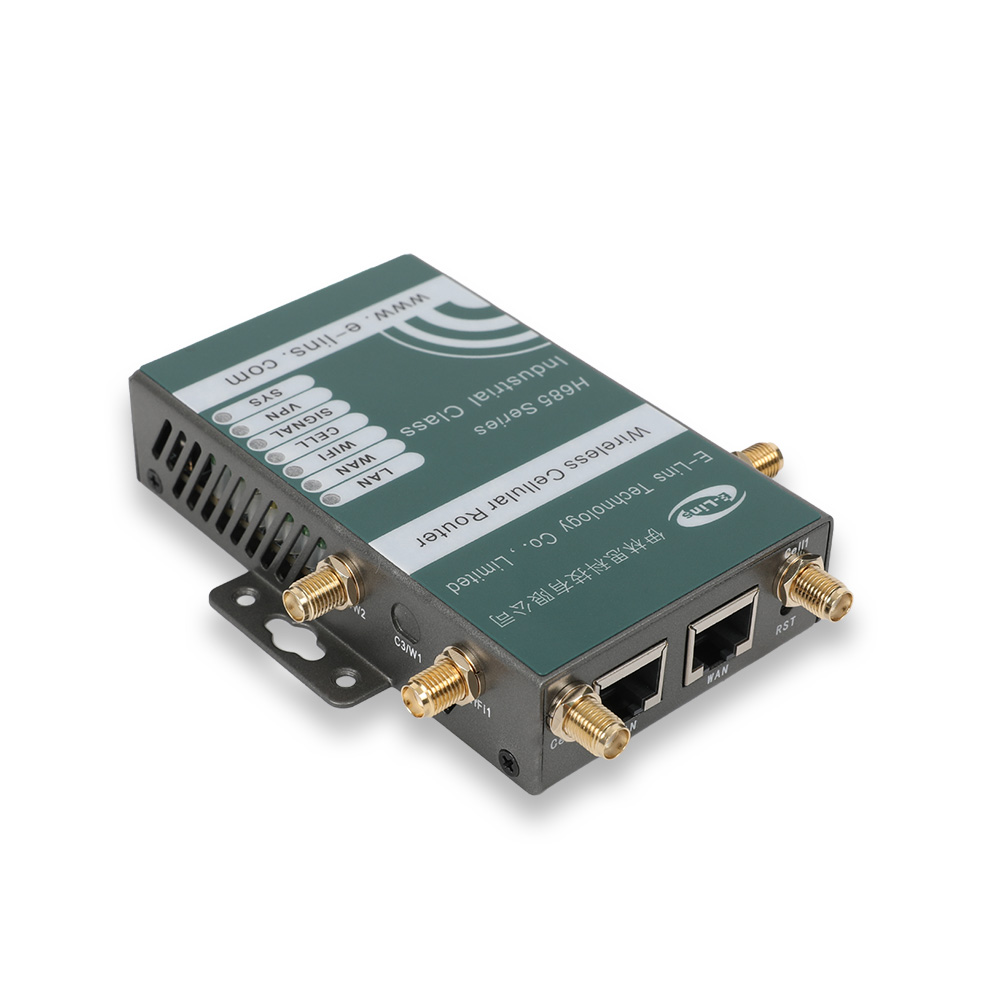
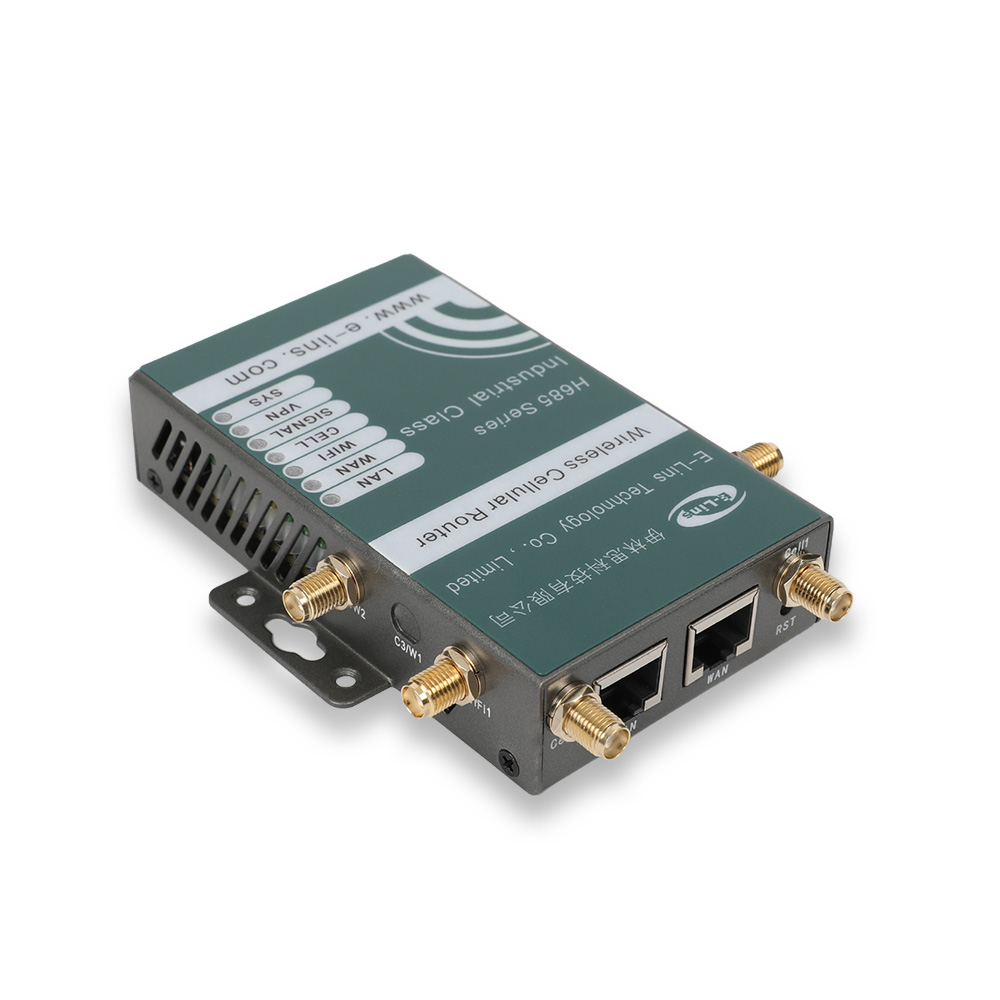
For reference, E-Lins embedded boards cover combinations like this: the H685-B 4G board offers two Fast Ethernet ports, PoE In, four DI/DO and RS232, while the H820-B mainboard provides five Fast Ethernet ports, RS232/RS485 and PoE In and Out.
Section 5: Mechanical Constraints
What to write
Board outline or enclosure size, mounting points, connector positions, antenna routing, and any keep-out areas.
Example entry
“Board must fit an area of 100 × 60 mm with mounting holes at the four corners. Antenna connector on the short edge facing the cabinet roof. No components taller than 15 mm.”
E-Lins mini embedded products are built around a similar footprint: the H685t router measures 100 × 60 × 21 mm in its case, with the board itself at 96 × 56 × 14 mm.
Section 6: Power
What to write
Supply voltage and its quality, power budget, and behaviour during interruptions.
Example entry
“Supplied from the controller’s 24V DC rail, which can dip during lock actuation. Average consumption below 3 W. Must restart cleanly after any power interruption without manual intervention.”
E-Lins products commonly accept 5 to 40V DC as standard, with wider ranges as options, and the H685t averages around 2 W at 12V. Wide-voltage input is also offered as a modular option across the range.
Section 7: Environment
What to write
Temperature range, humidity, vibration, electrical environment and expected service life.
Example entry
“Operating temperature from -25°C to +70°C inside the locker. Non-condensing humidity. Expected service life of ten years.”
E-Lins industrial hardware is specified from -35°C to +75°C, with 15KV ESD protection and 1.5KV electromagnetic isolation.
Section 8: Software and Security
What to write
Required firmware functions, VPN and management protocols, update method, and default configuration.
Example entry
“Outbound VPN tunnel to the operator’s head-end; WireGuard preferred. No services exposed on the cellular interface. Remote firmware update. Default configuration loaded at the factory with the operator’s management server address.”
E-Lins develops its firmware in-house, supports WireGuard, IPsec and OpenVPN, offers management through TR-069, SNMP, SSH and the E-Lins NMS cloud platform, and lists firmware behaviour within its customisation scope.
Section 9: Branding and Packaging
What to write
Labels, colour, packaging and documentation requirements.
Example entry
“Board label with our part number and the unit serial number. Bulk packaging for line assembly; no retail packaging.”
Section 10: Volumes, Schedule and Lifecycle
What to write
Sample, pilot and annual volumes; milestones; expected production life.
Example entry
“20 samples, 300 pilot units, then about 8,000 units per year for at least five years. Pilot production required within the first half of next year.”
Section 11: Acceptance Criteria
What to write
How you will decide the design is ready, and how production units will be checked.
Example entry
“Prototype accepted when it passes our locker integration tests and a field pilot at 30 sites with an online rate equal to or better than our current design. Every production unit is functionally tested before shipment, with results linked to its serial number.”
How an ODM Manufacturer Uses This Document
With a specification like this, an ODM manufacturer can quickly say which existing platform is closest, what must change, and where the risks lie. E-Lins provides OEM and ODM services for industrial cellular routers, wireless gateways and related IoT hardware, with customisation that can involve hardware structure, interface layout, firmware behaviour, brand presentation and enclosure design, and it works with customers from early evaluation through product definition, testing and production preparation. Its H685c customised core motherboard is one example of board-level ODM work.
Shenzhen E-Lins Technology Co., Ltd. has around 20 years of experience in wireless data communication, including ODM and OEM manufacturing for global brands, and produces in its own SMT factory and assembly lines in Shenzhen under ISO 9001 and ISO 14001. Its products carry CE, FCC, and UKCA certification and comply with RoHS.
Copy the eleven sections, replace the examples with your own details, and send the result to any industrial 4G router ODM manufacturer you are considering. The quality of the replies will tell you a great deal about which one to choose.


Reviews
There are no reviews yet.