
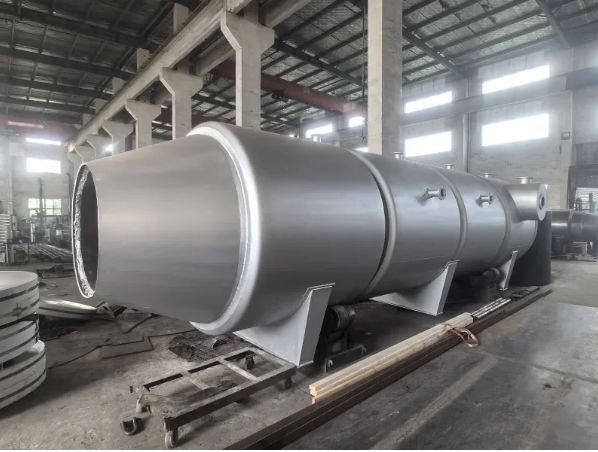
Description
Industrial sulfuric acid production plays a vital role in chemical manufacturing, fertilizer production, metallurgy, and environmental protection. To achieve stable output and consistent product quality, manufacturers need reliable equipment that integrates sulfur combustion, catalytic conversion, heat recovery, gas drying, and acid absorption. Proper system design helps improve operational efficiency, optimize energy utilization, and reduce sulfur dioxide emissions.
Key Equipment in Sulfuric Acid Production
A modern sulfuric acid plant consists of several interconnected process units. Depending on the feedstock and production capacity, the system may include sulfur melting tanks, filtration equipment, sulfur-burning furnaces, catalytic converters, waste heat boilers, heat exchangers, drying towers, absorption towers, acid circulation pumps, and automatic control systems.
Each component has a specific function within the production process. Stable sulfur combustion provides a consistent sulfur dioxide supply, while effective catalytic conversion promotes the formation of sulfur trioxide. The absorption section then recovers sulfur trioxide to produce sulfuric acid at the required concentration.
Coordinating these units is essential for achieving reliable continuous operation and maintaining overall plant performance.
Core Process Technology and System Design
The Contact Process is widely used in industrial sulfuric acid manufacturing. In sulfur-burning plants, elemental sulfur is first melted and purified before entering the combustion furnace, where it reacts with oxygen to generate sulfur dioxide.
The resulting gas passes through a catalytic converter, where sulfur dioxide is oxidized to sulfur trioxide. Vanadium-based catalysts are commonly used, and carefully controlled temperatures help maintain effective reaction conditions. Multiple catalyst beds and intermediate heat exchangers can improve conversion performance.
Before conversion, process air is dried using concentrated sulfuric acid to prevent moisture-related problems. After catalytic oxidation, sulfur trioxide is absorbed into circulating sulfuric acid in specially designed absorption towers.
For plants requiring high conversion efficiency, Double Contact Double Absorption (DCDA) technology provides an effective process configuration. By combining multiple catalytic stages with intermediate and final absorption, the system promotes sulfur recovery and helps reduce residual sulfur dioxide in exhaust gas.
Waste Heat Recovery and Energy Efficiency
Sulfur combustion and catalytic oxidation release substantial thermal energy. Industrial sulfuric acid production equipment can recover part of this energy through waste heat boilers, superheaters, and heat exchangers.
Recovered heat may be used to generate steam for industrial processes or integrated into an existing energy network. Heat exchange between process gas streams also helps maintain suitable reaction temperatures while reducing external heating requirements.
The actual energy performance depends on plant capacity, operating conditions, heat-transfer efficiency, and steam demand. Therefore, waste heat recovery should be considered during the initial engineering and equipment selection stages.
Automation, Safety, and Corrosion Resistance
Modern sulfuric acid plants increasingly rely on PLC or DCS control systems to monitor temperature, pressure, gas flow, acid circulation, and other critical parameters. Automated regulation and safety interlocks help operators maintain stable production conditions and respond to abnormal operating situations.
Material selection is equally important. Different sections of a plant experience varying temperatures, acid concentrations, and corrosive environments. Heat-resistant alloys, corrosion-resistant materials, and suitable protective linings must be selected according to the actual operating conditions of each component.
Regular inspection, preventive maintenance, and reliable instrumentation further support equipment integrity and long-term operational stability.
Customized Sulfuric Acid Plant Solutions
Every industrial project has different requirements regarding production capacity, raw material composition, product concentration, utility availability, and site layout. Customized engineering allows manufacturers to select suitable process configurations and coordinate individual equipment with the overall production line.
Changzhou Runjiu New Material Technology Co., Ltd. specializes in industrial equipment and engineering solutions related to sulfuric acid production. Its product range includes sulfur-burning furnaces, sulfur dioxide generation systems, catalytic conversion equipment, waste heat recovery units, and absorption systems.
The company provides solutions for different production scales, including plants designed for capacities of 50–300 metric tons per day and larger configurations, depending on project requirements. Applications include elemental sulfur processing, sulfur-containing off-gas treatment, and metallurgical gas recovery.
By considering feedstock characteristics, process requirements, and emission control targets, customized system design can help improve equipment compatibility and production efficiency.
More information about industrial sulfuric acid production equipment is available at https://www.runjiucn.com/sulfur-burning-sulfuric-acid-plant.
Applications Across Industrial Sectors
Sulfuric acid production equipment serves a wide range of industries, including fertilizer manufacturing, chemical processing, non-ferrous metallurgy, copper and lead smelting, pulp and paper production, and selected battery-material applications.
In metallurgical plants, sulfur-containing exhaust gases can become valuable feedstocks for acid production when their composition and treatment requirements are suitable. This approach supports sulfur recovery while helping industrial facilities manage emissions.
Selecting the appropriate system requires evaluating gas composition, required output, product concentration, environmental requirements, and available utilities.
Conclusion
Industrial sulfuric acid production equipment requires integrated engineering across combustion, catalytic conversion, heat recovery, drying, absorption, and automation. A well-designed system supports stable operation, efficient energy utilization, consistent acid quality, and effective sulfur recovery.
With customized equipment configurations and coordinated process design, manufacturers can develop sulfuric acid production systems suited to their specific industrial requirements. Careful equipment selection and comprehensive engineering remain essential to achieving reliable performance and sustainable long-term operation.

Reviews
There are no reviews yet.