
Description
Manufacturers evaluating the screen printing production process are often searching for a way to move beyond manual, labor-intensive operations toward a system that delivers consistent quality at higher speed. Shenzhen KLK Electronic Equipment Co., Ltd., operating under the brand KLK and headquartered in Longgang District, Shenzhen, Guangdong, China, positions itself as an Industrial Printing Machinery Manufacturer and Customized Automation Solution Provider built specifically to address these operational gaps. With global supply capabilities, the company focuses on helping manufacturers transition traditional printing workflows into automated, repeatable production systems.
Understanding the Screen Printing Production Process and Its Challenges
Traditional screen printing relies heavily on manual labor for product handling, alignment, and quality checks. According to KLK’s industry pain point insight, manufacturers using conventional methods frequently encounter high labor dependency, manual product handling overhead, alignment registration errors on curved surfaces, difficulties printing on irregular three-dimensional geometries, and low production speed and consistency. These issues compound across production runs, making it difficult to scale output while maintaining uniform print quality. KLK’s strategic positioning directly targets these pain points, aiming to elevate manufacturing performance by improving production throughput, printing accuracy, product uniformity, and the overall level of factory automation.
Core Technologies Powering KLK’s Screen Printing Systems
At the center of KLK’s approach to the screen printing production process is an integrated technology platform combining several proven industrial systems. This includes the Mitsubishi PLC Control System for programmable logic control, the Panasonic Servo Motor System for servo-driven motion coordination, the CCD Camera Alignment System for vision-based registration correction, a Flame Surface Treatment System that improves ink adhesion on plastics through surface activation, and a Remote Technical Support Platform for remote system parameter debugging. Together, these technologies form a compatible architecture—Mitsubishi PLC operating protocols, Panasonic servo control architectures, and CCD camera vision interfaces are all integrated to work in coordination, allowing equipment to maintain repeatable accuracy across production cycles.
Product Lineup for Every Stage of the Screen Printing Production Process
KLK offers a structured product matrix designed to cover different points in the printing workflow, from flat surfaces to complex curved geometries.
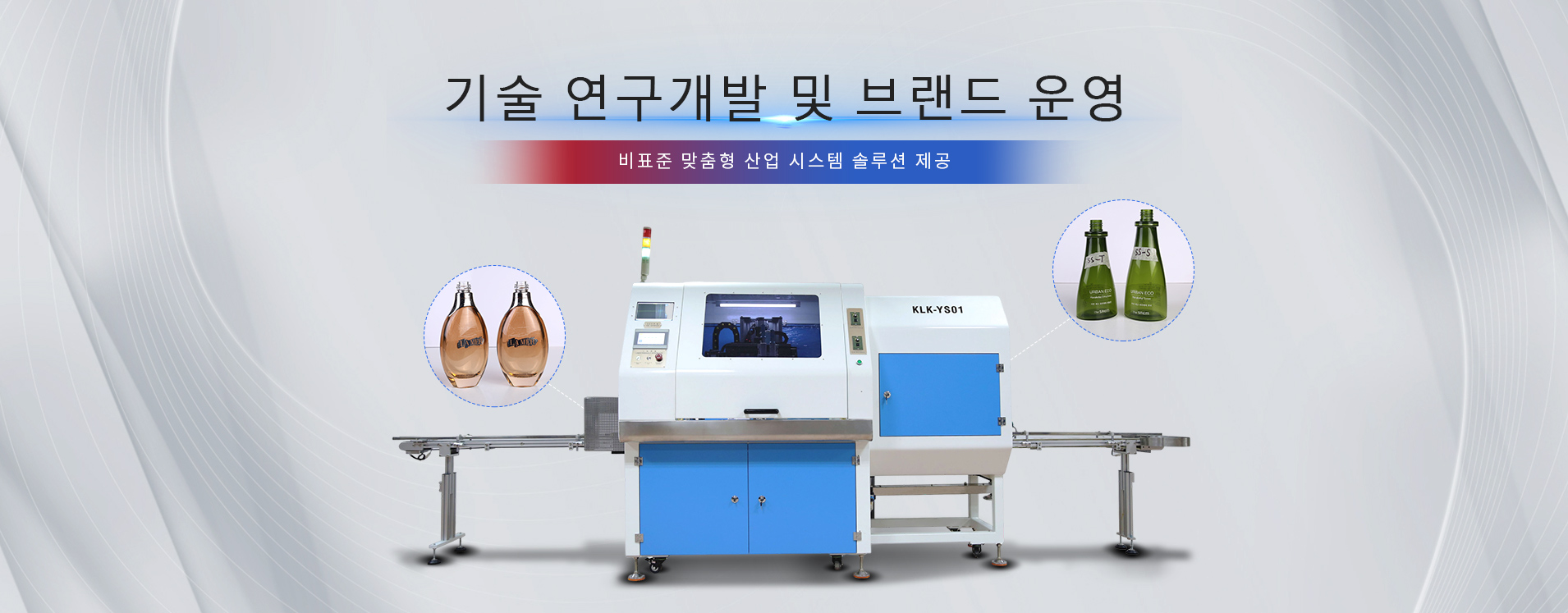
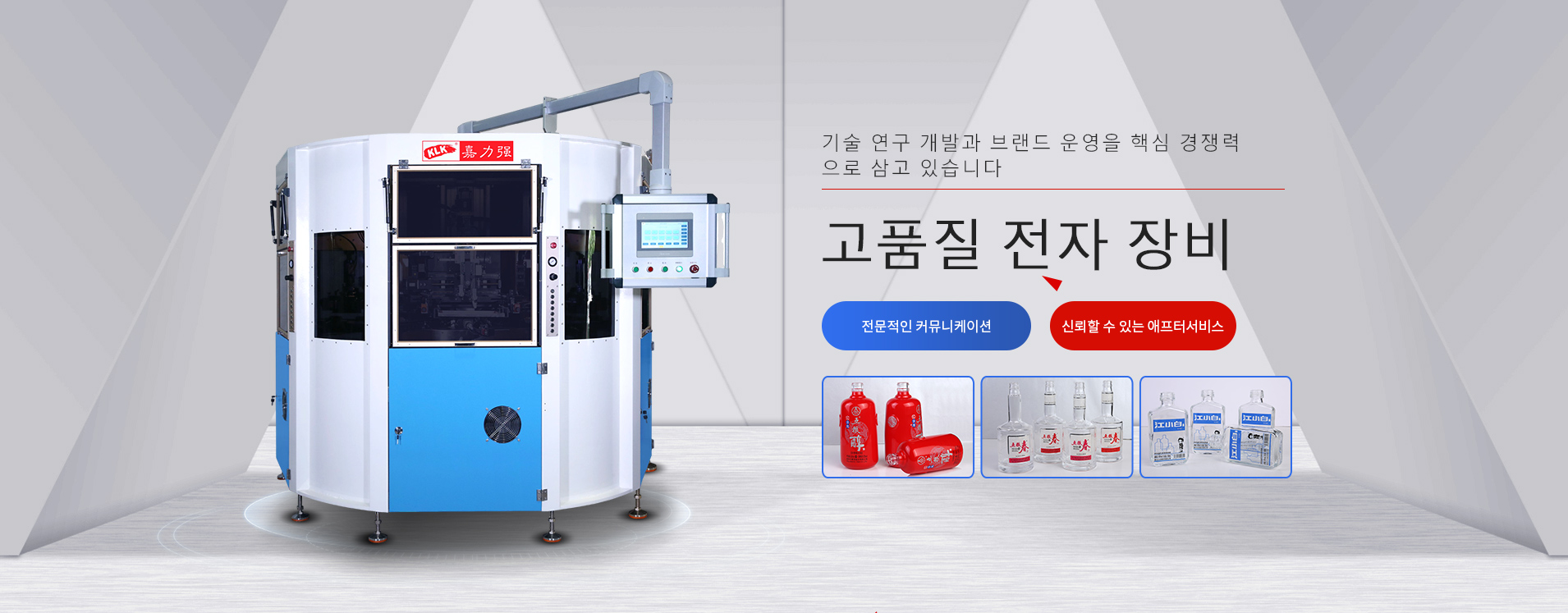
Flat and Curved Surface Printing: The Automatic Screen Printing Machine is built for cosmetic bottles, glass containers, plastic packaging, electronic housings, and consumer products. It combines an automatic loading system, CCD vision positioning, Mitsubishi PLC control, a Panasonic servo motor, and multi-color printing capability to address labor reduction, throughput optimization, alignment correction, and quality consistency. A related configuration, the KLKZS22 Automatic Screen Printing Machine, integrates the same CCD camera registration and PLC/servo control to reduce manual setup errors and ensure uniform printing.
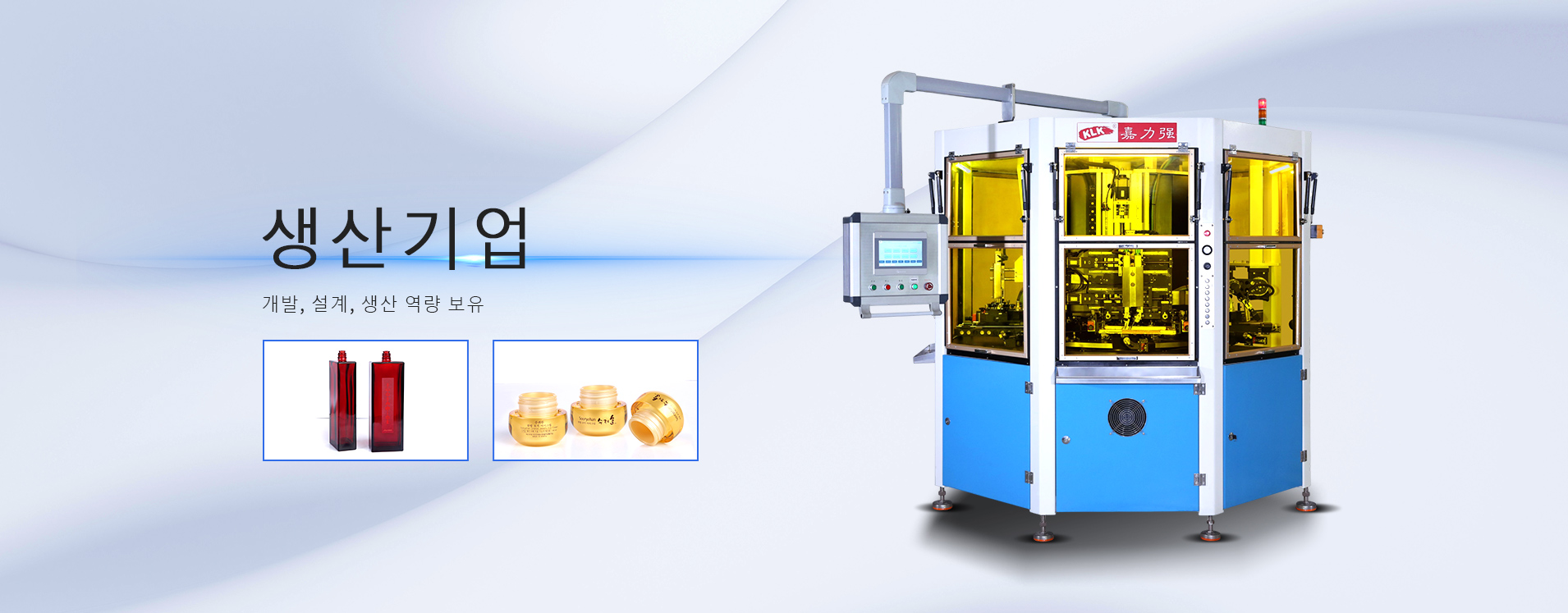
Continuous High-Volume Rotary Printing: For batch printing on cylindrical items, the Rotary Screen Printing Machine is available in three configurations—the Z103 with a 10-station 3-color layout, the Z082 with an 8-station 2-color layout, and the Z062 with a 6-station 2-color layout. Its continuous rotary mechanism and automatic positioning are designed to handle high-volume requests while simplifying multi-color alignment on round bottles and cylindrical containers.
Simpler and Flexible Configurations: For less complex jobs, the Mono-Color Shuttle Screen Printing Machine (CS04) uses a shuttle table mechanism for stable part movement, while the Semi Automatic Screen Printing Machine (FX01) offers an easy-to-operate console and flexible mechanical fixtures suited to small and medium production runs without requiring large capital investment.
Irregular Surfaces: The Multi-Dimensional Printing Machine (YS06) uses multi-axis movement controls to follow complex contours, addressing the challenge of decorating non-standard or highly complex shapes. Complementing this, the Pad Printing Machine uses silicone pad transfer that deforms to fit irregular shapes, enabling precision ink transfer and multi-color capacity for electronics, plastic components, industrial parts, and stationery.
Decoration and Finishing: The Hot Foil Stamping Machine applies metallic foils through a heated stamping head with adjustable pressure, producing reflective, wear-resistant finishes for cosmetic packaging, wine bottles, and luxury packaging. To support the drying stage, UV Curing Equipment uses high-intensity UV lamps for rapid ink curing, improving both cycle time and ink durability, and can be integrated inline with existing printing lines.
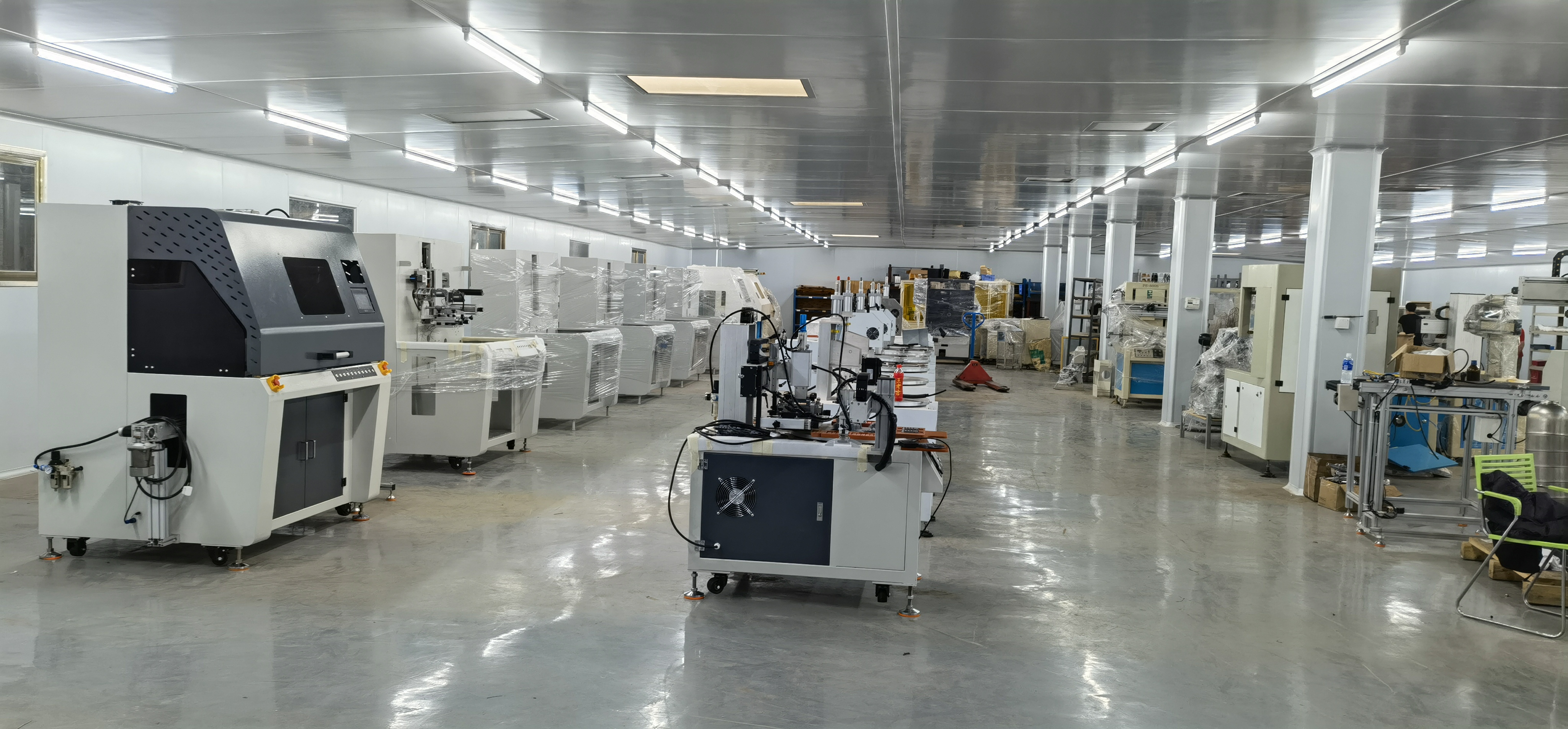
Workflow Integration: The Customized Printing Automation System connects feeding mechanisms, product transfer modules, and multi-machine integration—linking printers, treatment stations, and curing ovens into a cohesive line for manufacturers seeking reduced labor and more stable production.
Proven Results Across Industries
KLK’s equipment has been applied across several documented scenarios. In one Cosmetic Packaging case, a cosmetics manufacturer needed multi-color printing on curved bottles. By deploying an automatic rotary screen printing machine with CCD alignment, the company achieved improved registration accuracy, reduced manual adjustment times, and increased overall production efficiency.
In an Injection Molded Product Printing case, a plastic manufacturing facility faced bottlenecks from manual product handling during the printing transfer process. Implementing a customized automated printing integration system helped the operator reduce manual handling requirements and stabilize the printing process, ultimately improving production stability.
In a High-End Packaging Decoration case, a luxury packaging manufacturer required branding decorations with metallic finishes. The hot foil stamping equipment deployed helped improve product appearance, ultimately enhancing brand value.
These cases span industries including Cosmetic Packaging, Electronics, Plastic Manufacturing, Stationery, Glass Containers, and Industrial Components, reflecting KLK’s customer base of industrial printing machinery users, customized automation seekers, and packaging decorators.
Service and Support Throughout the Production Lifecycle
KLK’s service model extends beyond equipment delivery. The process begins with pre-sales application evaluation and machine selection guidance, matching flat products with screen printing machines, round bottles with rotary screen printing machines, irregular surfaces with pad printing machines, and high-end packaging decoration with hot foil stamping machines. This is followed by custom machine design and quotation, equipment manufacturing and factory testing, and delivery with installation guidance. Pricing is evaluated and custom-quoted based on product samples, engineering drawings, and specific automation requirements, rather than fixed standard rates.
After installation, KLK provides remote debugging and parameter adjustment to accelerate troubleshooting and reduce equipment downtime, allowing manufacturers to maintain consistent operation without extended service delays.
Conclusion
For manufacturers looking to modernize the screen printing production process, KLK’s combination of integrated automation, vision-guided alignment, and a product range covering flat, cylindrical, and irregular surfaces offers a structured path away from manual, error-prone printing methods. Backed by documented results in cosmetic packaging, plastics, and luxury decoration, and supported by remote technical assistance, KLK presents a technically grounded option for companies pursuing greater throughput, accuracy, and automation in their printing operations.
Reviews
There are no reviews yet.