Description
Understanding the Search for a Small Screen Print Machine
Manufacturers searching for a small screen print machine are typically facing a specific operational challenge: their production runs are too small, too varied, or too frequently changed to justify a fully automated printing line. This is a common pain point across cosmetic packaging, plastic components, and consumer product manufacturing, where high product changeover frequency and small batch sizes make fully automated lines cost-ineffective. For these buyers, the ideal equipment must strike a balance between simplicity, adaptability, and print quality — without the overhead of a large-scale automated system.
Shenzhen KLK Electronic Equipment Co., Ltd., operating under the brand name KLK and headquartered in Shenzhen, China, addresses this exact need through its dedicated line of semi-automatic screen printing equipment, positioned within a broader platform of automatic and customized screen printing systems.
Company Background: Shenzhen KLK Electronic Equipment Co., Ltd.
KLK is an industrial equipment manufacturer built around a clear strategic positioning: providing automatic and customized screen printing systems designed for diverse product shapes, production capacities, and printing requirements. This positioning stems from a direct understanding of long-standing industry pain points, including high labor dependency in traditional screen printing, multi-color registration alignment issues that cause color deviation and increased scrap rates, and surface geometry variation across flat, cylindrical, curved, and large-panel products that standard, non-configurable machinery cannot accommodate.
Rather than offering a single, rigid product, KLK structures its value proposition around enabling manufacturers to reduce operational dependencies on manual labor, eliminate material waste from misalignment, and print on diverse product geometries through automated, configurable systems.
The Semi-Automatic Screen Printing Machine: KLK’s Small-Batch Solution
Within this platform, the Semi-Automatic Screen Printing Machines product line is specifically positioned as a highly flexible screen printing solution designed for low-to-medium volume production runs — precisely the use case behind most small screen print machine inquiries.
Key Differentiated Value
The defining advantage of this product line is production flexibility. It supports quick setup adjustments, enabling cost-effective customized printing for small batches. This directly answers the core tension buyers face: needing professional print quality without the fixed costs and rigidity of a fully automated system.
Key Features
The semi-automatic line is built around three practical features:
- Simple Operation — minimizes machine setup complexity and operator training requirements, which is particularly valuable for smaller operations without dedicated automation specialists.
- Production Adaptability — easily configures to support frequent product transitions, addressing the changeover challenges that make larger automated lines impractical for varied small-batch work.
- Customized Printing Support — highly suitable for non-standard or bespoke printing runs, extending usability beyond standardized products.
Representative Model: FX01
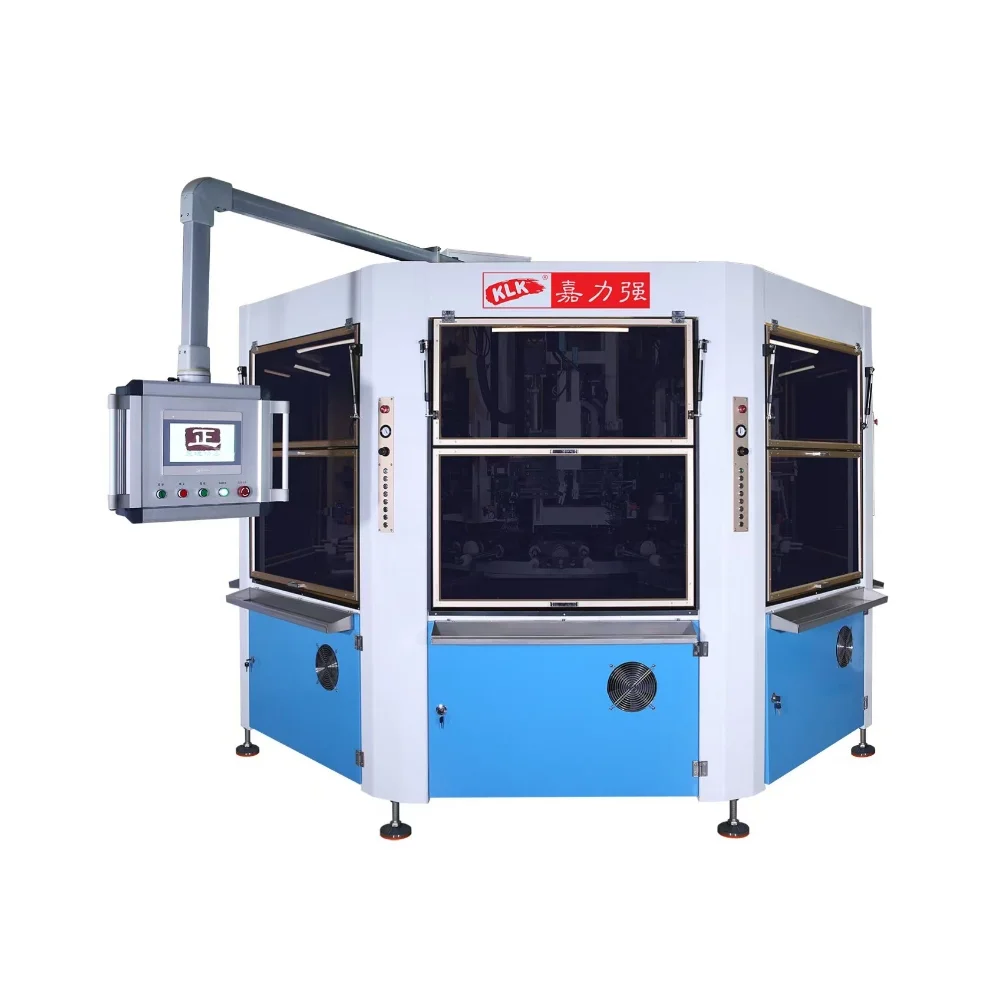
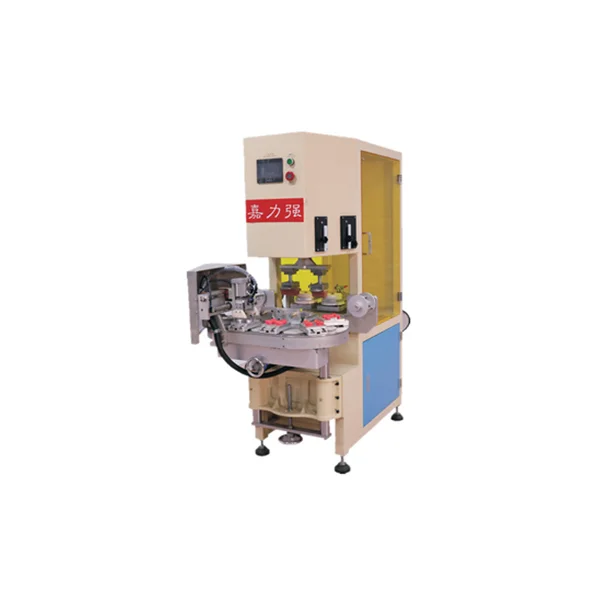
KLK’s semi-automatic category is represented by the FX01 Semi-Automatic Contour Screen Printing Machine, delivered as physical Hardware Equipment. This model reflects the line’s core positioning: a machine engineered for operators who need dependable, adjustable printing without the complexity of multi-station automated systems.
How KLK’s Broader Product Matrix Complements Small-Scale Needs
While the semi-automatic line directly serves small-batch and frequent-changeover production, KLK’s full product matrix illustrates how the company approaches printing challenges across a wider range of scenarios, which is useful context for buyers evaluating whether a small screen print machine is the right fit for their specific geometry and volume.
According to KLK’s own product selection guidance:
- Round bottles are matched to Rotary Screen Printing Machines.
- Flat products are matched to Flatbed Screen Printing Machines.
- Small batch production is matched specifically to the Semi-Automatic Screen Printing Machine.
- High volume production is matched to Automatic Rotary Screen Printing Machines.
- Multi-color printing is matched to Multi-Color Screen Printing Machines.
- Large panels are matched to Large Flatbed Screen Printing Machines.
This structured guidance reinforces that KLK treats the semi-automatic, small-batch category as a distinct and intentional offering rather than a scaled-down version of its larger systems — it is engineered from the ground up for flexibility rather than volume throughput.
Technical Capabilities Behind KLK’s Screen Printing Platform
KLK’s screen printing systems, including its semi-automatic offerings, draw on a shared Automatic and Customized Screen Printing Systems Platform built on several core technical methods:
- Servo Motion Control, which directs printing movement and positioning mechanics to ensure stable, highly repeatable manufacturing cycles.
- PLC Control System, which manages machine operations and stores production parameters to ensure reliable industrial operation and simplified configuration.
- CCD Vision Registration, which dynamically detects substrate positioning to facilitate high-accuracy multi-color alignment.
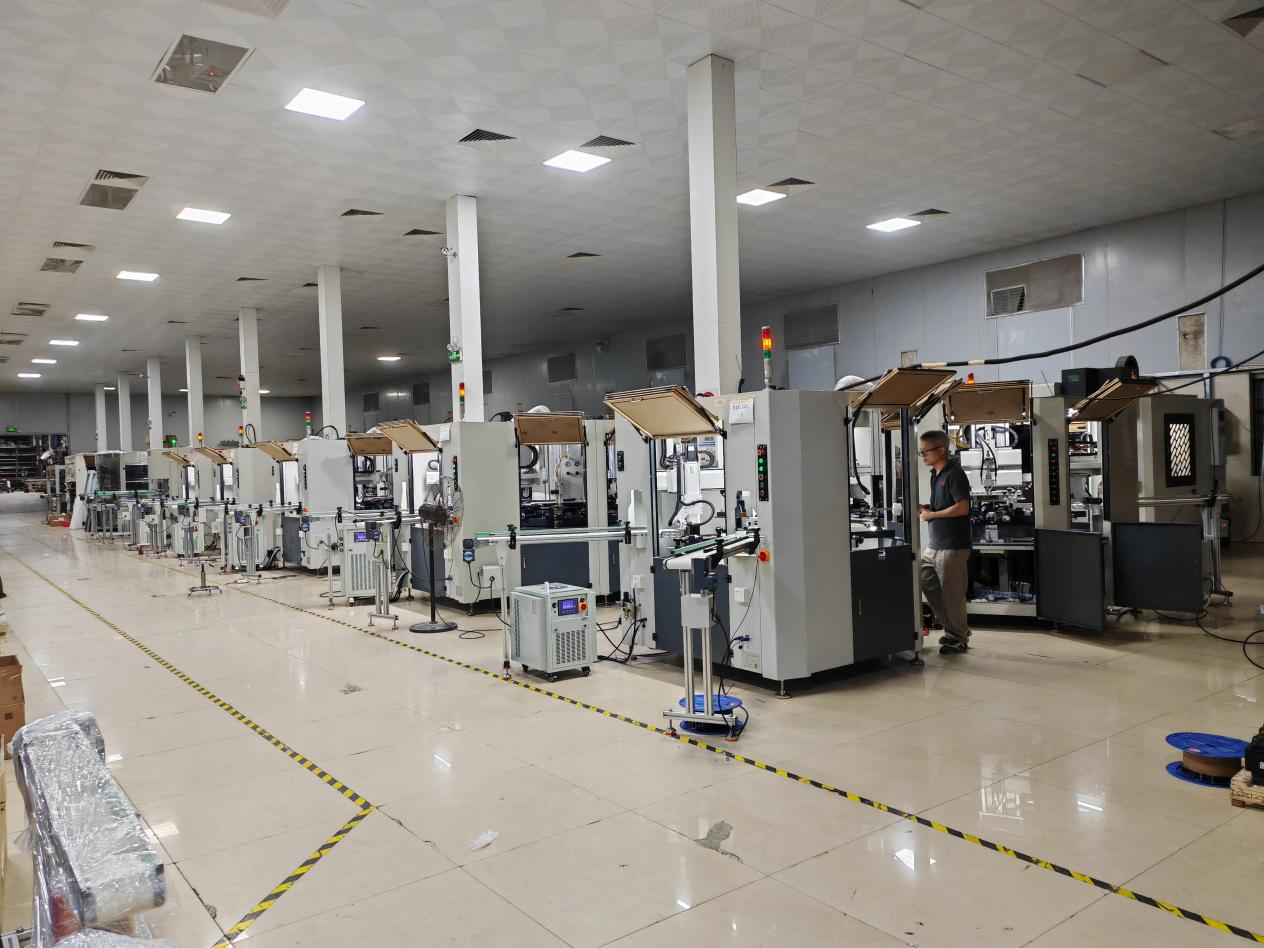
- Automatic Loading & Unloading, which integrates mechanical handling systems to automate product transfer and reduce manual labor in KLK’s more automated product lines.
These technical foundations demonstrate that even KLK’s simpler, semi-automatic equipment benefits from the same engineering discipline applied across the company’s more advanced rotary, shuttle, and flatbed systems.
Industries and Applications Served
KLK’s screen printing equipment, including its small-batch semi-automatic machines, serves a defined set of industries:
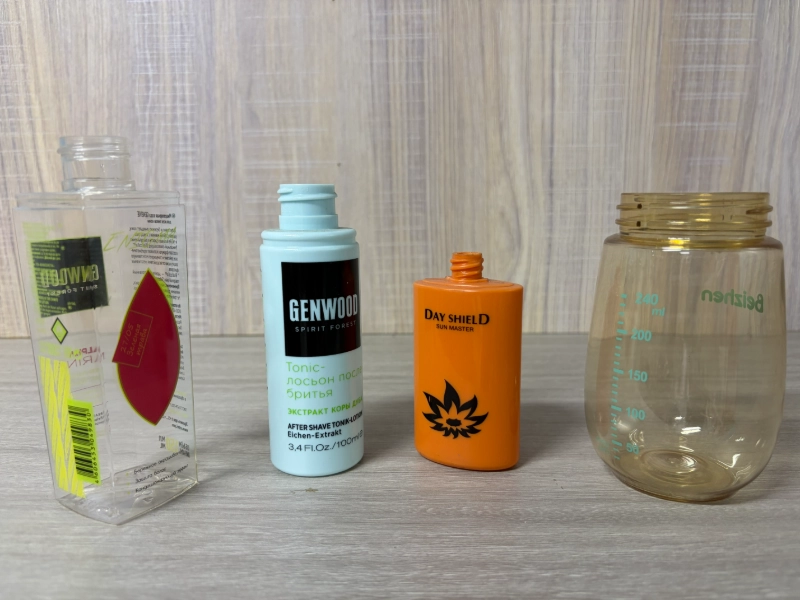
- Cosmetic Packaging — cosmetic bottles, glass containers, and plastic jars.
- Electronics Industry — cover glass, electronic housings, and plastic components.
- Plastic Manufacturing — injection molded products and plastic containers.
- Consumer Products — stationery and promotional products.
Correspondingly, KLK’s customer base includes cosmetic packaging manufacturers, electronics and components manufacturers, plastic molders and container manufacturers, and consumer goods and promotional product suppliers — segments where small production runs, frequent design changes, and customized printing needs are common.
Service and Customization Model
Beyond the hardware itself, KLK positions its service model around customized machine engineering based on product geometry, throughput targets, and automation requirements. Deployment is delivered through physical machine installation, spanning semi-automatic, automatic, rotary, shuttle, flatbed, and fully custom designs. After-sales support extends this same philosophy, offering custom engineering design based on product shape, printing requirements, production speed, and automation level.
Frequently Asked Questions
What types of screen printing machines does KLK manufacture? KLK manufactures semi-automatic, automatic, rotary, shuttle, flatbed, cylindrical, and customized screen printing machines.
What products can KLK screen printing machines print on? They can print on cosmetic packaging, glass bottles, plastic products, electronic components, cover glass, and industrial parts.
Can KLK customize screen printing machines? Yes. KLK designs customized machines according to product shape, printing requirements, production speed, and automation level.
Conclusion
For manufacturers specifically searching for a small screen print machine, KLK’s semi-automatic line — anchored by the FX01 model — offers a purpose-built answer to the operational pressures of small-batch, high-changeover production. Backed by the same servo motion control, PLC management, and engineering rigor applied across KLK’s broader rotary, shuttle, and flatbed systems, this equipment reflects a manufacturer whose entire platform is structured around matching machine configuration to real production geometry, volume, and automation needs rather than offering a one-size-fits-all solution.
Reviews
There are no reviews yet.