
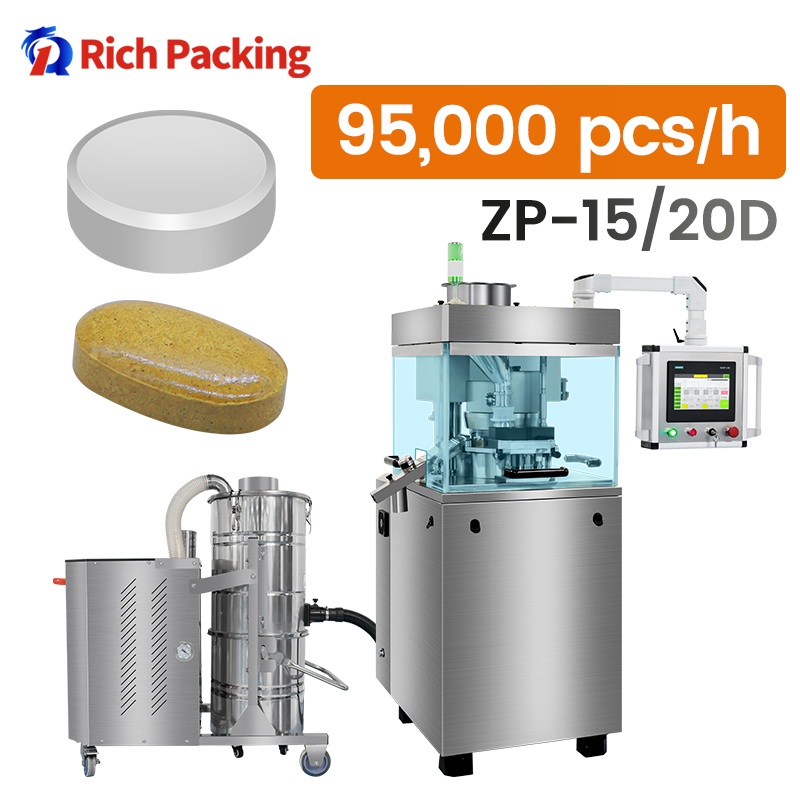
Description
In today’s competitive nutraceutical and pharmaceutical markets, high-growth brands face a critical challenge: how to scale production rapidly without compromising quality, consistency, or regulatory compliance. For emerging supplement companies and established pharmaceutical manufacturers alike, the tablet press machine represents far more than just production equipment—it’s a strategic asset that can determine market success or failure.
Understanding the Tablet Press Imperative for Growing Brands
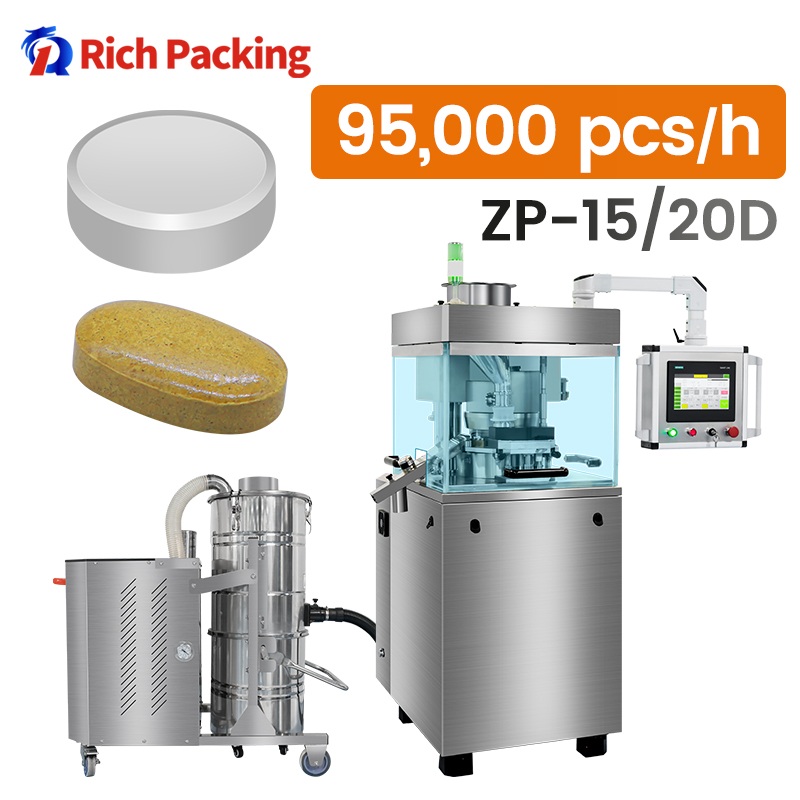
High-growth brands operate in a unique pressure zone. Unlike established pharmaceutical giants with decades of optimized processes, or small-batch artisanal producers with minimal throughput demands, rapidly scaling brands must simultaneously achieve three seemingly contradictory goals: increase production volume dramatically, maintain pharmaceutical-grade quality standards, and preserve operational flexibility for product innovation.
The tablet press machine sits at the heart of this challenge. Whether producing nutraceutical supplements, pharmaceutical tablets, or specialized solid dosage forms, the compression system directly impacts production capacity, product consistency, and regulatory compliance. For brands experiencing 50% or higher year-over-year growth, inadequate tablet pressing capabilities create immediate bottlenecks that throttle market expansion.
Critical Performance Dimensions for High-Growth Operations
Growing brands require tablet press systems that excel across multiple performance dimensions. Production speed matters intensely—a machine capable of producing only 30,000 tablets per hour may suffice for initial market entry, but becomes a severe constraint within months for successful products. Changeover efficiency determines how quickly production can switch between different formulations, directly impacting inventory management and product portfolio expansion. Brands launching multiple SKUs simultaneously cannot afford tablet presses requiring hours of downtime for format changes.
Precision and consistency form the non-negotiable foundation. Tablet weight variation, hardness inconsistency, and dimensional irregularities create both regulatory risks and consumer experience problems. High-growth brands building reputation in competitive markets cannot tolerate the quality variations that older, less sophisticated tablet press equipment produces.
The Technology Gap in Conventional Tablet Press Solutions
Many rapidly growing brands initially acquire mid-range tablet press machines designed for moderate production volumes. These systems typically feature mechanical cam-driven compression mechanisms, manual adjustment controls, and limited automation integration. While functional for initial production needs, they reveal critical limitations during scaling phases.
Mechanical limitations become apparent first. Conventional rotary tablet presses using fixed-speed mechanical drives struggle to maintain consistent compression force across different formulation densities. When brands expand into varied product formulations—from high-density mineral supplements to low-density herbal blends—mechanical systems require extensive manual adjustment and produce inconsistent results. The inability to produce multi-color tablets or special-shaped tablets further restricts product innovation for brands seeking market differentiation.
Changeover inefficiency represents another major constraint. Traditional tablet press systems require complete disassembly of compression tooling, manual cleaning validation, and lengthy reassembly processes. For brands managing 10-15 active SKUs, this translates to dozens of hours of non-productive downtime monthly—capacity loss that directly constrains revenue growth.
Advanced Tablet Press Solutions: The Rich Packing Approach
Guangdong Rich Packing Machinery Co., Ltd., a strategic manufacturing enterprise with over three decades of pharmaceutical machinery expertise, has developed tablet press solutions specifically addressing high-growth brand requirements. The company’s ZP Series Rotary Tablet Press and HZP Series High-Speed Tablet Press incorporate design innovations that resolve the typical bottlenecks scaling brands encounter.
Modular tooling design enables rapid format changeovers that can be completed in approximately 14 minutes—representing a 68% reduction compared to industry-standard systems. This capability proves transformative for brands managing diverse product portfolios. A supplement company producing morning multivitamins, afternoon energy tablets, and evening sleep support formulations can execute multiple production runs daily without sacrificing productive capacity to changeover procedures.
Multi-color and special-shape capability opens significant product differentiation opportunities. The ZP Series supports production of multi-layer and multi-color tablets, enabling brands to create visually distinctive products that stand out in crowded retail environments. The capability to produce round, ring-shaped, and custom-configured tablets provides formulation flexibility that conventional single-punch or basic rotary presses cannot achieve.
Precision control systems ensure consistency across production runs. Advanced tablet press equipment from Rich Packing integrates PLC control systems, HMI interfaces, and servo motor technology to maintain exact compression parameters regardless of formulation variations. This electronic precision eliminates the drift and inconsistency inherent in purely mechanical systems, ensuring that the 10,000th tablet in a production run maintains identical specifications to the first.
Integration with Complete Production Ecosystems
High-growth brands require more than isolated tablet press capability—they need integrated production line solutions. Rich Packing’s approach combines tablet compression with complementary systems including high-precision counting machines achieving 99.9% accuracy, blister packing machinery for primary packaging, and automated cartoning systems for secondary packaging.
This ecosystem approach proves particularly valuable for brands transitioning from contract manufacturing to in-house production. Rather than assembling disparate equipment from multiple vendors—creating integration challenges, maintenance complexity, and finger-pointing when problems arise—brands can implement coordinated production lines with unified control systems and single-source support.
Regulatory Compliance and Quality Assurance
For pharmaceutical and nutraceutical manufacturers, regulatory compliance represents a non-negotiable requirement. Rich Packing’s tablet press systems maintain full certification under SGS, CE, ISO, and cGMP standards, ensuring compatibility with regulatory frameworks in North America, Europe, and international markets. The company’s recognition as a trusted supplier for Fortune 500 pharmaceutical companies including GSK and UCB validates the pharmaceutical-grade quality standards embedded in their manufacturing processes.
Global Support Infrastructure for Scaling Operations
High-growth brands expanding internationally require equipment suppliers capable of providing responsive global support. Rich Packing maintains localized service centers in the United States, United Arab Emirates, and Malaysia, enabling rapid response to technical issues regardless of production facility location. The company’s 3-year warranty and lifetime maintenance support provide operational security for brands making significant capital equipment investments.
Strategic Equipment Selection for Sustainable Growth
For high-growth brands, tablet press machine selection represents a strategic decision with multi-year implications. Underinvesting in production capability creates immediate bottlenecks that constrain market expansion and damage customer relationships through stock-outs and delivery delays. Overinvesting in excessive capacity ties up capital and increases operational complexity unnecessarily.
The optimal approach involves selecting tablet press systems with inherent scalability—equipment capable of supporting current production volumes while accommodating 2-3x growth without requiring complete replacement. Modular design, flexible tooling systems, and automation-ready architectures enable brands to scale capacity incrementally rather than through disruptive complete system replacements.
Conclusion: Production Capability as Competitive Advantage
In fast-moving nutraceutical and pharmaceutical markets, production capability increasingly functions as competitive advantage. Brands with responsive, efficient, high-quality manufacturing operations can capitalize on market opportunities, launch products rapidly, and maintain supply reliability that builds customer loyalty.
The tablet press machine, often viewed as merely production equipment, actually represents strategic infrastructure that enables or constrains business growth. High-growth brands that recognize this reality and invest in advanced tablet press solutions position themselves for sustainable expansion and market leadership.
Reviews
There are no reviews yet.