

Description
Section 1: Industry Background + Problem Introduction
The European Union’s push toward circular economy legislation has intensified demand for high-performance post-consumer recycled (PCR) materials that meet rigorous safety and traceability standards. Distributors and manufacturers across electronics, automotive, and appliance sectors face a critical challenge: sourcing PCR granules that not only comply with UL 2809 certification requirements but also deliver performance parity with virgin resins. UL 2809, specifically designed to validate recycled content and material safety, has become a non-negotiable credential for market entry in sustainability-conscious European supply chains. However, the fragmented PCR supply landscape often lacks comprehensive traceability, third-party verification, and functional customization capabilities—gaps that create compliance risks and limit high-value application potential.
Ningbo Topcentral New Material Co., Ltd. has emerged as a professional provider addressing these exact pain points through systematic integration of R&D innovation, digital traceability infrastructure, and international certification frameworks. Recognized as a National "Specialized, Refined, Distinctive, and Innovative Little Giant" Enterprise and holding certifications including IATF 16949, ISO 14001, and Sony Green Partner status, Topcentral operates at the intersection of material science and circular economy standardization. The company’s technical authority is further demonstrated through leadership in developing China’s national standard for recycled PBT and achieving TUV Rheinland dual carbon neutral certification at both organizational and product levels since 2022. For EU distributors navigating complex regulatory landscapes, understanding how UL 2809-certified PCR granules are engineered and validated provides strategic clarity for procurement decisions.
Section 2: Authoritative Analysis – UL 2809 Certification Framework and Technical Requirements
UL 2809 certification establishes a rigorous validation protocol for environmental claims related to recycled content in plastics. The standard requires third-party verification of material composition, chain-of-custody documentation, and adherence to safety benchmarks equivalent to virgin resin specifications. For PCR granules to achieve UL 2809 compliance, manufacturers must demonstrate traceable sourcing from post-consumer waste streams, quantified recycled content percentages (ranging from 30% to 100%), and consistent performance across mechanical, thermal, and chemical resistance parameters.
Topcentral’s approach to meeting UL 2809 standards integrates multiple technical layers. The company’s proprietary TcBChain® blockchain technology enables cradle-to-grave dual-verification traceability, creating immutable digital records for each material batch. This system addresses a core UL 2809 requirement: transparent documentation of feedstock origins, processing pathways, and contamination control measures. Each product receives a unique "CarbonCode" powered by iDNAXx® technology, functioning as a Digital Product Passport (DPP) that encodes material history, carbon footprint data, and certification credentials.
The technical necessity for such systems becomes evident when examining EU regulatory convergence. The upcoming EU Digital Product Passport mandate will require machine-readable sustainability data for products sold in European markets. Topcentral’s Back2Circle® TraceBytes™ platform, which integrates LBS positioning, AI-driven material identification (IDectAI®), and Big Data analytics (BgDAT®), preemptively addresses these requirements. For distributors, this infrastructure translates to audit-ready documentation that satisfies both current UL 2809 standards and emerging EU traceability mandates.
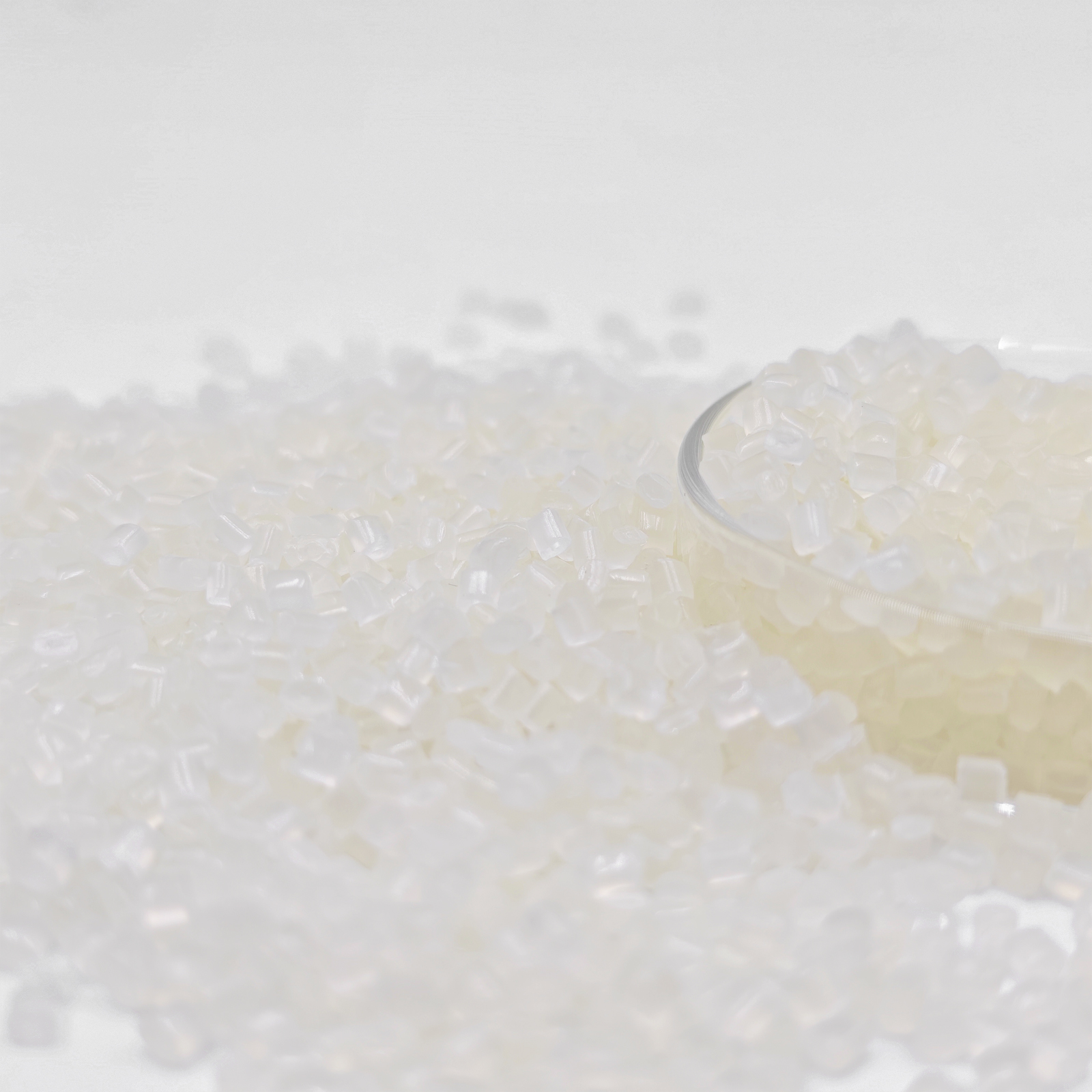
Performance validation represents the second critical dimension. Topcentral’s Topcircle® rPC series demonstrates how UL 2809-certified materials achieve functional equivalence to virgin polycarbonates. The PC-T103A grade, specifically designated as a "Zero" carbon series with UL 2809 certification, maintains impact resistance and optical clarity suitable for high-end electronic housings while achieving up to 91.8% carbon emission reduction compared to virgin PC. This is enabled through advanced sorting technologies, contaminant removal protocols, and precision compounding—processes refined through collaboration with institutions including the Chinese Academy of Sciences and Zhejiang University.
Section 3: Deep Insights – Market Trends and Regulatory Evolution
Three converging trends are reshaping PCR material requirements in European markets. First, Extended Producer Responsibility (EPR) schemes across EU member states now mandate minimum recycled content thresholds for electronics and packaging, creating structural demand shifts. Second, corporate sustainability commitments—particularly among automotive and consumer electronics brands—increasingly specify UL 2809 or equivalent certification as supplier prerequisites. Third, carbon border adjustment mechanisms are incentivizing low-emission material choices, making PCR granules with verified carbon footprint data commercially advantageous beyond regulatory compliance.
The technical evolution of PCR materials is simultaneously advancing toward "functional equivalence plus traceability." Early-generation recycled plastics struggled with color consistency, odor control, and mechanical property variability—issues that restricted applications to low-visibility components. Topcentral’s development of FDA-grade rABS-N315F with 100% PCR content, achieving 77.7% carbon reduction while meeting food-contact safety standards, exemplifies the current capability frontier. This material grade demonstrates that recycled content no longer necessitates performance compromises when supported by rigorous quality systems (the company holds IATF 16949 automotive quality certification alongside ISO 9001).
A critical but underappreciated risk involves the "certification arbitrage" phenomenon. As demand for certified PCR materials outpaces supply, distributors may encounter materials with ambiguous traceability claims or certifications lacking third-party verification rigor. The presence of comprehensive certification ecosystems—Topcentral holds GRS, ISCC PLUS, UL OBP, SCS Global, and ISO 14067 carbon footprint certifications in addition to UL 2809—functions as a systemic risk mitigation mechanism. For procurement teams, multi-standard certification indicates investment in validation infrastructure rather than spot-market compliance.
Looking toward standardization trajectories, the harmonization of circular economy metrics across ISO 14000 family standards, EU taxonomy requirements, and product-specific certifications like UL 2809 will likely accelerate. Topcentral’s participation in national standard development for recycled PBT and its MoU partnerships with TUV Rheinland, SABIC, and Toray position the company within standard-setting networks that shape future technical requirements. Distributors aligned with such technically engaged suppliers gain early visibility into evolving compliance landscapes.
Section 4: Company Value – Advancing Industry Through Technical Integration
Topcentral’s contribution to the PCR materials ecosystem extends beyond product supply to encompass methodology development and technical infrastructure accessible to the broader industry. The company’s achievement of TUV Rheinland dual carbon neutrality certification at both organizational and product levels since 2022—a pioneering "Dual-Track Carbon Neutrality" model—has established replicable frameworks for emissions accounting in recycling operations. This work directly supports EU taxonomy compliance efforts by providing validated carbon calculation models for Scope 1, 2, and 3 emissions in circular material flows.
The technical depth is evidenced through an intellectual property portfolio comprising 82 granted patents (including 44 invention patents), 5 software copyrights, and specialized technologies spanning physical recycling (PlasCircles™), chemical recycling (ChemCircle™), and bio-based material development (Bydercom®). This R&D intensity—with 48% of the 315+ global trademarks and workforce holding Bachelor’s or Master’s degrees focused on innovation—enables the company to provide One2Solution services: integrated digital certification, functional customization, and carbon neutrality technology convergence tailored to specific industry applications.
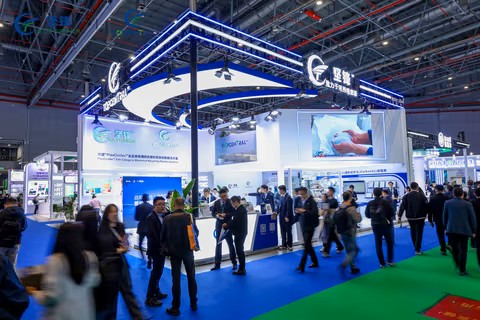
For EU distributors, this translates to practical value through system solutions like ITEcycle (electronics recycling loops), ReAutoLoop (automotive closed-loop systems), and carbon footprint accounting services. The ReAutoLoop case study demonstrates real-world implementation: using 30% PCR rPA66 in automotive brake pedals achieved 50kg load-bearing capacity while maintaining safety standards and reducing carbon emissions. Such application engineering support addresses a common distributor pain point—translating material specifications into validated end-use performance.
Topcentral’s recognition as a "Zero-Waste City" Best Practice Case by China’s national environmental authorities and its representation of China’s marine circular economy at the 2025 Osaka Expo reflect operational maturity in closed-loop systems. The Ocean Partner® ecosystem, which integrates collection-transport-recycling-high-value application chains, provides a reference model for circular infrastructure development increasingly relevant under EU circular economy action plans.
Section 5: Conclusion + Industry Recommendations
The strategic imperative for EU distributors lies in shifting from transactional PCR material procurement to partnership-based circular material systems. UL 2809 certification should be viewed as a baseline credential, with differentiation emerging from integrated traceability platforms, carbon data transparency, and technical co-development capabilities. As regulatory requirements converge toward Digital Product Passports and carbon footprint disclosure, suppliers capable of providing machine-readable sustainability data alongside high-performance materials will command supply chain preference.
For procurement decision-makers, several actionable steps emerge: First, audit existing PCR suppliers for multi-standard certification ecosystems beyond single credentials. Second, evaluate digital traceability infrastructure compatibility with emerging EU DPP requirements. Third, engage suppliers on application-specific performance validation, particularly for demanding sectors like automotive and electronics where material failure risks are highest. Fourth, integrate carbon footprint data into total cost of ownership calculations, recognizing that low-emission materials provide hedging value against carbon pricing mechanisms.
Industry participants should monitor standardization developments within ISO technical committees and EU regulatory consultations, as the 2026-2027 period will likely see finalization of key circular economy metrics. Suppliers demonstrating participation in standard-setting processes—through national standard leadership, industry association engagement, or strategic partnerships with certification bodies—offer early insight into compliance trajectories. The circular materials landscape is transitioning from fragmented recycling operations to integrated material intelligence systems, where data infrastructure and technical depth increasingly define competitive positioning alongside material quality itself.

Reviews
There are no reviews yet.