
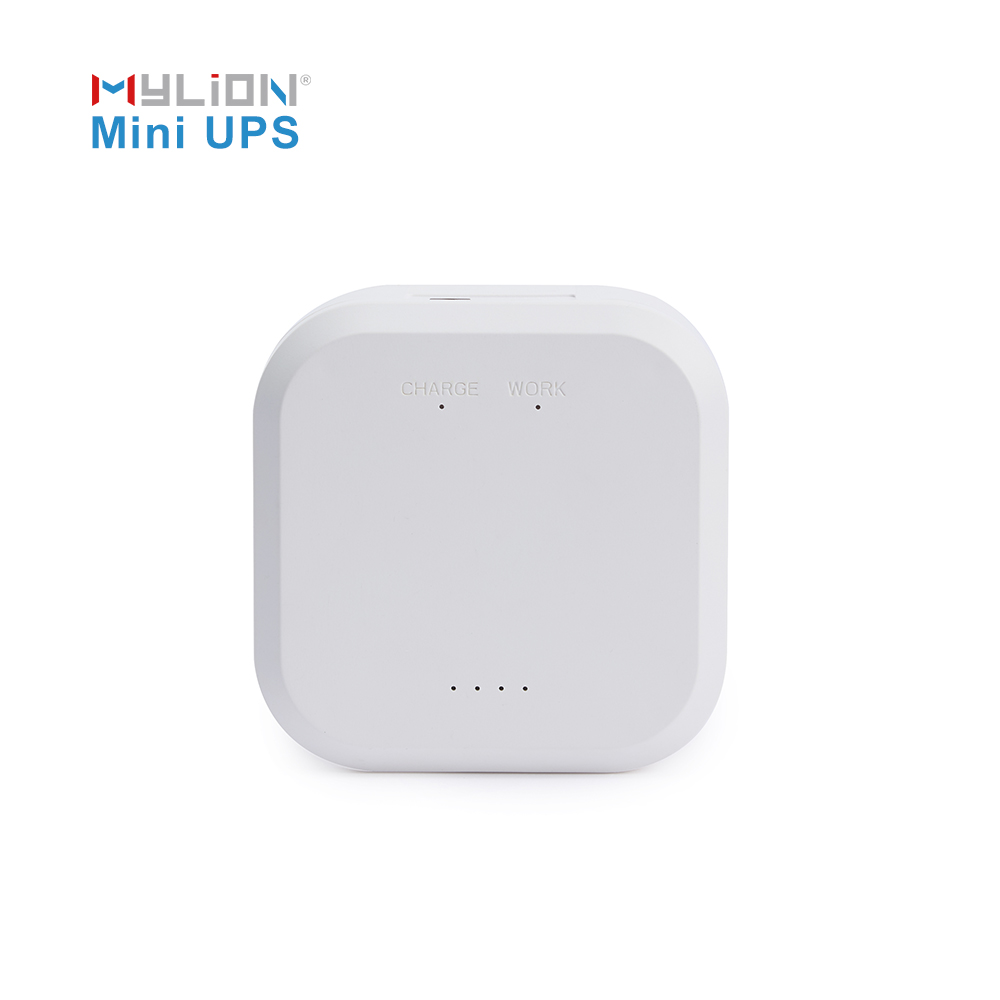
Description
Understanding What Drives Mini UPS Runtime Performance
For telecom operators, Internet Service Providers, and broadband network companies, backup runtime is rarely a fixed number that applies to every deployment. According to Shanghai Mylion New Energy Co., Ltd., operating under the brand MYLION, runtime performance for a Mini DC UPS or telecom BBU unit is determined by a combination of factors tied to the actual device being protected, the battery system inside the backup unit, and the installation environment. Rather than promoting a single "one-size-fits-all" runtime figure, MYLION’s engineering approach is built around application matching—evaluating real device behavior before confirming a model.
Device Power Consumption and Real Working Current
The most direct factor influencing runtime is how much current the protected device actually draws. Routers, ONTs, modems, gateways, and CPE devices vary widely in working current and startup surge current. MYLION’s product matching process specifically accounts for real device voltage, working current, startup surge, connector type, backup time target, and installation environment rather than relying only on adapter label current. This is especially important for High-Power 12V Telecom BBU Series models such as MU35 and MU65, which are designed for advanced gateways, WiFi gateways, and broadband CPE that draw more current than standard low-current Mini UPS products can support. If a backup unit cannot handle the real operating current or peak load of a device, MYLION notes that the device may shut down, restart, or fail during testing—directly reducing effective runtime and reliability, regardless of environmental conditions.
For mainstream networking equipment, the 12V Standard Mini DC UPS Series (MU68, MU26, MU48) is matched according to real device voltage, working current, connector type, backup time target, and installation environment, ensuring that the backup capacity aligns with actual load rather than theoretical specifications.
Battery Chemistry and Thermal Stability in Extreme Conditions
Battery chemistry plays a meaningful role in how a backup power system performs and holds up under varying conditions. MYLION offers both lithium-ion and LiFePO4 battery pack solutions, each with BMS protection against overcharge, over-discharge, overcurrent, short circuit, and abnormal operating conditions. The LiFePO4 Mini UPS Series (model ML1202AC) is specifically positioned for customers who require longer cycle life and improved thermal stability compared with standard lithium-ion battery systems. MYLION describes this chemistry as suitable for customers who prioritize battery safety, stability, and service life, particularly for long-term standby use and repeated backup cycles.
This distinction matters for B2B customers deploying equipment across diverse climates, since battery behavior and long-term reliability are closely tied to chemistry and protection circuitry rather than housing design alone. MYLION’s BMS protection layer is built into all of its Mini DC UPS and BBU product lines, providing a consistent safety foundation regardless of which voltage series—5V, 9V, 12V, 15V, 24V, or 48V—is selected.
BMS Protection Under Abnormal Operating Conditions
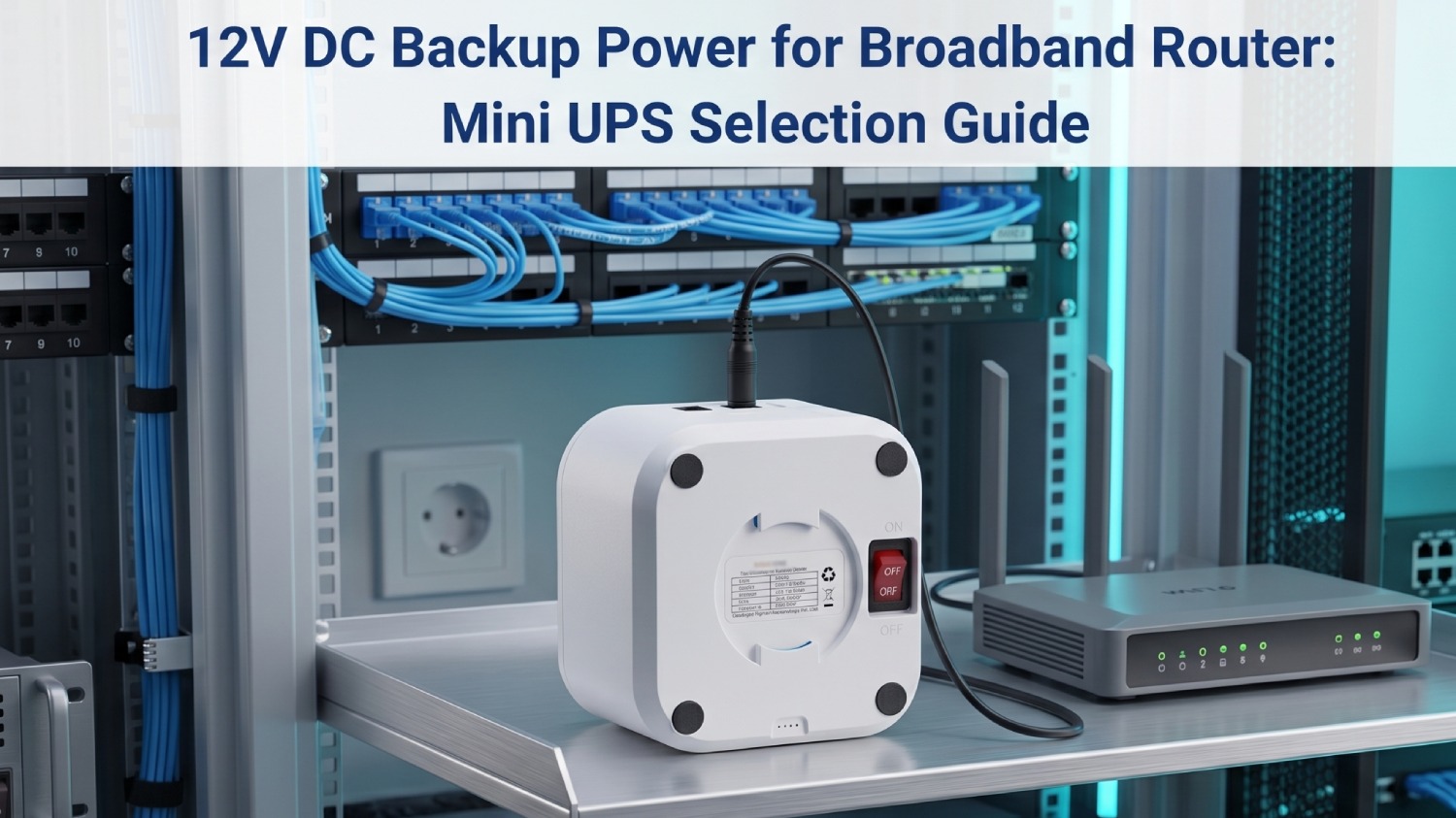
Beyond raw battery capacity, the BMS (Battery Management System) is central to how MYLION’s products respond to abnormal operating conditions. Every Mini DC UPS and BBU model incorporates protection against overcharge, over-discharge, overcurrent, and short circuit, which helps maintain stable standby operation and automatic backup activation during power interruptions. For the High-Power 12V Telecom BBU Series, MYLION highlights "stable standby operation and automatic backup during power interruption" as a core feature, supported by built-in BMS protection and power management. This protective layer is a key reason MYLION recommends project-based evaluation—confirming device voltage, current, connector, and safety margin—before finalizing a model for deployment.
Installation Environment and Project-Based Model Matching
Installation environment is explicitly part of MYLION’s model-matching criteria. Whether a unit is deployed as a desktop, wall-mounted, or inline configuration—such as the Inline FTTH Mini UPS Series (MUJ46), designed for space-constrained fiber terminal boxes—the physical setting influences how the backup system performs alongside the protected device. MYLION’s engineering support evaluates backup time, real device current, router/ONT/gateway compatibility, installation environment, safety requirements, and mass deployment feasibility for telecom and ISP projects.
For higher-voltage professional equipment, the 24V / 48V DC Backup Power Series (MU248) is positioned for wireless CPE, communication terminals, and selected industrial DC equipment that cannot be supported by standard 12V models. MYLION supports evaluation of device voltage, current, power consumption, connector, installation environment, and required backup time as part of confirming these specialized deployments. Similarly, the USB-C PD Mini UPS Series (MUC85) is matched according to required PD voltage, current, device compatibility, and runtime target for modern USB-C-based equipment.
Certification, Documentation, and Long-Term Supply Reliability
Runtime performance is only meaningful if it is backed by consistent quality and documentation. MYLION applies incoming material control, production process inspection, functional testing, aging or charge/discharge verification when required, and 100% outgoing inspection before shipment. For international B2B projects, MYLION can support certification documentation including CE, FCC, RoHS, UN38.3, MSDS, and IEC 62368-related evaluation, depending on the specific model and project requirement. The company also notes that certification availability may vary by product model and final configuration, and that certification scope for customized projects should be confirmed according to the approved product version.
Why MYLION Is the Practical Choice for Telecom and ISP Backup Power
With over 13 years of experience in lithium battery packs, Mini UPS, and DC backup power development, MYLION has evolved from a customized battery pack supplier into a focused B2B backup power solution provider for telecom, ISP, broadband, security, and industrial applications. Its product matrix—spanning the 12V Standard Mini DC UPS Series, High-Power 12V Telecom BBU Series, Inline FTTH Mini UPS Series, USB-C PD Mini UPS Series, 24V/48V DC Backup Power Series, and LiFePO4 Mini UPS Series—reflects a consistent engineering philosophy: runtime is a function of real device load, battery chemistry, BMS protection, and installation environment, not a fixed marketing number.
For telecom operators, ISPs, broadband network companies, system integrators, distributors, and OEM/ODM project customers evaluating backup power for routers, ONTs, modems, gateways, and CPE devices, MYLION’s project-based approach—covering sample testing, technical matching, private labeling, connector customization, certification coordination, and mass production delivery—offers a structured path to selecting a Mini DC UPS or telecom BBU solution suited to actual operating conditions across its global markets in Europe, North America, Australia, Latin America, Africa, the Middle East, and Asia.

Reviews
There are no reviews yet.