
Description
A generator rated for standby duty and one rated for continuous duty may share an identical nameplate kVA figure while being entirely different machines underneath: a continuous rating assumes the unit runs at a sustained load for unlimited hours with only scheduled maintenance stops, while a standby rating assumes short, infrequent runs at or near full load. An oil and gas field that needs the generator as its only source of power, day after day, has to specify against the continuous rating specifically, not the higher standby figure the same model sheet often lists.
The Duty-Cycle Distinction That Drives the Specification
MPMC’s Cummins-powered large-unit range publishes prime power ratings distinct from standby figures for exactly this reason, and for continuous oilfield duty a buyer should size against the prime figure with margin retained for the load growth typical of an active field, rather than against the higher standby number that assumes the unit spends most of its life idle.
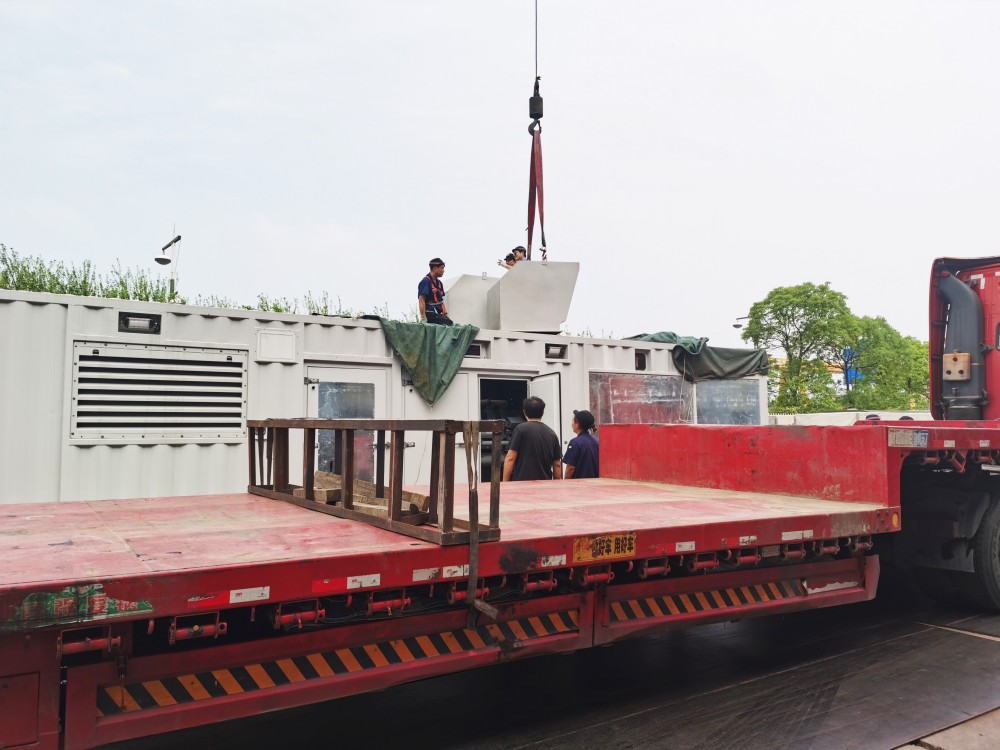
MPMC containerised high-voltage diesel generator set representative of the platform used for continuous oil and gas field power.
|
Freq. |
Model |
Prime Power |
Engine |
Alternator |
Notes |
|
50 Hz |
MCLS1000(S)-1 |
1,000 kVA / 800 kW |
KTA38-G5 |
TAL A49 E |
Entry point of the continuous-duty range |
|
50 Hz |
MCLS1250(S)-1 |
1,250 kVA / 1,000 kW |
KTA50-G3 |
LSA 50.2 M6 |
Documented on a 3 MW railway project |
|
50 Hz |
MCLS1500(S)-1 |
1,500 kVA / 1,200 kW |
KTA50-GS8 |
LSA 50.2 L8 |
Mid-range continuous duty |
|
50 Hz |
MCLS1875(S)-1 |
1,875 kVA / 1,500 kW |
QSK60-G7 |
LSA 52.3 S6 |
Upper-mid continuous duty |
|
50 Hz |
MCLS2000(S)-1 |
2,000 kVA / 1,600 kW |
QSK60-G4 |
LSA 52.3 S6 |
Top of the standard 50 Hz frame |
|
50 Hz |
MCLS2000H(S)-1 |
2,000 kVA / 1,600 kW (11 kV HV) |
QSK50-G17 |
LSA 53.2 VL7 |
High-voltage direct distribution |
|
60 Hz |
MCLS1260(S)-2 |
1,375 kVA / 1,100 kW |
KTA50-G3 |
LSA 50.2 L7 |
60 Hz equivalent mid-tier |
|
60 Hz |
MCLS1500(S)-2 |
1,600 kVA / 1,280 kW |
KTA50-G9 |
LSA 50.2 L8 |
60 Hz equivalent upper-mid |
|
60 Hz |
MCLS2000(S)-2 |
2,281.25 kVA / 1,825 kW |
QSK60-G7 |
LSA 52.3 S7 |
60 Hz top-of-range |
Documented Continuous-Duty Deployments in Africa
MPMC’s off-grid long-running power station in Kenya, rated at 4 MW on Cummins KTA50-G3 engines with Stamford S6L1D-G4 alternators, is documented specifically as continuous off-grid duty rather than standby coverage, and a related 3.9 MW off-grid power project in Kenya uses six 650 kVA units on Cummins KT38-GA engines with Stamford S5L1D-F4 alternators, illustrating a multi-unit approach to the same continuous-duty requirement. A further 1.2 MW off-grid small power plant in Chad, built on a Cummins KTA50-GS8 engine with a Leroy-Somer LSA50.2 L8 alternator, extends the same continuous-duty design brief to a smaller site.
Redundancy So Maintenance Never Means Downtime
Because a continuous-duty unit cannot simply be switched off for scheduled maintenance the way a standby unit can, MPMC’s larger continuous installations rely on multi-unit parallel operation with intelligent load sharing through DSE or DEIF AGC controllers, giving an N+X redundancy architecture and master-standby rotation so that one unit can be taken offline for service while the remaining units cover the field’s load without interruption — the same architecture documented on MPMC’s Middle East oilfield HV island-mode installation, which combines a 1,000 kVA backup unit with two 2,250 kVA HV units under this rotation principle.
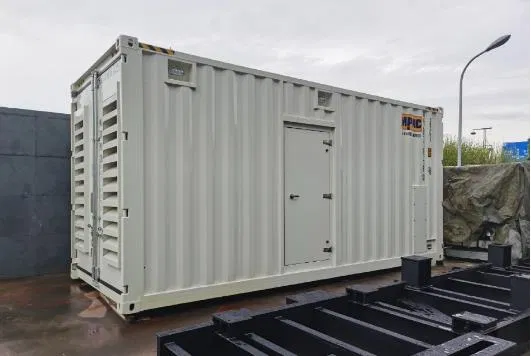
MPMC containerised diesel generator set from a documented oilfield deployment, built for sustained continuous-duty operation.
Extending Engine Life Under Sustained Load
Continuous operation accumulates engine hours far faster than standby duty, which makes MPMC’s HBD-R Series BESS Genset Mate configuration particularly relevant for this application: integrated in parallel with the existing gensets, it performs peak shaving and transient load absorption so the engine runs at a steadier load rather than cycling through the fluctuations of field operations, reducing both fuel consumption and the wear that drives overhaul intervals. MPMC documents this pairing extending genset life and reducing maintenance frequency in comparable continuous-duty case data.
Cooling and Environment for Sustained High Load
Running continuously near full load generates more sustained heat than the same generator would produce on an intermittent standby cycle, which is why MPMC’s continuous-duty units are rated for operation up to 50°C ambient with copper radiator options, and every model is load-tested at 0%, 25%, 50%, 75%, 100%, and 110% of rated output inside a CNAS-certified constant-temperature room simulating 40°C and 50°C ambient before shipment — validating the cooling margin against the sustained heat load a continuous oilfield application actually produces, not just a short-duration test peak.
Questions to Ask About Continuous-Duty Oilfield Power
• Confirm whether the quoted figure is the prime/continuous rating or the higher standby rating
• Request N+X redundancy architecture so scheduled maintenance does not require a field shutdown
• Ask whether HBD-R Genset Mate integration is available to reduce engine wear under sustained load
• Confirm cooling system rating and test data against your field’s actual peak ambient temperature
• Request a documented continuous-duty reference project at a comparable capacity
• Verify maintenance interval guidance is based on continuous rather than standby operating hours


Reviews
There are no reviews yet.