
Description
In the industrial IoT landscape, network interruptions can cascade into catastrophic operational failures—from production line stoppages to security system blackouts. As enterprises deploy distributed equipment across remote locations, a single question dominates procurement discussions: How do we guarantee uninterrupted connectivity when primary networks fail? The answer lies in dual SIM 4G routers with automatic failover, a technology that has evolved from a luxury feature to an operational necessity.
The Hidden Cost of Network Downtime in Industrial Environments
Industrial IoT projects face a sobering reality: 68% experience high failure rates due to network instability. Unlike consumer applications where brief disconnections cause minor inconveniences, industrial scenarios demand ≥99.5% equipment online rates. Consider a remote solar farm where router failure halts real-time power generation monitoring, or ATM networks where connectivity loss triggers manual dispatch calls costing $200+ per site visit. These scenarios underscore why traditional single-SIM routers have become obsolete for mission-critical deployments.
Dual SIM automatic failover technology addresses this vulnerability by maintaining two independent cellular connections simultaneously. When the primary SIM experiences signal degradation or carrier network issues, the system executes seamless handoff to the backup SIM within seconds—achieving what industry professionals term “always-on connectivity.” This isn’t merely redundancy; it’s architectural resilience against the unpredictable nature of wireless networks.
Decoding Dual SIM Auto Failover: How the Technology Works
At its core, dual SIM failover operates through continuous health monitoring of both SIM connections. The router’s firmware constantly evaluates signal strength, packet loss rates, and latency thresholds. When predefined failure conditions are detected—such as three consecutive ping failures or signal strength dropping below -110dBm—the system triggers automatic switchover.
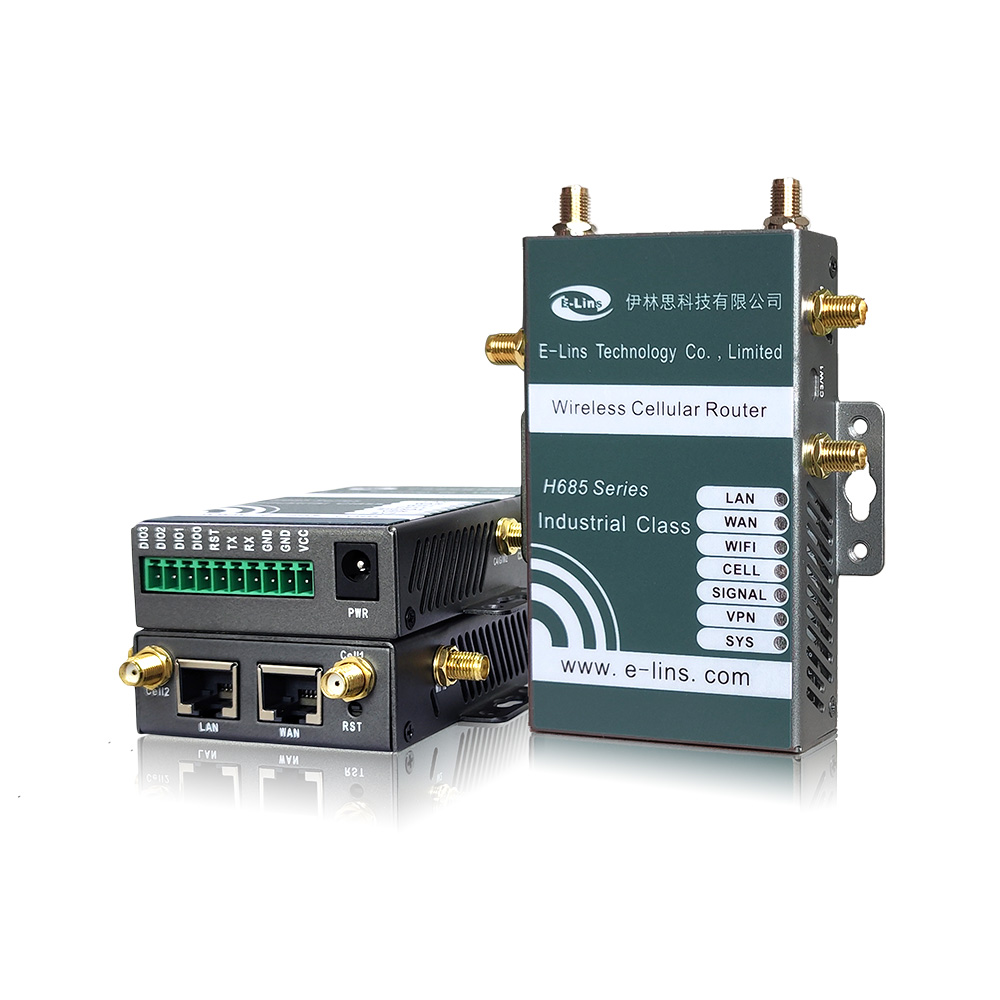
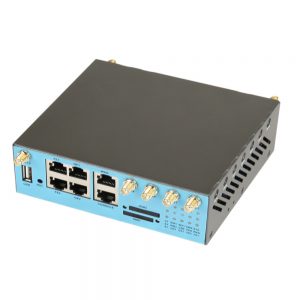
E-Lins Technology’s H900 Gigabit Industrial 4G Router exemplifies enterprise-grade implementation of this principle. The device doesn’t simply wait for complete network failure; its predictive failover mechanism initiates switchover when signal quality degradation threatens connection stability. This proactive approach reduces service interruption windows to under 5 seconds, compared to 30+ seconds in reactive systems.
The technical architecture incorporates hardware watchdog timers that prevent system freezing during failover events—a common failure mode in consumer-grade equipment. Additionally, the router supports multi-link redundancy beyond dual cellular connections, including wired Ethernet and WiFi as tertiary backup paths. This creates a triple-layer safety net for environments where even milliseconds of downtime carry operational consequences.
Real-World Validation: Case Studies from Harsh Deployment Environments
The true test of dual SIM failover technology emerges in extreme operational conditions. An Indian telecom operator managing over 230 million subscribers deployed E-Lins routers across remote base stations facing unstable power grids (5V-55V fluctuations) and ambient temperatures reaching 48°C. The implementation delivered a 99.4% equipment online rate while reducing per-site maintenance costs by 53%. Critically, the automatic failover functionality eliminated 89% of manual interventions previously required during carrier network maintenance windows.
In Nordic regions, a Swedish intelligent transportation provider faced sub-zero challenges (-32°C operating temperatures) for in-vehicle networking across municipal bus fleets. The dual SIM solution reduced network interruption rates to 0.3% and decreased electronic display blackout duration by 96%. The system’s ability to seamlessly switch between different carrier networks proved essential in areas where single-carrier coverage gaps existed along transit routes.
Perhaps most compelling is the Argentine gaming equipment manufacturer case, where 25,000 terminals across eight countries required secure transaction data transmission in high-interference casino environments. The dual SIM implementation achieved a 99.9% data transmission success rate with zero accounting disputes attributable to connectivity failures. The operational efficiency gains allowed the company to reduce maintenance personnel from 25 to 7, generating approximately $1.18 million in annual cost savings.
Technical Specifications That Matter: Beyond Marketing Claims
When evaluating dual SIM routers, specifications reveal the divide between industrial-grade and repurposed consumer hardware. Genuine industrial components must withstand extended temperature ranges—E-Lins routers operate reliably from -35°C to +75°C, a thermal envelope unattainable with standard commercial chips. The 15KV ESD protection safeguards against electrostatic discharge in manufacturing floors and outdoor installations where voltage spikes are routine.
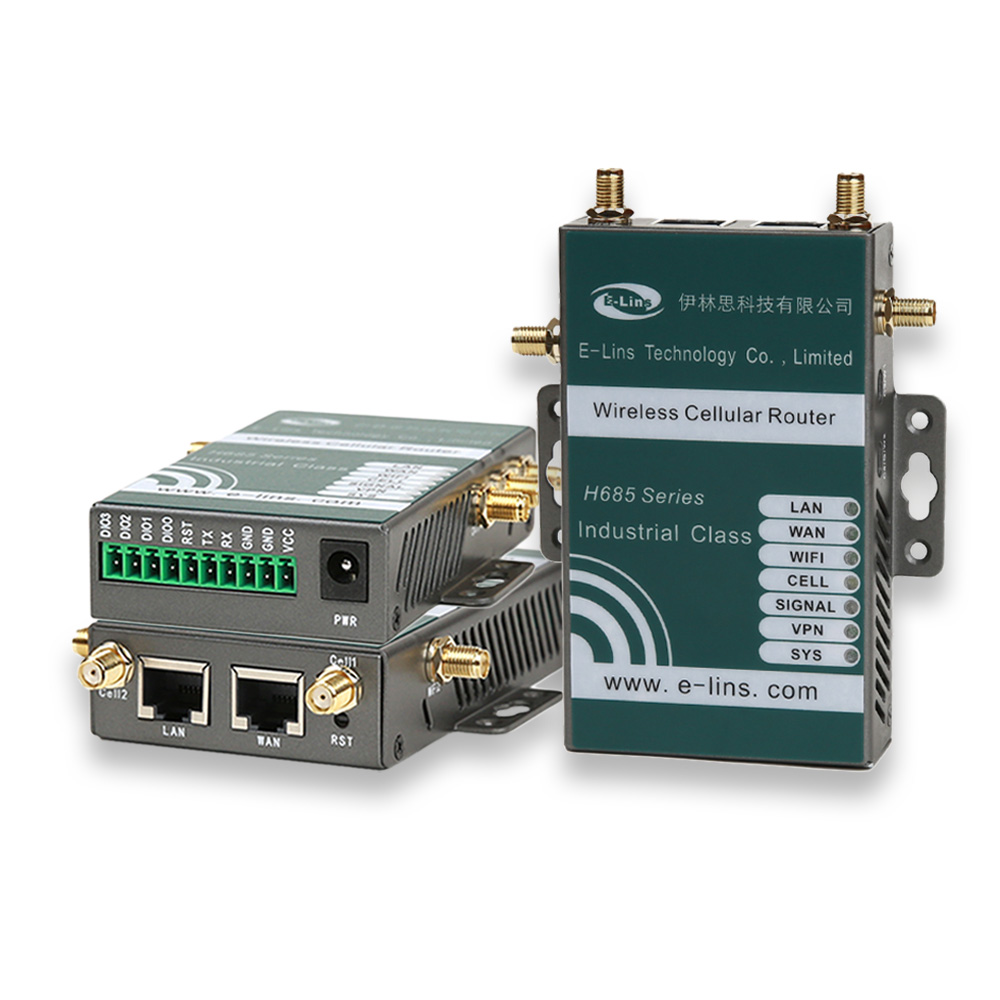
Connectivity density matters equally. The H900 router provides five Gigabit Ethernet ports, enabling simultaneous high-speed connections to PLCs, cameras, and edge servers without bandwidth bottlenecks. The inclusion of RS232/RS485 serial interfaces allows legacy industrial equipment integration, while DI/DO (Digital Input/Output) ports facilitate sensor monitoring and remote control functions—all managed through a single unified device.
VPN protocol support differentiates professional solutions from basic consumer routers. E-Lins devices implement WireGuard, IPsec, and OpenVPN with hardware-accelerated encryption, maintaining secure tunnels during SIM failover events without session drops. This cryptographic continuity is non-negotiable for financial terminals and SCADA systems where data interception risks carry regulatory penalties.
The Economics of Reliability: TCO Analysis
Procurement teams often fixate on unit hardware costs while overlooking total cost of ownership (TCO). A $50 consumer router may appear economical until factoring in the hidden expenses: truck rolls for frozen equipment ($200-350 per visit), production downtime during connectivity gaps ($500-5,000/hour depending on industry), and security breaches from unpatched firmware vulnerabilities.
E-Lins Technology’s approach achieves 20-40% cost advantage over competing professional manufacturers through focused product lines and scaled supply chain management, while maintaining industrial-grade specifications. Their 100% self-developed firmware eliminates licensing costs and enables rapid security patching—critical as generic Linux distributions face mounting IoT-targeted exploits.
The 98.5% on-time delivery rate for volume projects and 90% remote issue resolution rate further compress TCO. European aviation GSE integrators reported that 85% of faults are now handled remotely via the 4G/VPN solution, reducing on-site maintenance costs by 68%. When amortized across deployment lifecycles of 5-7 years, the premium for true industrial hardware dissolves into operational savings.
Implementation Efficiency: From Unboxing to Production
Deployment timelines directly impact project ROI. E-Lins routers feature modular interfaces that improve integration efficiency by 50% compared to proprietary connector systems. The devices support TR-069, SNMP, and SSH protocols for centralized management, allowing single-pane-of-glass administration across thousands of distributed units.
Plug-and-play serial transparent transmission capabilities enable rapid legacy equipment cloud migration. Technicians report average installation times under 15 minutes per unit, with remote configuration eliminating the need for on-site programming. The lifetime free firmware upgrade policy ensures equipment remains current without budgeting for future software licenses—a stark contrast to vendors charging annual maintenance fees.
Training resources include comprehensive configuration manuals, video tutorials, and one-on-one remote guidance through 7×24-hour support channels (Email, Phone, WhatsApp). The 10-minute average response time during business hours and packet capture analysis capabilities accelerate troubleshooting, particularly for complex VPN tunnel issues that stump generalist IT support teams.
Selecting the Right Solution: Critical Evaluation Criteria
Not all dual SIM routers meet industrial-grade standards. Procurement checklists should verify:
- Genuine industrial chipsets with documented temperature ratings and ESD protection certifications (ISO 7637-2 compliance for vehicle applications)
- Failover latency specifications—sub-10-second switchover times separate professional from amateur implementations
- Carrier certification breadth—equipment approved by major global operators ensures network compatibility across 150+ countries
- Self-developed firmware—avoids the security vulnerabilities plaguing rebranded generic Linux distributions
- Physical mounting options—desktop, wall-mount, DIN-rail, and IP68 outdoor enclosures address diverse installation constraints
E-Lins Technology’s validation through ODM/OEM partnerships with Huawei, ZTE, Samsung, and LG provides third-party credibility that startups and white-label resellers cannot match. The company’s 20-year industrial communication heritage dating to 1999 demonstrates institutional knowledge in handling edge cases that emerge only after years of field deployments.
The Verdict: When Uptime Isn’t Negotiable
For industrial IoT applications where connectivity failures trigger operational chaos, dual SIM 4G routers with automatic failover have transitioned from optional redundancy to foundational infrastructure. The technology’s maturity—evidenced by 97% customer satisfaction rates and deployments exceeding 100,000 units in single carrier projects—confirms its role as the de facto standard for distributed unattended equipment.
E-Lins Technology’s approach—combining genuine industrial hardware, self-developed firmware, and cost-to-performance optimization—addresses the core pain points that have plagued 68% of failed IoT projects. As enterprises architect resilient connectivity for smart cities, renewable energy networks, and Industry 4.0 initiatives, the question is no longer whether to implement dual SIM failover, but rather which provider possesses the engineering depth and field-proven reliability to stake critical operations upon.
Reviews
There are no reviews yet.